
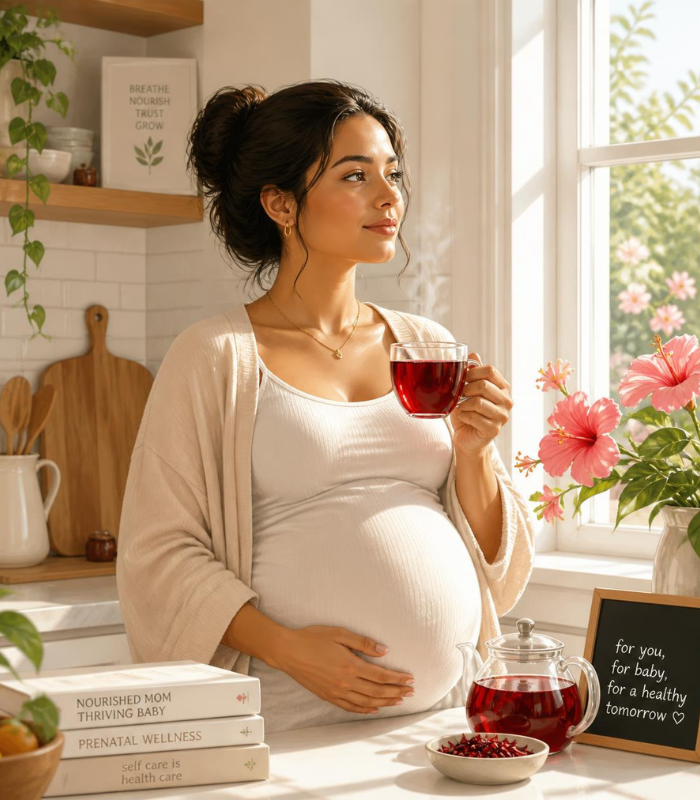
That vibrant, tart cup of hibiscus tea might be a habit you’re not ready to give up — but pregnancy has a way of making you second-guess even the most ordinary parts of your routine. As one prenatal nutrition counselor puts it, “when a patient asks me about hibiscus, I don’t tell her it’s dangerous — I tell her we simply don’t have enough proof that it’s not.” That’s really the heart of this whole question, so let’s get into what’s actually known.
If you want the quick version: most doctors and health organizations say to skip hibiscus tea while you’re pregnant. Not because anyone’s proven it causes harm, but because there just isn’t enough solid research to say it’s safe, either. And when it comes to pregnancy, that gap in knowledge is usually enough reason on its own to play it safe.
Table of Contents
Where the Worry Actually Comes From
You may have heard hibiscus tea can “bring on labor.” That sounds almost appealing if you’re overdue and running on fumes, but it’s exactly the reason it’s treated with caution earlier on. Hibiscus is thought to have what’s called an emmenagogue effect — basically, it may increase blood flow to the uterus in a way that’s linked to triggering menstruation. Follow that logic forward, and you can see why there’s concern it could also contribute to cramping, bleeding, or contractions during pregnancy. It’s worth saying, though, that most of this evidence comes from animal studies, not large trials in pregnant women.
What the Research Actually Says
Studies done on pregnant rats found that concentrated hibiscus extract had a noticeable effect on uterine muscle activity, and in some cases, was tied to developmental changes in the offspring. That sounds scarier than it might actually be for a person sipping tea — animal studies often use much higher, more concentrated doses than you’d ever get from a cup you brew at home. Still, it’s part of why the caution exists.
The honest truth is that there’s no large clinical trial in humans that’s pinned down a “safe amount” of hibiscus during pregnancy. That’s a very different thing from hibiscus being proven unsafe — it’s more that nobody’s been able to answer the question definitively either way, because running that kind of study on pregnant women is understandably difficult to justify ethically.
Outside of pregnancy, hibiscus has actually gotten some positive attention for supporting healthy blood pressure, and a few small early-stage studies have started looking specifically at hibiscus drinks during pregnancy. But “a few small studies” is a long way from changing official guidance, so for now, the standard advice hasn’t shifted.
Why “Not Proven Safe” Basically Means “Avoid It”
Pregnancy is one of those areas where the bar for herbs and botanicals gets set noticeably higher than it would for everyday adult nutrition. Since researchers can’t ethically run large randomized trials testing unknown herbs on pregnant women, that “we’re just not sure” territory almost always gets treated the same as “don’t.” It’s less about hibiscus being singled out as dangerous, and more about pregnancy medicine defaulting to the cautious road whenever the evidence is thin.
It’s Not Just Hibiscus
If it helps to know you’re not being singled out, hibiscus is just one name on a longer list of herbal teas doctors ask people to hold off on during pregnancy. Licorice root gets flagged for its possible effects on blood pressure and hormones. Ginseng carries similar hormonal question marks. Raspberry leaf tea is usually saved for later in pregnancy — often after 32 weeks, and typically only with a provider’s blessing — because of its uterine-toning reputation.
On the flip side, ginger tea tends to get a thumbs up, especially since it can genuinely help with nausea, and chamomile in moderation is usually considered fine too. Even so, it’s always worth running your specific situation by your provider, since everyone’s pregnancy looks a little different.
If You’re Missing That Tart, Cranberry-ish Flavor
You don’t have to just white-knuckle your way through nine months without something satisfying to sip on. A splash of 100% cranberry or pomegranate juice in sparkling water scratches a similar itch. Ginger tea with a slice of lemon is another good stand-in, and rooibos tea is naturally caffeine-free without carrying the same uterine-effect concerns.
 Alona Smith