
You’re at a friend’s dinner party, there’s a gorgeous cheese board on the table, and right in the middle sits that unmistakable wedge of blue cheese, crumbly, pungent, calling your name from across the room. And then it hits you. Wait… am I actually allowed to eat that?
Table of Contents
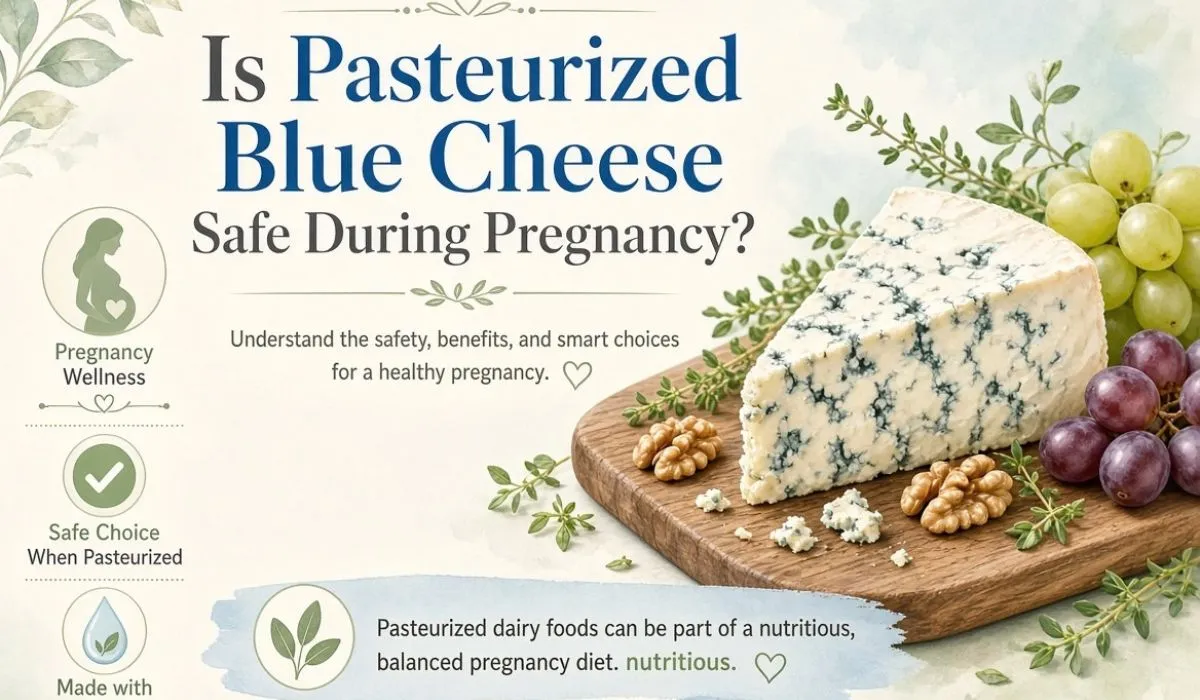
Good instinct. Here’s the answer, straight up, no runaround: yes, you can eat blue cheese while pregnant, but only the kind made with pasteurized milk. The famous ones, Roquefort, Gorgonzola, Stilton, are traditionally made with raw milk. That’s the entire issue, right there in one sentence.
It’s Not the Mold. I Promise.
Here’s the thing almost everyone gets wrong first. Those weird blue-green streaks running through the cheese? Totally innocent. That mold is food-safe, it’s been used in cheesemaking for centuries, and it’s genuinely not what your doctor is worried about.
So what is the actual villain here? A bacterium called Listeria monocytogenes. It loves unpasteurized dairy the way I love this cheese board, deeply and enthusiastically.
Pasteurization, in plain terms, is just milk getting heated hot enough, long enough, to knock out bacteria like Listeria, without wrecking the nutrition. See “made with pasteurized milk” on a label? Good. That cheese already cleared the hurdle that actually matters.
But, and I say this gently, pasteurization isn’t some invincible force field either. Every now and then, soft cheese gets contaminated after pasteurization, during the actual cheese-making, if the facility isn’t spotless. So even pasteurized cheese deserves a quick label check and a little common sense, not blind trust.
Why Pregnancy Turns Up the Stakes
You might be thinking, isn’t this basically regular food poisoning? Nope, not quite. Listeriosis plays by different rules when you’re expecting. You catch it more easily than usual, and unlike most foodborne bugs, it can cross the placenta and reach your baby directly.
And here’s the part that genuinely gets me. You might barely notice you’re sick. A little fever. Some body aches. Maybe your stomach feels off, nothing you wouldn’t shrug off on any regular Tuesday. Meanwhile, for your baby, that same infection can mean miscarriage, stillbirth, or a serious infection right after birth. Feeling almost fine while the stakes are that high for your baby? That’s exactly why this one rule gets taken so seriously.
Okay, So What Do You Actually Do?
Next time you’re at the cheese counter, here’s how I’d walk through it. Look for the words “pasteurized milk.” Not there? Assume raw, skip it, no drama. A lot of imported, artisanal, farmhouse-style blue cheeses from Europe are still made the old traditional way, so treat those with extra caution. Cheese made in the U.S. is far more likely to already be pasteurized, but it still takes two seconds to double-check.
Eating out and can’t confirm what’s in your salad? Cooking is your safety net. Heat destroys Listeria completely. Blue cheese baked into a pizza or melted into a warm sauce is a much safer bet than cold crumbles with no traceable label.
And for what it’s worth, the CDC says the same thing in plainer terms: choosing pasteurized dairy generally, not just blue cheese, is one of the simplest things you can do to cut your listeriosis risk during pregnancy.
Small Habits That Make This a Non-Issue
Check for “pasteurized” before buying any soft or blue-veined cheese. Do it once, twice, and it becomes second nature. At a restaurant and not sure? Just ask, most servers actually know their menu. Genuinely can’t tell either way? Hard cheeses like cheddar, parmesan, or gouda are your easy, low-risk fallback. Got a dish with blue cheese baked in? Cooking it takes the worry off the table entirely. And on the days you’re just not sure, it’s completely fine to skip it, there will be plenty of blue cheese salads waiting for you on the other side of this pregnancy.
The Sneaky Trap So Many Moms-to-Be Fall Into
Here’s what catches people off guard constantly: “gourmet” or “imported” does not mean safer. Honestly, it’s usually the opposite. Those beautiful specialty European cheeses are proudly, traditionally unpasteurized, which is exactly what makes cheese lovers swoon and exactly why they’re riskier for you right now. The other classic trap is assuming a dish is safe because it looks cooked. Blue cheese dressing drizzled over a warm entree almost always gets added cold, after cooking, so it never actually reaches a safe temperature.
Quick Answers to What You’re Probably Wondering
Is all blue cheese off the table while I’m pregnant?
Not even close. Blue cheese made with pasteurized milk is generally totally fine to enjoy. The real risk sits with the unpasteurized stuff.
What about blue cheese dressing?
Most commercial dressings in the U.S. use pasteurized cheese, but a quick label check or a question to your server never hurts.
If it’s unpasteurized, does cooking it fix the problem?
Yes. Thorough cooking kills Listeria, so a fully baked dish beats eating unpasteurized blue cheese cold, every time.Yes. Thorough cooking kills Listeria, so a fully baked dish beats eating unpasteurized blue cheese cold, every time.
How would I even know if I had listeriosis?
Early on, it often just feels like fever, body aches, an upset stomach, easy to miss or brush off. If it turns into a stiff neck, confusion, or trouble balancing, that’s your signal to get medical help right away.
Are Roquefort and Gorgonzola ever okay during pregnancy?
Only when the label specifically says pasteurized milk. A lot of the traditional versions aren’t, so it’s always worth a look before you dig in.