
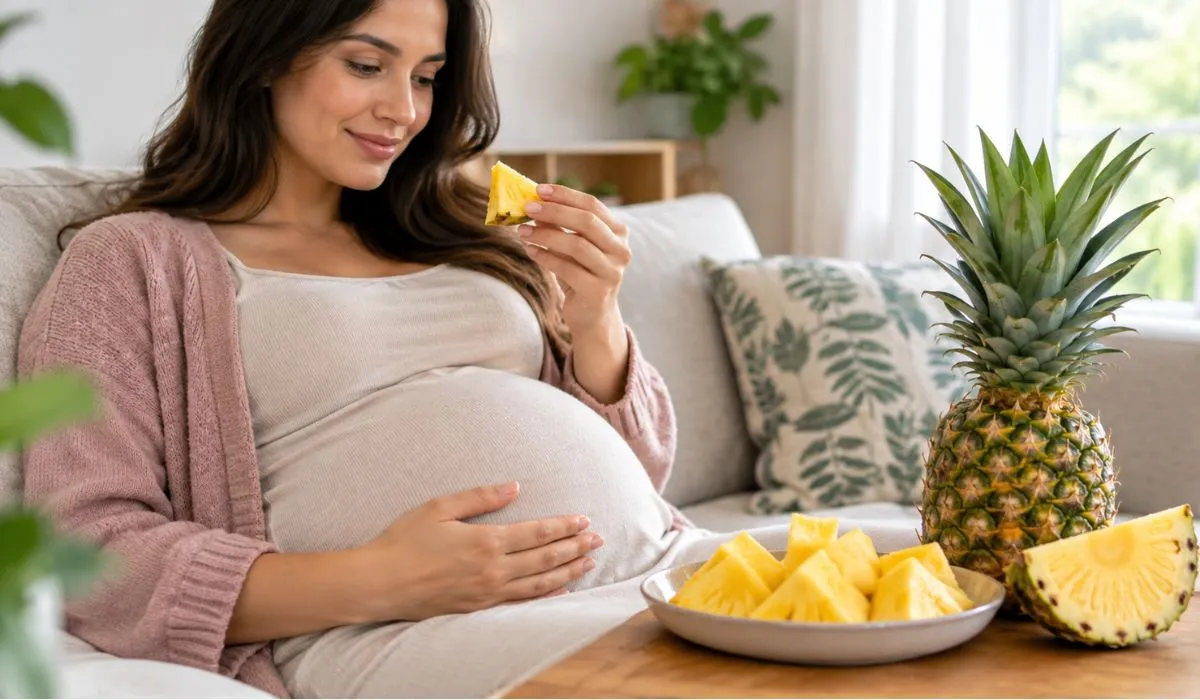
You’re cutting up a fresh pineapple, or maybe you’re just eyeing one in the produce aisle, and then that little voice pops into your head: wait, aren’t you not supposed to eat this while pregnant? Someone told you it can bring on labor. Or was it a miscarriage thing? You can’t quite remember where you heard it, just that you heard it somewhere and now you’re second-guessing a piece of fruit.
Table of Contents
Here’s the good news: you can eat it. Pineapple is safe during pregnancy, and honestly, it’s a pretty great snack to be craving. The whole “pineapple causes labor” thing is one of those pregnancy myths that’s been passed around so many times it just sounds true by now. It’s not. Let’s talk about where it actually came from.
Okay, But Where Did This Rumor Even Start?
Nobody makes these warnings up out of nowhere, so there’s usually a tiny grain of truth buried somewhere in there. With pineapple, that grain of truth is an enzyme called bromelain. It’s what breaks down protein, and it’s also the reason your tongue feels a little tingly or raw after you’ve eaten a lot of fresh pineapple in one go — it’s literally nibbling away at your mouth a bit. Kind of gross when you think about it, but harmless.
Years ago, researchers looked at concentrated, isolated bromelain in lab settings and found it could soften the cervix and stimulate the uterus. That’s a real finding. But here’s where the story gets stretched way past what it actually means: a cup of fresh pineapple has something like 16 mg of bromelain in it. The studies that raised concern were using doses of 200 to 400 mg. So we’re talking about eating seven to ten whole pineapples in one sitting before you’d even get close to that amount — and honestly, your stomach would revolt long before your uterus noticed anything. Most of the bromelain also lives in the tough core that nobody eats anyway, not the sweet flesh, and canned pineapple has almost none left because the canning process cooks it out.
So the supplements? Skip those, there’s just not enough research on bromelain pills during pregnancy to call them safe. But the fruit itself sitting in your fridge right now? Completely different situation. Not a single major pregnancy health organization tells women to avoid pineapple.
What It’s Actually Doing for You
Once the fear part is out of the way, pineapple turns out to be a genuinely good thing to be reaching for. It’s full of vitamin C, which gives your immune system a boost and helps your body actually absorb the iron you’re eating — pretty handy since your blood volume is quietly increasing this whole pregnancy to keep up with the baby. There’s manganese in there too, which helps with bone development. And the fiber? If pregnancy has slowed your digestion down to a crawl, you already know what a relief a little extra fiber can be. It’s also mostly water, so on the days when plain water just isn’t cutting it anymore, a bowl of pineapple can sneak in some hydration without you even noticing.
How Much Should You Actually Eat?
This is honestly the part worth paying attention to, way more than the bromelain scare. Pineapple is acidic, so if you eat a big bowl of it, don’t be shocked if heartburn shows up — especially later in pregnancy when it’s already knocking on your door most nights anyway. It’s also pretty sugary as fruits go, so if you’re dealing with gestational diabetes, keep your portions in check and maybe ask your provider how it fits into things. And really, too much of any fruit in one sitting can leave your stomach unhappy. A cup a day, give or take, fresh or canned, is a comfortable amount for most people.
A few small things help. Stick to the real fruit rather than any bromelain extract or supplement. If you’re eating canned pineapple in heavy syrup, a quick rinse cuts down on the added sugar. And if heartburn already bothers you, eating it alongside something like Greek yogurt tends to make it easier on your stomach. If you notice your mouth tingling afterward, that’s just the acidity talking, not a warning sign about the baby. Next time, just go a little smaller.
Questions You’re Probably Actually Asking
Can pineapple cause a miscarriage?
No, there’s no science behind that one. It’s one of those myths that just keeps getting repeated, and every time researchers or doctors look into it, they come back with the same answer: not true.
Is pineapple juice safe to drink while pregnant?
Yes, just don’t go overboard. Juice has less fiber than the whole fruit and more sugar packed into it, so it’s easier to drink way more than you’d ever eat in fruit form without even realizing it. A small glass is plenty.
Will eating pineapple near my due date help start labor?
Probably not, no. Some women give it a try hoping for a little nudge, but the amount of bromelain in a normal serving is nowhere near enough to actually do anything.
Can I eat dried pineapple?
Sure, just check that it’s not loaded with extra added sugar, and watch your portion — dried fruit crams a lot more sugar and calories into a small handful than the fresh stuff does.
Does the trimester matter?
Not really. Whether you’re in your first trimester or your third, fresh pineapple in normal amounts is considered safe the whole way through.