
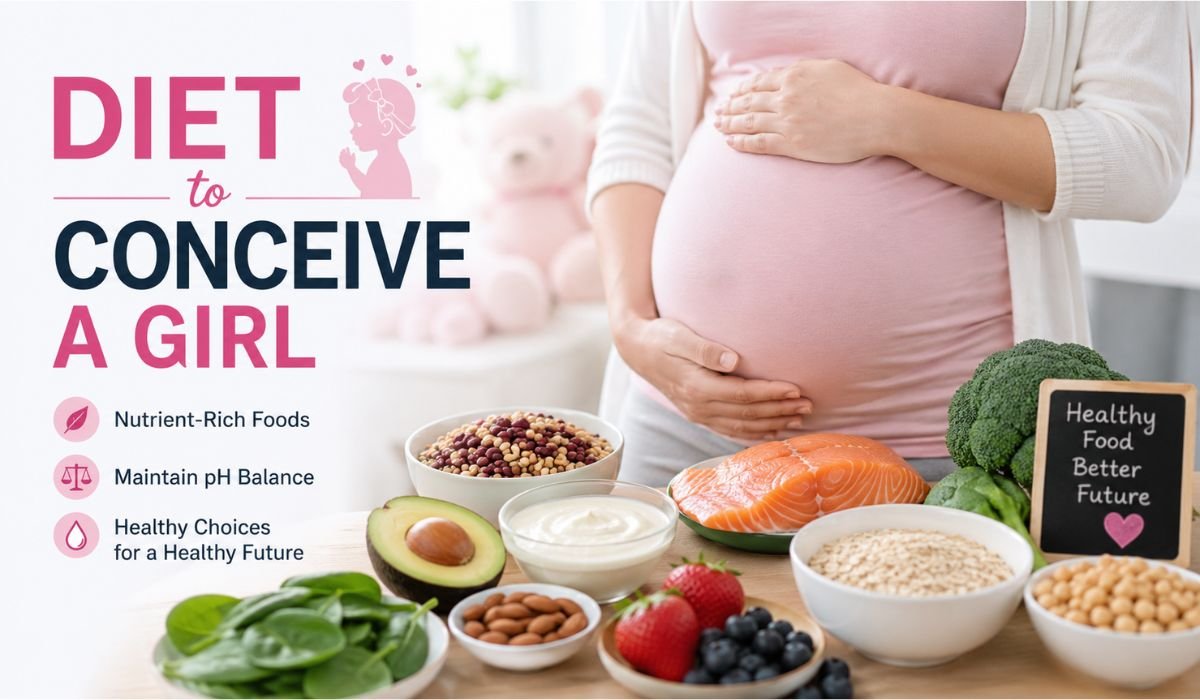
So you’re hoping for a little girl, and somewhere along the way you heard that changing your diet might help tip the odds. It’s a really common thing to wonder about — but here’s the honest answer up front: no diet has ever been scientifically proven to influence a baby’s sex. That comes down to chromosomes, not what’s on your plate. The mother always contributes an X chromosome, and it’s the father’s sperm — carrying either an X or a Y — that decides whether you end up with a girl or a boy. Still, the “girl diet” theory has been around for decades, and it’s worth understanding where it comes from and why most doctors remain unconvinced.
Where the “Girl Diet” Idea Actually Comes From
This isn’t a new fad. It traces back to something called the Shettles Method, built around the idea that X-carrying sperm (the ones linked to girls) are slower but tougher, while Y-carrying sperm (linked to boys) are faster but more fragile. The theory goes that if you can make the vaginal environment more acidic through diet, you create conditions that favor the hardier X sperm and give the Y sperm a harder time.
It’s a neat story, and it’s easy to see why it’s stuck around for so long. But according to reproductive health experts, there’s no solid evidence that maternal diet actually changes that internal environment enough to select for one type of sperm over another. The NIH and ACOG haven’t endorsed this as an effective method, mostly because sex determination happens the moment fertilization occurs — well before diet could realistically play a role.
What People Following This Diet Actually Eat
If you decide to try it anyway — and plenty of people do, just for peace of mind or because it feels like doing something — the approach usually looks like this. You’d lean into calcium and magnesium-rich foods like dairy, leafy greens, and almonds, while cutting back on salty, potassium-heavy foods such as bananas, potatoes, and processed snacks. Citrus fruits, berries, and yogurt tend to show up a lot too, since they’re seen as more acidic. Most versions of the diet suggest starting several weeks before you plan to conceive, and pairing it with ovulation tracking so intercourse happens a bit earlier before ovulation rather than right on top of it.
None of this is dangerous in moderation. But it’s worth being clear-eyed that you’re following folklore, not clinical guidance — there just isn’t peer-reviewed research backing it up.
Why Doctors Tend to Push Back on This
Most health experts would rather you focus your energy on preconception nutrition that actually supports a healthy pregnancy — folic acid, iron, DHA, and the usual prenatal nutrition essentials — regardless of which sex you end up with. And that’s really the concern here: if you start cutting out entire food groups, like potassium-rich bananas or potatoes, purely to chase a theory, you might accidentally shortchange nutrients your body genuinely needs right now.
If choosing your baby’s sex matters enough that you want something with real scientific backing, that does exist — but it looks nothing like a diet plan. Sperm sorting and preimplantation genetic testing (used alongside IVF) are the only methods with solid evidence behind them, and they come with their own cost, ethical, and legal considerations depending on where you live.
If You Want to Try It Anyway
There’s nothing wrong with giving it a shot, as long as you go in with realistic expectations and keep a few things in mind. Loop your doctor in before restricting any food groups, and don’t let the “girl diet” replace your prenatal vitamins — folic acid and iron aren’t optional just because you’re experimenting with something else. If timing matters to the method you’re following, track your ovulation carefully rather than guessing. And try to hold onto the fact that even families who follow this diet closely still land at roughly 50/50 odds — because biologically, that’s really what’s driving the outcome.
A few things worth avoiding: don’t over-restrict sodium or potassium without a doctor’s input, don’t treat this as a guarantee, and don’t let the diet distract you from the maternal health vitamins and nutrients that matter most right now. And if fertility is a real concern for you, don’t lean on dietary folklore instead of getting proper care.
FAQ
Does eating acidic foods really help conceive a girl?
Not according to current evidence. Sex comes down to chromosomes at the moment of fertilization, not the acidity of your diet.
Is the Shettles Method backed by research?
No — it’s a popular theory, but it hasn’t held up to scientific scrutiny, and major medical bodies don’t recommend it.
Can the timing of intercourse affect a baby’s sex?
Some versions of this theory link timing to outcome, but the research on this isn’t reliable enough to count on.
Is there anything that’s actually proven to work?
Yes — sperm sorting and preimplantation genetic diagnosis (PGD) during IVF are the only scientifically supported options, and both require working with a fertility specialist.
Is it safe to follow a “girl diet” while trying to conceive?
Generally, yes, in moderation — just don’t let it crowd out the nutrients that matter for a healthy pregnancy, and check in with your doctor first.
 Emma Gill