

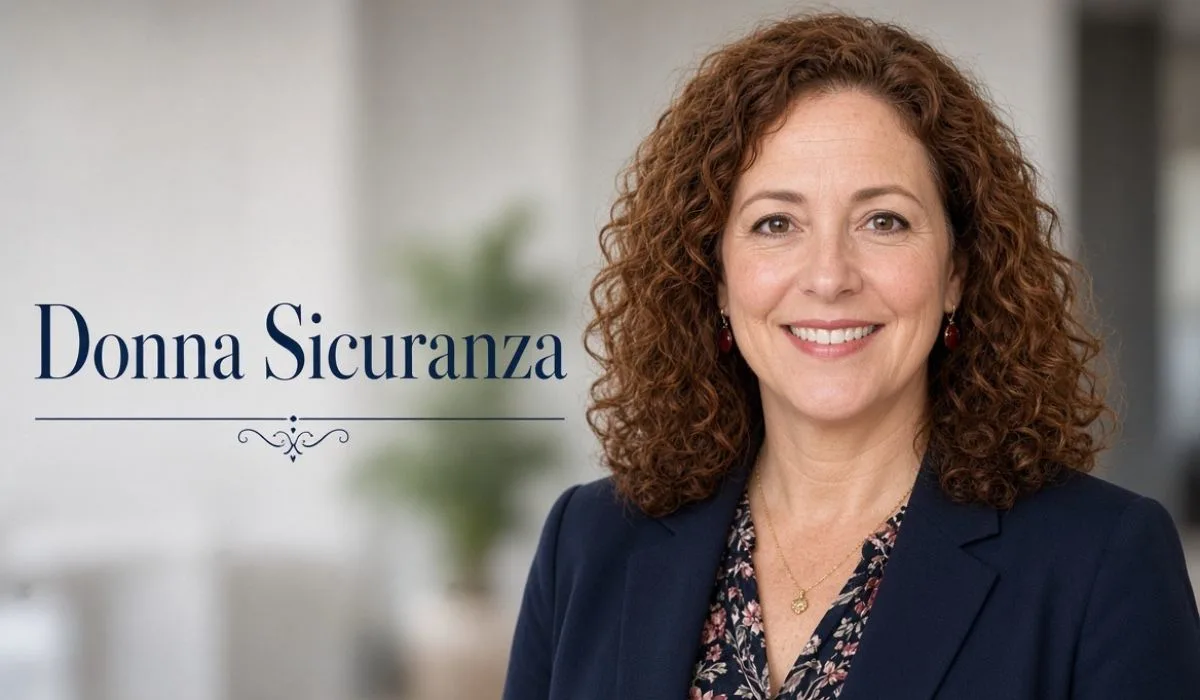
From a 22-foot van and 12 cats on opening day to more than 225,000 cats sterilized, this is the story of Donna Sicuranza and her nearly thirty years with TEAM.
Overview
Ask anyone who has lived near a barn, a back alley, or a neighborhood with a few stray cats, and they’ll tell you the same thing: the cats multiply faster than anyone can keep up. Donna Sicuranza has spent most of her working life on that problem.
Her name is tied to Tait’s Every Animal Matters, or TEAM, a Connecticut nonprofit that runs a mobile spay and neuter clinic for cats. She and veterinarian Dr. John A. Caltabiano got the clinic rolling in 1997. On day one, the crew handled just 12 cats. TEAM now reports more than 225,000 cats sterilized and vaccinated.
She isn’t a surgeon, and she never chased the spotlight. What she did was help build an organization, explain its mission to the public, and keep it running through decades of change.
A quick note on names, since you’ll see a few. TEAM lists her today as Donna Sicuranza Marconi, Executive Director. Older records and news stories use Donna Sicuranza or Donna J. Sicuranza.
At a Glance
| Detail | Information |
|---|---|
| Known as | Donna Sicuranza |
| Name used by TEAM today | Donna Sicuranza Marconi |
| Also recorded as | Donna J. Sicuranza |
| Work | Nonprofit executive, animal-welfare advocate |
| Organization | Tait’s Every Animal Matters (TEAM) |
| Role | Executive Director |
| Based in | Connecticut |
| Earlier career | Journalism and public relations |
| Signature program | TEAM Mobile Feline Spay/Neuter Clinic (1997) |
| Co-founder of the clinic | Dr. John A. Caltabiano, DVM |
| Parents | Robert J. Sicuranza and Marlene C. Patitucci Sicuranza |
| Sister | Dina M. Sicuranza |
| Cats served so far | 225,000+ sterilized and vaccinated |
Who She Is
Donna Sicuranza is a Connecticut nonprofit leader who has been part of TEAM for more than 25 years. The organization’s clinic travels from town to town offering spay, neuter, and vaccination services for pet cats and feral cats. The idea behind it is straightforward: if cats are sterilized before they breed, there are fewer unwanted litters down the line. According to TEAM, any cat in Connecticut can use the service.
In her role as Executive Director, she leads the administrative staff. TEAM’s 2019 publication listed her as Donna J. Sicuranza in that position and credited her as editor of its newsletter, TEAMWORKS.
To really appreciate her work, it helps to know that TEAM didn’t start out big. It began with a small adoption effort and a pile of phone messages that all said the same thing: there are too many cats and nowhere for them to go.
From Newsrooms to Animal Welfare
Before TEAM, Sicuranza’s world was words, not veterinary medicine. Connecticut Magazine reported that she was working in journalism and public relations when she crossed paths with Dr. Caltabiano.
Those skills never went to waste. Newspapers later quoted her as a TEAM spokeswoman, and she shared the organization’s news with supporters through its publications, including as TEAMWORKS editor in 2019.
Caltabiano’s own road to TEAM wasn’t smooth. He first started a nonprofit called All-Animal Adoption, which put people who wanted pets in touch with people who needed to rehome theirs. Connecticut Magazine reported that it folded when funding ran dry. Years afterward, a bequest from the estate of Vernon A. Tait, a Connecticut businessman who loved animals, gave him the resources for a second attempt. This time, rather than deciding what the mission should be, he set out to find what people actually needed.
The Hotline That Pointed the Way
Caltabiano set up a toll-free number for animal-related problems. The calls that came in kept circling back to cats.
Sicuranza later described what people were reporting: kittens nobody wanted, homes with far too many cats, and disagreements over animals roaming outdoors. The litters just kept coming.
That was the turning point. Finding homes for kittens helps the kittens, but it doesn’t stop the next batch from being born. Caltabiano and Sicuranza flipped their thinking and decided to prevent the litters in the first place.
The surgery itself wasn’t the hard part, since spaying and neutering were routine. Access was. Cost kept many people away, especially caretakers with several cats or a feral colony, and a single clinic in one location could never reach everyone in the state.
So the clinic would go to the people.
1997: The Clinic Hits the Road
In 1997, Caltabiano and Sicuranza launched TEAM’s mobile feline spay and neuter clinic. TEAM’s 2019 history says they wanted to make the service cheaper and easier for caretakers to use. The first vehicle was only 22 feet long, with barely enough space for the animals and the crew, and the team altered just 12 cats that first day. Connecticut Magazine called it the first mobile spay and neuter clinic in the state and said the original price was $25 per cat.
A modest beginning didn’t mean modest demand. Because the van went to communities instead of asking people to travel to one place, it was much easier for rural residents, feral-cat caretakers, and anyone struggling with repeat litters to use. Word spread and the numbers grew.
Racing Past 40,000
A 2001 report from The Middletown Press shows how fast things moved. By July of that year, TEAM had sterilized more than 40,000 cats since March 1997. Sicuranza, quoted as a TEAM spokeswoman, said the clinic averaged around 40 surgeries per stop.
Think about that for a second: 12 cats on day one, and tens of thousands within roughly four years.
The article also pointed out that about one in three cats came from feral colonies. Sicuranza mentioned rural areas in particular, where barn cats and wild populations created a constant need. TEAM wasn’t just helping pet owners save money. It was taking on a bigger problem involving cats with no owner at all.
Standing Up for Feral Cats
Feral cats have always been part of TEAM’s mission. The organization supports Trap, Neuter and Return (TNR), where cats are humanely trapped, sterilized, marked as treated, and returned to the place they live.
TEAM’s 2019 newsletter said its backing of TNR goes back to the early years. It also described the TEAM Incentive Program (TIP), which helps people bring qualifying feral cats to the clinic.
For Sicuranza, it’s personal. In a note published by TEAM, she told the story of Sobie, a feral cat who kept showing up at her farm looking for food and shelter. She planned to trap and neuter him, but he was hit and killed by a car before she got the chance. Stories like his, she wrote, helped inspire TEAM’s feral-cat assistance work. By 2019, more than 320 feral cats had been helped through TIP, which began in 2014.
It’s a small story, but it says plenty. The statistics matter, and so does every individual cat living outside with no one looking after it.
Working Alongside Dr. Caltabiano
Sicuranza and Caltabiano were more than colleagues. His 2009 obituary named Donna Sicuranza of Westbrook as his longtime partner, and it noted that TEAM had sterilized more than 128,000 cats by the time he died.
He passed away in November 2009 after a battle with cancer. It was a heavy loss for TEAM. He had helped found the clinic and shaped its veterinary approach. But the organization carried on, and Sicuranza stayed at the helm.
Ten years later, TEAM reached a milestone that would have seemed out of reach when the first van pulled out: its 200,000th surgery.
The 200,000th Cat
TEAM opened 2019 with a landmark. On February 4, in Torrington, a calico named Calypso became its 200,000th patient. The newsletter used the occasion to look back at how the clinic had grown since 1997.
That first 22-foot van had been a tight squeeze. By 2019, TEAM said its vets could sterilize about 35 cats in a single day in one of two purpose-built vehicles, and the organization was visiting more than 25 communities around the state.
Sicuranza didn’t take the credit herself. In TEAM’s account, she thanked the veterinary team, office staff, maintenance crew, donors, and everyone who brought a cat to the clinic.
That detail matters when you think about her story. She isn’t someone who operated on hundreds of thousands of cats. Her documented role is helping lead the organization that made all those surgeries possible.
A Seat at the Policy Table
Over the years, her work reached into state policy. Connecticut Department of Agriculture records show her at the 2019 Animal Population Control Program Working Group, speaking for Tait’s Every Animal Matters.
The August meeting covered topics that affect who can get care for their animals: reimbursements to veterinarians, program funding, dog licensing, climbing veterinary costs, and the digital systems used by animal-control officials.
It’s a striking contrast. In the late 1990s, the goal was simply to get one clinic on the road. Two decades later, she was helping represent TEAM in conversations about the state’s whole approach to animal populations. Connecticut still runs an Animal Population Control Program that supports sterilization and vaccination for eligible residents and for animals adopted from municipal facilities.
A Family That Cares About Animals
Her love of animals clearly runs in the family. Her father, Robert J. “Bob” Sicuranza, enjoyed dogs and wildlife, helped with his daughters’ horses, and spent years announcing horse shows across Connecticut, according to his 2011 obituary. He also served on TEAM’s board. The obituary lists his wife as Marlene C. Patitucci Sicuranza and his daughters as Donna J. and Dina M. Sicuranza.
TEAM turned into something of a family business. A 2019 staff list had Marlene C. Sicuranza as Program Assistant and Dina Sicuranza as Senior Veterinary Technician, a role Dina still holds according to current TEAM records. She joined in 1998, a year after the clinic launched.
If you describe Donna only by her job title, you leave out this part of the picture. TEAM has been woven into the lives of several members of her family.
Still a Storyteller
Her years in journalism and PR didn’t stay behind when she moved into animal welfare. Older news stories quote her explaining how the clinic worked and why feral-cat sterilization was so important. Later, TEAM named her editor of its newsletter, which gave her a direct line to supporters about services, results, and progress.
That thread runs through her whole career. Vets handle the surgeries, but a statewide nonprofit also needs someone who can explain why it exists, talk with the public, keep donors in the loop, and represent it beyond the clinic. Her leap from journalism to nonprofit leadership was smaller than it sounds, because communication stayed at the heart of the job.
TEAM Today
Almost three decades after the first clinic rolled out, Donna Sicuranza is still with TEAM. The current staff page lists Donna Sicuranza Marconi as Executive Director, working with Program Coordinator Lacey J. Raymond and a veterinary team led by Medical Director Art Heller, DVM. Her sister Dina is still the Senior Veterinary Technician.
It’s a long way from 1997. TEAM says its veterinarians have sterilized and vaccinated more than 225,000 cats since the program began, and it keeps traveling to communities across Connecticut, treating both domestic and feral cats.
The growth tells its own story. It went from 12 cats on that first day to more than 40,000 by 2001, past 128,000 by 2009, the 200,000th surgery in 2019, and over 225,000 today. Those totals measure an organization, not one person, but Sicuranza has been there through the entire stretch, which makes her one of TEAM’s most consistent presences.
Not to Be Confused With Someone Else
There’s a mix-up in search results worth clearing up. A different woman, Donna Marie Sicuranza, lived in New York and died in 2017. Her obituary mentions a career at Walker Studios and the Bank of New York and names her husband as Angelo Sicuranza. She is not the TEAM executive profiled here.
It’s easy to tell the two apart. Donna J. Sicuranza kept showing up in TEAM materials after 2017, including as Executive Director in the 2019 publication, and TEAM’s current staff page lists Donna Sicuranza Marconi in that same job. Keeping the two women separate prevents unrelated family, work, and obituary details from being attached to the wrong person.
Why Her Work Matters
Most conversations about cat overpopulation begin after the problem is already obvious: shelters at capacity, litters born outdoors, caretakers overwhelmed by colonies, and more animals waiting for homes.
TEAM chose to step in sooner. It focused on sterilization and built a mobile model around that one goal, so veterinary crews could reach communities all over Connecticut. Sicuranza has been part of that approach since the beginning.
Perhaps the best measure of her contribution is how long it has lasted. Plenty of programs launch with energy and then fade when money, staff, leadership, or attention moves on. TEAM’s mobile clinic has kept going from 1997 into 2026, survived the loss of its veterinary co-founder, and treated cats by the hundreds of thousands. That’s a long run for any nonprofit program.
The Bottom Line
Donna Sicuranza’s story isn’t really about fame. It’s about one idea, sterilize cats before they have litters, and the decades of steady work it took to make that idea last.
She started in journalism and public relations, teamed up with John Caltabiano as TEAM figured out its purpose, and helped put a small feline clinic on Connecticut roads in 1997. After his death, she stayed on, spoke for the organization in policy discussions, told its story through the press and its own publications, and kept leading as it passed 200,000 procedures. TEAM lists her today as Donna Sicuranza Marconi, Executive Director, and counts more than 225,000 cats sterilized and vaccinated since 1997.
For a career built on prevention, that number may be the best proof of what endured.
Frequently Asked Questions
Who is Donna Sicuranza?
A Connecticut nonprofit executive and animal-welfare advocate. TEAM lists her as Donna Sicuranza Marconi, Executive Director of Tait’s Every Animal Matters.
What is she best known for?
Her long leadership at TEAM and her role in helping Dr. John A. Caltabiano start the organization’s mobile feline spay and neuter clinic in 1997.
What did she do before joining TEAM?
Connecticut Magazine reported that she worked in journalism and public relations before getting involved in TEAM’s animal-welfare work.
When did the mobile clinic start?
In 1997. According to TEAM’s 2019 publication, 12 cats were treated on the first day.
How was Dr. Caltabiano connected to her?
He was her collaborator in launching the mobile clinic, and his 2009 obituary also named her as his longtime partner.
How many cats has TEAM helped?
TEAM’s website says its veterinarians have sterilized and vaccinated more than 225,000 cats since 1997.
Is she still with TEAM?
Yes. TEAM’s current staff page lists her as Executive Director.
Is she related to Dina Sicuranza?
Yes. Their father’s obituary names both as his daughters, and TEAM currently lists Dina as Senior Veterinary Technician.