

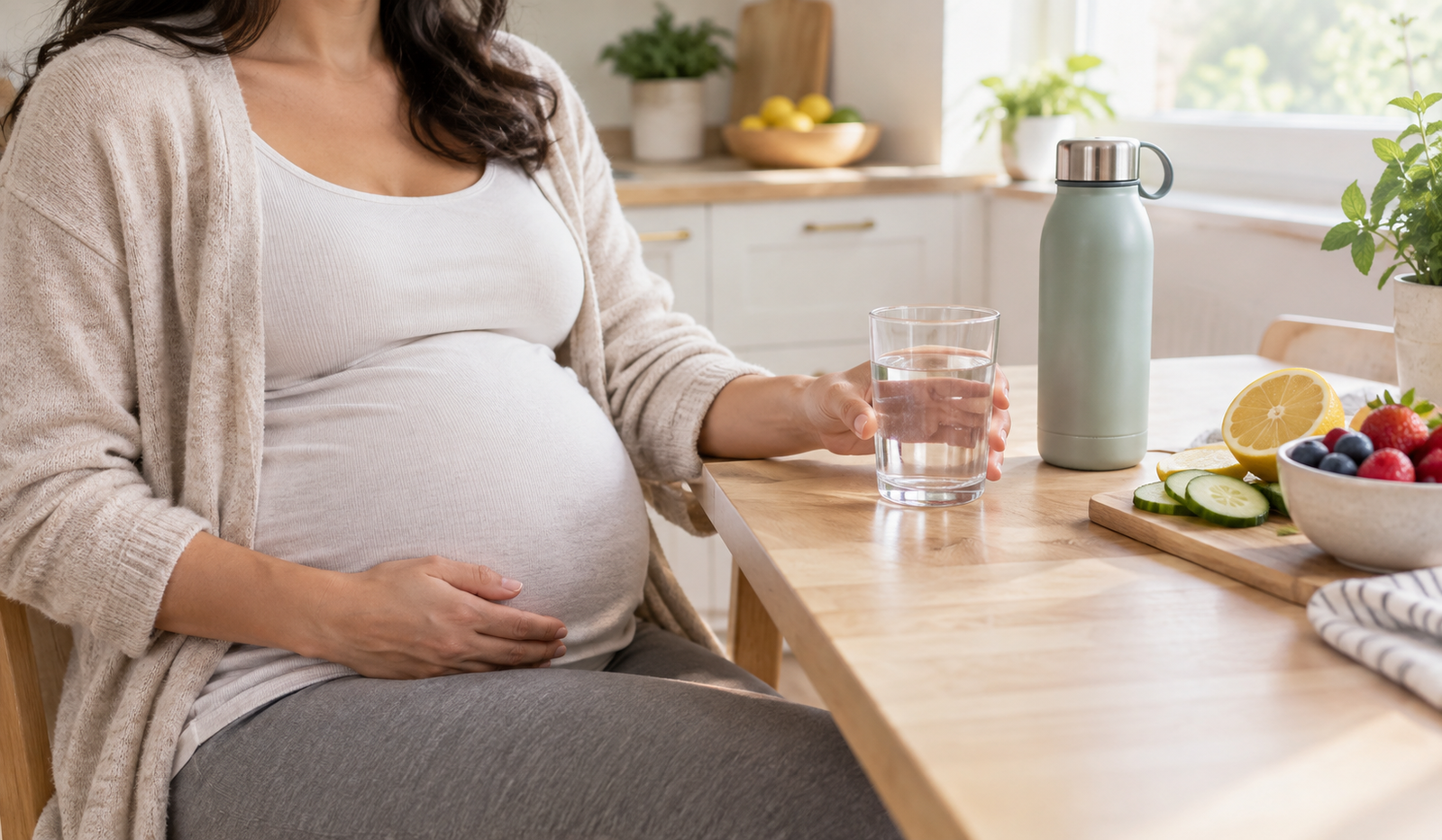
Suddenly feel like you could drink an entire lake? You’re not imagining it, and you’re not weird. Your blood volume is going up, your body is making amniotic fluid, and all of that runs on water. Drinking enough also helps with constipation, swollen ankles, and those annoying headaches.
So does the kind of water matter? A little. But a lot less than the fancy labels want you to think.
Table of Contents
How much do you actually need?
The National Academies of Sciences, Engineering, and Medicine says about 3 liters a day (around 13 cups) while you’re pregnant. Before that number stresses you out: it counts everything. Your drinks, soup, fruit, even the water hiding in your dinner. Roughly 2.3 liters (about 10 cups) of it should come from things you actually drink.
You’ll want more on hot days, after a workout, or if you’ve been throwing up. And here’s the easiest check there is: if your pee is pale yellow, you’re doing great.
The short version
The best water is clean, safe water that you’ll actually want to drink. No type has been proven better for your baby. For most people, that looks like:
- Tap water, if your local supply is tested and approved
- Filtered water, if your tap tastes funny or has a known problem
- Sealed bottled water from a brand you trust, if your tap isn’t reliable
Tap water
Where water is regulated, tap is usually perfectly safe, and lots of places add fluoride, which is great for teeth. You can usually find your local water quality report with a quick search.
One thing worth knowing: older pipes can leach lead, and lead is a bigger deal during pregnancy. If the water’s been sitting in the pipes for a few hours, let the tap run for 30 seconds to 2 minutes first. And stick with cold water for drinking and cooking.
Filtered water
A good filter can make your water taste better and cut down chlorine and lead. Look for NSF/ANSI certification (Standard 53 is the one that covers things like lead). And please, change the cartridge when you’re supposed to. An old one can grow bacteria, which kind of defeats the point.
Bottled, mineral, and sparkling
Sealed bottled water is a handy backup, especially when you’re traveling. Just keep bottles out of heat and direct sun, and don’t refill the same single-use plastic bottle for weeks.
Plain sparkling water is totally fine, and some women find it settles a queasy stomach. If you love natural mineral water, peek at the sodium on the label, especially if you’re dealing with swelling or high blood pressure.
Waters to be a bit more careful with
- Untreated well water can carry nitrates, bacteria, or heavy metals. Get it tested, and keep retesting it every so often.
- Distilled or reverse-osmosis water has the minerals taken out. That’s not harmful, but don’t lean on it alone if your diet is on the limited side.
- “Alkaline” water gets a lot of hype, but there’s little evidence it does anything special in pregnancy.
- Water you just don’t trust? Boil it for at least 1 minute, let it cool, and keep it covered.
When plain water feels like a chore
It happens to everyone. Keep a bottle where you’ll see it. Toss in some lemon, cucumber, mint, or berries. If nausea makes water hard to face, try ice chips or frozen fruit. Melon, oranges, cucumber, and soup all count toward your total too.
Try sipping all day rather than chugging. Downing a liter right before bed just means extra midnight trips to the bathroom, and you’re probably getting enough of those already.
When to call your provider
Give them a call if you notice dark urine, dizziness, very little urine, or constant thirst. Same goes for vomiting that won’t stop, since dehydration can sneak up on you fast.
The bottom line
Pick the safe water that’s easiest for you to keep drinking. Steady sips beat the perfect brand, every time.
 Alona Smith