
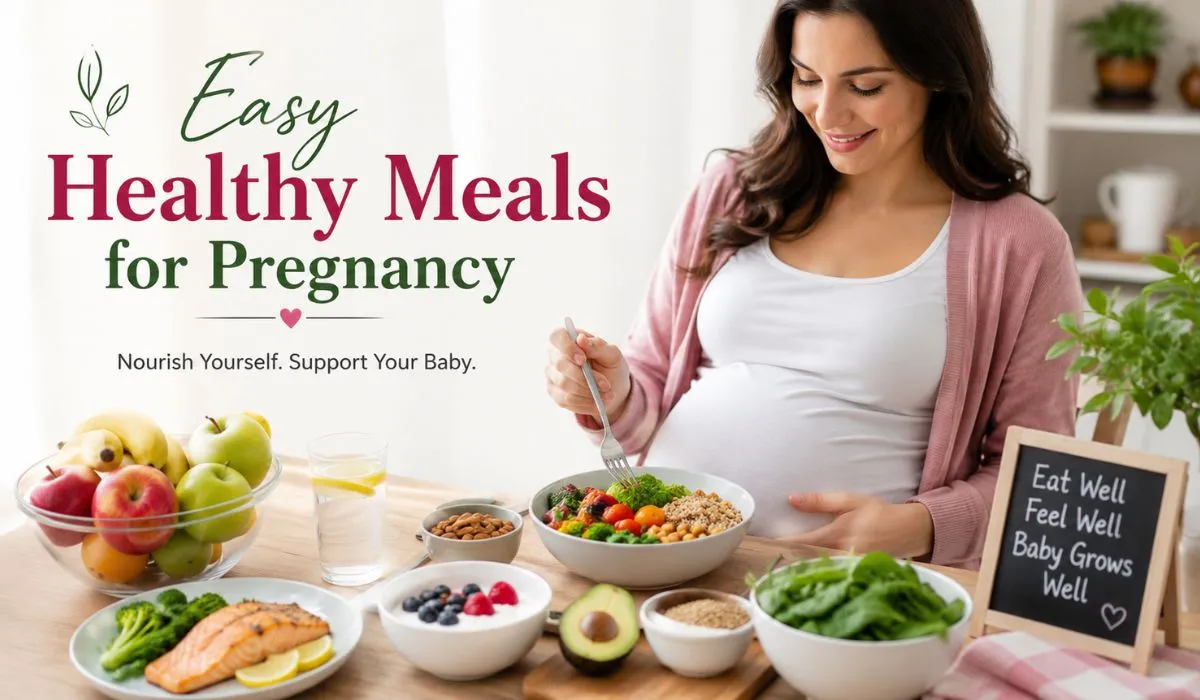
Can we just be honest for a second? Some days, cooking a “proper” meal feels like a punishment. You’re tired in a way that doesn’t make sense, your stomach has opinions about everything, and the thought of chopping vegetables for twenty minutes sounds unbearable. So here’s the real answer, no fluff: the easiest healthy meals for pregnancy are the ones that pair a protein, a whole grain, and something colorful — a veggie omelet with toast, or a yogurt bowl with berries and nuts. That’s it. That’s the whole trick.
Table of Contents
Why Simple Beats “Perfect,” Every Time
Most pregnancy meal plans die by week two, and honestly, that’s not on you. It’s because they ask for too much — fifteen ingredients, an hour at the stove, energy you just don’t have when nausea and exhaustion are calling the shots. What actually matters is nutrient density, not how impressive the meal looks. You want food that carries folic acid, iron, calcium, and DHA, not food that demands your whole evening.
The CDC points out that getting enough folic acid, iron, and other key nutrients throughout pregnancy genuinely supports healthy fetal development and helps lower the risk of certain birth defects. The good news? Simple food gets you there just fine. Lentil soup with a slice of whole-grain bread hands you iron and fiber without you even trying. A salmon and quinoa bowl covers DHA and protein in one dish. You really don’t need to be a chef for any of this.
Breakfasts You Can Basically Make Half-Asleep
Mornings are rough — maybe the roughest part of the day, especially early on when even the smell of coffee can turn your stomach. So these are gentle enough to actually get down, while still doing something for you nutritionally. Greek yogurt with berries, chia seeds, and a drizzle of honey. Whole-grain toast with mashed avocado and a boiled egg. Oatmeal made with milk, topped with walnuts and banana. And if solid food just isn’t happening, a smoothie with spinach, frozen mango, milk, and a spoonful of nut butter goes down easily and still brings calcium, fiber, and healthy fats to the table — fuel for you and for the little one growing inside you.
Lunches That Don’t Ask Much of You
By lunch, you probably just want something that keeps you upright without knocking you out for the afternoon. A grain bowl is hard to beat: cooked quinoa or brown rice, a scoop of black beans or chickpeas, whatever vegetables you’ve got roasted or leftover, and a simple olive oil dressing. And honestly? Last night’s dinner reheated counts. Leaning on leftovers is one of the smartest, least exhausting things you can do this week.
Craving something warm instead? A big batch of vegetable and lentil soup, made once and frozen in portions, means there’s always something comforting waiting for you — even on the days you can’t imagine standing at the stove.
Dinners That Still Feel Like a Real Meal
Dinner doesn’t have to be complicated to feel like you actually took care of yourself. A baked salmon fillet with roasted sweet potatoes and steamed broccoli gives you protein, DHA, and fiber on one plate, with almost no hands-on effort. Stir-fried tofu or chicken with mixed vegetables over brown rice is another one worth keeping in your back pocket — most versions are done in under 25 minutes, which matters a lot on the nights your patience has left the building.
Ground turkey tacos with black beans, avocado, and a simple side salad tend to be a favorite too, mostly because they bend to whatever mood you’re in. Some nights you’ll want extra avocado. Other nights the thought of meat will make you close the fridge and walk away. Both are completely normal — pregnancy cravings and aversions can flip on you within the same afternoon, and there’s no fighting it.
Snacks Worth Keeping Within Reach
Smaller, more frequent meals often feel a lot kinder on your body than three big ones, especially if nausea or heartburn has been showing up uninvited. Keep something within arm’s reach at all times — apple slices with peanut butter, a small handful of almonds and dried apricots, cheese with whole-grain crackers, hummus with cucumber or carrot sticks. None of it takes real prep, and having it nearby means you’re far less likely to skip eating entirely on a hard day.
A Few Things That Genuinely Make This Easier
Cook a double batch of grains or protein on a day you’re feeling decent, so you’ve got building blocks ready for the days you’re not. Keep a bag of frozen vegetables around — it saves you from that guilty feeling when fresh produce goes bad before you get to it, and nutritionally, frozen holds up just fine. And please remember: your prenatal vitamin is there to fill the gaps, not replace real food. Think of it as a safety net for the days eating well simply isn’t in the cards.
One thing worth avoiding — skipping meals entirely when nausea hits. It tends to make things worse, not better. Small, bland snacks like crackers or plain toast, nibbled throughout the day, usually help more than forcing down a full plate.
FAQ
What should a pregnant woman eat every day?
A good daily rhythm includes a protein, a whole grain, a fruit or vegetable, and something with calcium at most meals, plus your prenatal vitamin.
Are frozen vegetables okay during pregnancy?
Yes, completely. They’re usually flash-frozen at peak ripeness, so they hold onto most of their nutrients — and on busy weeks, they’re a genuine lifesaver.
What are quick, healthy dinner ideas for pregnancy?
Sheet-pan salmon with vegetables, stir-fried tofu with rice, or a big grain bowl with beans and roasted veggies — all fast, nutrient-dense, and hard to get wrong.
Is it okay to eat the same healthy meals over and over during pregnancy?
Yes, truly. As long as the meals are balanced, repetition is a good thing — it takes the decision-making off your plate on the days you have nothing left to give.
Do I still need a prenatal vitamin if I’m already eating healthy meals?
Most health experts, including ACOG, recommend sticking with a prenatal vitamin throughout pregnancy, since it’s genuinely hard to get enough folic acid, iron, and DHA from food alone — even on your best eating days.