

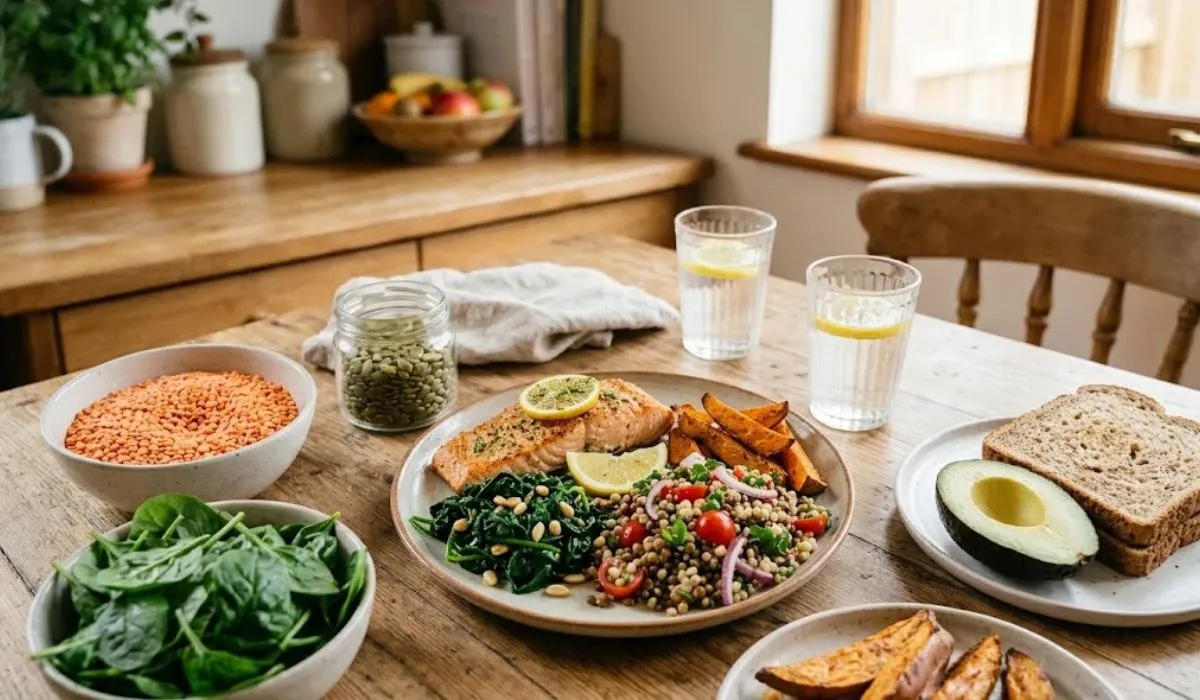
eat red meat, chicken, eggs, lentils, chickpeas, spinach, tofu, or fortified cereal most days, and have something with vitamin C alongside. The NIH says you need about 27 mg of iron a day while pregnant, which is a big jump from before.
Table of Contents
Why iron suddenly matters so much
Somewhere around the second trimester, plenty of women notice they’re out of breath on the stairs or flat by mid-afternoon. Sleep doesn’t fix it. Often it’s iron.
Your body makes a lot more blood during pregnancy, close to 50% more, and iron is what red blood cells are built from. Those cells also carry oxygen to your baby. When there isn’t enough, you can end up with anemia, and the CDC links that to early birth and smaller babies. So it’s worth getting ahead of, and it’s a big part of good prenatal nutrition.
Iron-rich foods for pregnant women, and what they give you
Meat first, since it’s the easiest for your body to use. Beef, lamb, and chicken have heme iron, which you absorb well. A piece about the size of your palm gives roughly 2 to 3 mg. An egg adds around 1 mg, so breakfast helps a little.
No meat? Or meat just sounds awful right now, which happens a lot with morning sickness? Lentils are a great pick, about 3 mg in half a cup cooked. Cooked spinach is close to that. Chickpeas, kidney beans, tofu, pumpkin seeds, and dried apricots all chip in too. Fortified cereal can have up to 18 mg a bowl, but brands differ, so read the box.
Honestly, though, most women won’t reach 27 mg from food alone. ACOG suggests asking your doctor whether a prenatal vitamin or an iron supplement makes sense, and what dose fits you.
Getting more out of what you eat
Eating iron and absorbing iron aren’t the same thing. Plant iron is the pickier kind, and vitamin C helps it along. Lemon on your lentils, tomato with your eggs, an orange after cereal, a few strawberries. Easy.
Tea and coffee do the opposite. They get in the way of iron, so leave about an hour between your meal and your cup. Calcium does the same, so don’t take your calcium and iron supplements together.
For a rough idea of a day: oatmeal with strawberries, lentil soup with lemon, then chicken with spinach and peppers for dinner. Nothing fancy.
Slip-ups and small tips
A few things trip people up. Skipping food when you feel queasy is one, and even a handful of roasted chickpeas counts. Eating liver too often is another. It’s packed with iron, but the vitamin A is high and too much isn’t safe in pregnancy, so keep it occasional. And guessing about your levels is a mistake when a blood test takes a few minutes.
Small habits help too. Cook in a cast-iron pan if you have one, keep dried apricots in your bag, and if you’re vegetarian, put something with vitamin C on every plate.
FAQs
How much iron do I need during pregnancy?
bout 27 mg a day, according to the NIH. Your doctor may suggest more if you’re already low.
What are the signs of low iron?
Tiredness that won’t quit, pale skin, dizziness, shortness of breath, and a fast heartbeat. Only a blood test can tell you for sure.
Can I get enough iron from food alone?
Some women can. Many can’t, which is why prenatal vitamins are so common.
Does iron cause constipation?
Sometimes, yes. Water, oats, and fruit usually help.