

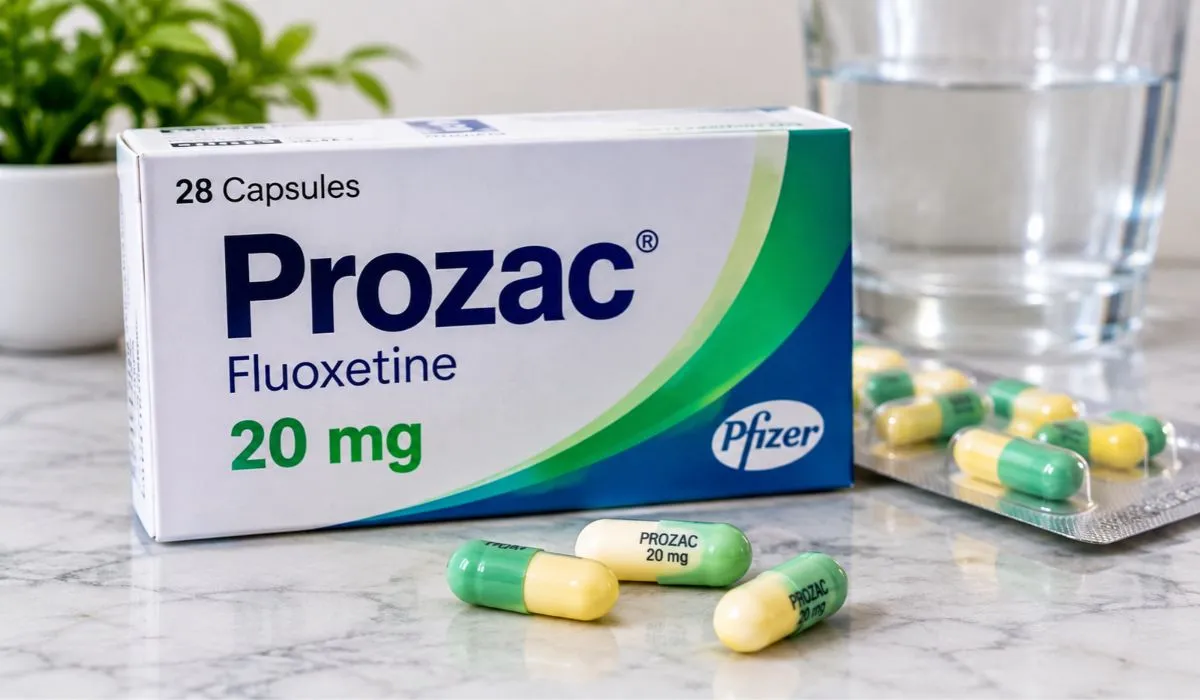
Prozac is just the brand name for fluoxetine, an antidepressant doctors prescribe mostly for depression, but also for OCD, panic disorder and bulimia. It sits in a group of medicines called SSRIs.
Table of Contents
Picture this. Your doctor says the word “Prozac,” you nod, you walk out, and about ten minutes later you realize you have a hundred questions and didn’t ask a single one. Happens all the time. So here’s the stuff that usually gets skipped.
What it actually does
Your brain passes messages around using chemicals, and serotonin is one of the big ones for mood and sleep. After it delivers a message, your nerve cells normally suck it back up. Prozac slows that down a bit, so serotonin hangs around longer. That’s basically it. Not magic, just a small adjustment to how the signal travels.
It’s been around since the FDA approved it in 1987, which is a long time. Doctors know it well, and that’s a big part of why it’s still so common.
Why people get prescribed it
The FDA lists major depression, obsessive-compulsive disorder, panic disorder and bulimia nervosa. There’s also a version called Sarafem for PMDD, which is like PMS turned up to eleven. Beyond that, your doctor may have their own reasons, and that’s a conversation worth having.
The first month is the weird part
Nobody tells you this, but for the first couple of weeks you might feel nothing good at all. Some people get a queasy stomach, a headache, or that wired, can’t-sleep feeling, and others get sleepy instead. Most of it fades. Real improvement usually takes four to six weeks, so if you’re on day five and feeling impatient, that’s normal.
Some side effects, like a lower sex drive, can hang around longer. Tell your doctor if that happens. They’ve heard it a thousand times and there are things to try.
Most people take it once a day, usually in the morning, as a capsule, tablet or liquid. Fluoxetine stays in your body longer than other antidepressants, so a missed dose isn’t a disaster. But please don’t quit just because you’re feeling better. That’s honestly the mistake I’d worry about most, because symptoms can creep back. Also mention everything else you take, even supplements, since St. John’s wort and some pain pills don’t mix well with it.
One serious thing: the FDA puts a boxed warning on antidepressants for people under 25, because suicidal thoughts can increase early on. If you or someone close to you feels worse or starts having dark thoughts, call the doctor straight away.
And if you’re pregnant, or planning to be
This is the question that keeps a lot of women up at night, so let’s just talk about it.
Is Prozac okay during pregnancy? Sometimes yes, sometimes no, and that’s why it’s a talk with your doctor rather than a Google answer. ACOG points out that untreated depression carries real risks for mom and baby too, so for plenty of women, staying on an SSRI is the safer path. Some studies show small increases in certain risks, and a few newborns have brief adjustment symptoms in the first days, like jitteriness or feeding trouble. Your doctor weighs all of that against your own history.
If you’re thinking about getting pregnant, bring it up early. If you’ve just seen a positive test while on Prozac, don’t stop that day. Call your provider first. Meanwhile, keep up the basics: prenatal nutrition, folic acid, and any pregnancy supplements your care team recommends. And remember mood matters after the baby comes. The CDC says many new moms deal with postpartum depression, and there’s help for that too.
A few quick ones
Is Prozac the same as fluoxetine?
Yes, one’s the brand, the other’s the generic.
Can you drink on it?
Better not. Alcohol can drag your mood down and make you drowsy.
Does it make you gain weight?
Depends on the person. Some lose a bit early on, some gain later.
Bottom line
Prozac has helped millions of people feel steadier, and it’s one of the most studied medicines out there. If you’re considering it, or you’re on it and expecting, take your questions to your doctor. This is general information, not medical advice.