
A few years ago I tried a strict meal plan I found online. Six small meals, measured portions, no bread, no rice. It lasted nine days. On the tenth I ate a plate of biryani standing at the kitchen counter and felt both guilty and completely satisfied.
That experience taught me more about nutrition than the plan did. A diet that only works when life is perfect is not a good diet. The habits that stick are the ones that fit around work, family, tiredness and real appetite.
Here is what I have learned about building a balanced daily diet without turning it into a second job.
Start with the plate, not the rules
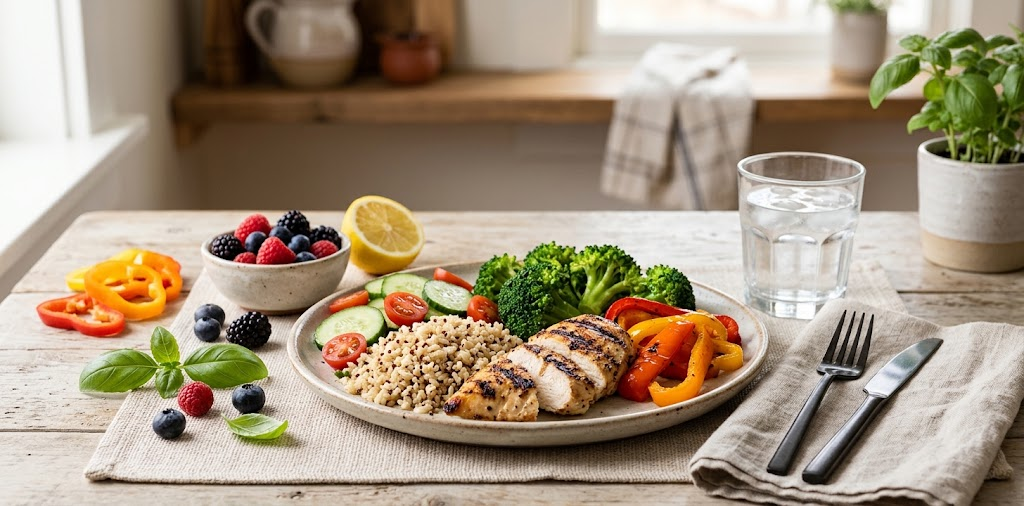
You don’t need to count anything to begin. Just look at your plate and ask what is on it. Ideally there is some vegetable or fruit, something with protein, and something starchy that gives you energy, preferably a whole grain.
No single food covers everything your body needs. That is why variety matters more than any “superfood”. Eating different colours is a simple trick because different coloured produce brings different vitamins and plant compounds. Spinach, carrots, tomatoes, berries, beetroot and peppers all contribute something different.
Variety also keeps things interesting. If you eat the same three meals on repeat, you’ll get bored, and boredom is usually when the takeaway menu comes out.
Breakfast: useful, but not a rule
Some people wake up hungry. Others cannot face food until ten. Both are normal. What matters is that when you do eat, the meal has some substance.
A few easy options:
- Oats cooked with milk, topped with fruit and a handful of nuts
- Wholemeal toast with an egg
- Plain yoghurt with berries and seeds
- A vegetable omelette with a chapati or slice of bread
What these share is protein plus fibre, which tends to keep you full longer than something sugary on its own. If breakfast isn’t your thing, don’t force it. Eat a proper meal when your appetite shows up.
Make fruit and vegetables the easy choice
Most of us know we should eat more of them. The problem is rarely knowledge. It’s convenience.
So make it easy. Keep a bowl of fruit where you can see it. Throw a handful of spinach into eggs or dal. Add grated carrot or chopped cucumber to whatever you’re already making. Serve a simple salad alongside lunch.
Fresh is great, but it isn’t the only option. Frozen vegetables are picked and frozen quickly and are often just as nutritious. Canned beans, tomatoes and sweetcorn are handy too. Just glance at the label and choose versions without lots of added salt or sugar.
Small additions beat big resolutions. One extra portion of vegetables a day is more realistic than promising to eat a giant salad every night.
Protein without overthinking it
Protein helps your body repair and maintain itself, and it makes meals more filling. Good sources include eggs, fish, chicken, lentils, chickpeas, beans, tofu, nuts, seeds, milk and yoghurt.
You don’t need to rely on one source. A rotation works well: dal or chana a few days a week, fish once or twice, eggs and chicken in between. If you eat mostly plant-based food, combining pulses with grains through the day covers a lot of ground.
How much you need depends on your age, activity level and health. A very active person and a desk worker won’t need the same amount, so treat any fixed number you see online as a rough guide only.
Don’t be afraid of carbs and fibre
Carbohydrates got a bad reputation they don’t fully deserve. The type matters more than the word itself. Whole grains such as oats, brown rice, barley and wholemeal roti come with fibre and other nutrients that refined options have lost.
Fibre keeps digestion moving and helps you feel full. You’ll also find it in beans, lentils, fruit, vegetables, nuts and seeds. If you currently eat very little fibre, raise it slowly and drink more water as you do. Jumping up too fast can leave you bloated and put you off.
You don’t need to cut carbs out. Aim for sensible portions and better-quality sources.
Water counts too
It’s easy to forget to drink until you have a headache. Needs vary with the weather, how active you are and what you eat, so there is no magic number that suits everyone. Hot climates and long days outdoors obviously mean more.
A bottle on your desk helps more than good intentions. Foods like cucumber, oranges, melon and soup also add to your fluid intake. If you have a medical condition or take medication that affects how much you should drink, ask your doctor.
Plan a little, and the week gets easier
You don’t need a colour-coded spreadsheet. Even ten minutes before the week starts makes a difference.
Pick a few flexible meals. Cook a pot of lentils or chickpeas, boil some eggs, wash and chop vegetables, make extra rice or another grain. Then mix and match through the week.
Roasted vegetables from dinner can go into a wrap or lunch bowl tomorrow. Leftover chicken or tofu can go into a salad or soup. A basic shopping list also cuts down on impulse buying and wasted food.
Perfection is not the goal. The goal is to make the healthy option the one that takes the least effort when you’re tired.
Your needs change over time
Nobody eats the same way at 20 and at 50, and nobody’s needs match exactly. Age, activity, health conditions and life stage all play a part.
Pregnancy is a good example. During this time the body needs enough nutrients to support the mother’s health and the baby’s development. Folate is especially important before conception and in the early weeks because it supports the development of the baby’s neural tube. Health authorities generally recommend 400 micrograms of folic acid daily for anyone who could become pregnant, alongside folate-rich foods, unless a doctor advises a different amount.
If you are pregnant or planning to be, talk to a doctor or qualified health professional about supplements and your personal needs. Supplements support a varied diet, they don’t replace it, and higher doses are not right for everyone.
Build habits you can actually keep
The best eating pattern is the one you can follow on a bad Tuesday, not just a good Sunday.
Choose one or two changes to start with. Add vegetables to dinner. Swap some white rice or bread for wholegrain. Prepare a healthy snack before a busy workday. When those feel normal, add another.
And yes, you can still enjoy the foods you love. One dessert or one plate of biryani won’t undo anything. What you eat most of the time matters far more than what you eat once in a while.
If you’re looking for more everyday food ideas, healthy eating tips and practical nutrition advice, take a look at Pravi Celer.
The bottom line
A balanced diet is not built on extreme rules or quick fixes. It comes from lots of ordinary choices repeated over time: a variety of vegetables and fruit, some protein at most meals, whole grains, enough water, and a bit of planning.
If you have specific health concerns, a medical condition, or you’re planning a pregnancy, get personalised advice from a qualified professional instead of relying on general articles, including this one.
 Emma Gill
 Alona Smith