

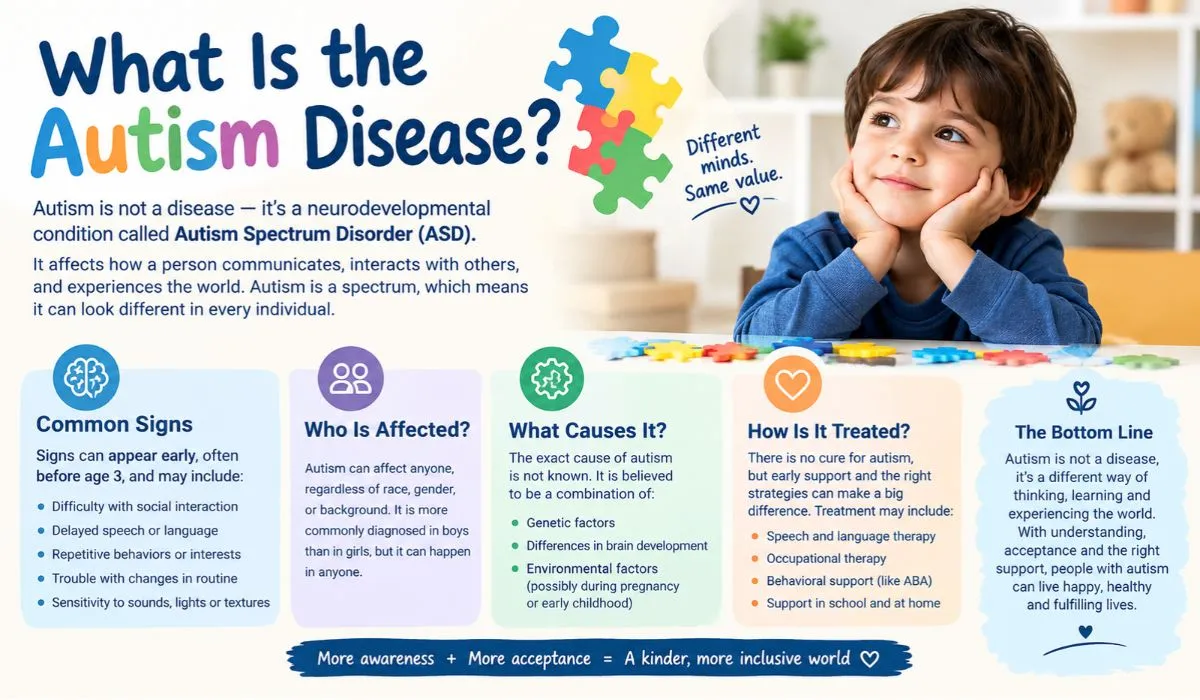
Let me say the important thing first. Autism isn’t a disease. It’s a developmental condition, which just means a child’s brain grows and works in its own way. It affects how they talk, how they play, and how they handle noise, change and people. Nobody catches it from anyone, and nothing a parent does in the kitchen or the nursery causes it.
Table of Contents
I know a lot of people search “autism disease,” so you’re in good company. The word feels scary, and the truth is a lot gentler.
What autism looks like at home
Doctors call it autism spectrum disorder, or ASD. The CDC says signs usually show up before age three, though some families only notice later.
Say you have a two-year-old who ignores you when you call her name, even though her hearing is fine. She lines up her spoons on the floor, and if you move one she screams. She’d rather watch the ceiling fan than your face. Or say you have a six-year-old who knows every car brand there is but goes silent at a family gathering and hides behind the sofa. Different kids, same diagnosis. That’s what “spectrum” means. Some children need a lot of daily help, and some need very little.
One sign by itself tells you nothing, by the way. Plenty of toddlers line things up. It’s the pattern over time that doctors pay attention to.
Why it happens, and why it isn’t your fault
If you’re pregnant or you’ve just had a baby, this part matters. Researchers don’t have one clear cause. Genes seem to play the biggest role, and the NIH also mentions things like certain genetic conditions and older parental age as being linked to a higher chance. “Linked” is the key word there. It doesn’t mean guaranteed.
What it does not come from is stress, a missed prenatal vitamin or something you ate. And the WHO and CDC are both very clear after years of research that vaccines don’t cause autism. Good prenatal nutrition and folic acid are still worth it for your baby’s brain development overall. Just don’t take on guilt that was never yours.
How doctors figure it out
There’s no blood test and no scan. A pediatrician or child development specialist watches your child, asks you loads of questions and looks at how they play and communicate. The American Academy of Pediatrics suggests routine autism screening at 18 and 24 months. If you’re worried before that, ask anyway. Waiting and hoping they’ll grow out of it usually just costs time.
Early support, like speech therapy or play-based therapy, really does help kids and parents day to day. A small tip from other parents: write down what you notice, with dates, and bring that note to the appointment. It makes the visit so much easier, because nobody remembers details when they’re nervous.
And try not to compare your child with the cousin who talked at ten months. It doesn’t help, and it hurts.
Quick questions parents ask
Is it a mental illness?
No. It’s about how the brain develops, not an illness.
Can it be cured?
No cure exists, but with the right support children learn, grow and often thrive.
Can it be found during pregnancy?
Not yet. Signs tend to appear between 12 and 24 months.
Do adults have it too?
Yes, and many women only learn they’re autistic well into adulthood.
Is it contagious?
Not even a little.
One last thing
Autism isn’t something to be afraid of. It’s a different way of experiencing the world, and children who feel understood usually do better. If something keeps nagging at you, call your pediatrician. That’s always a good first step.