

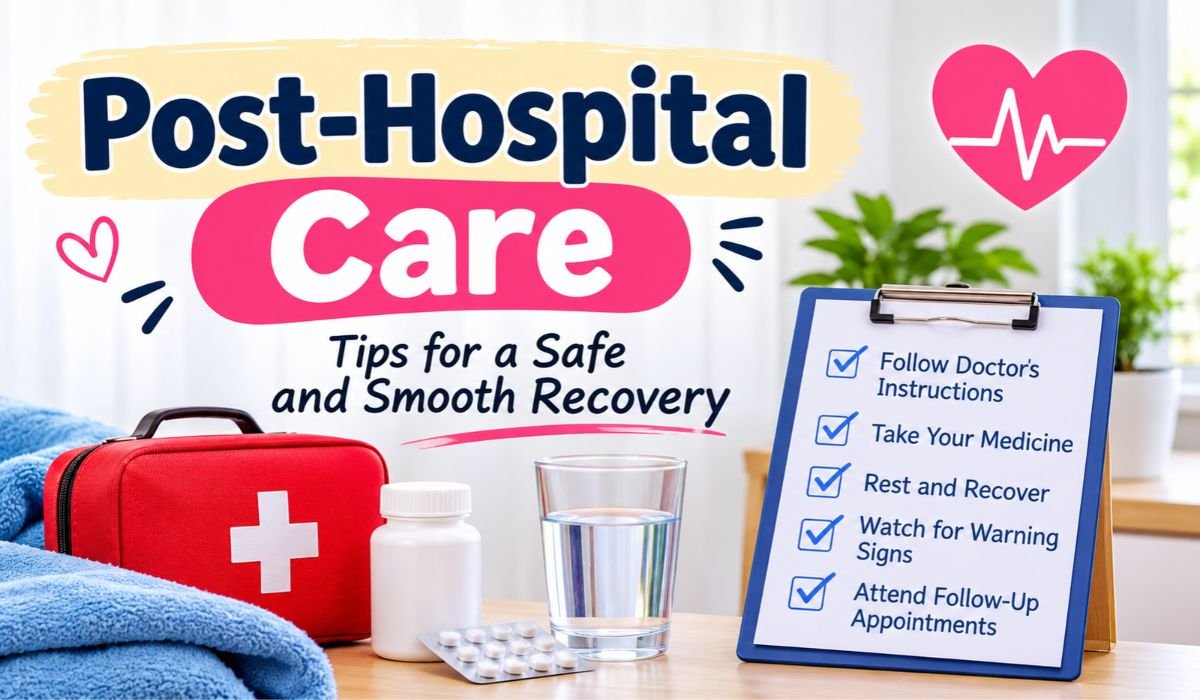
Post-hospital care means looking after yourself once you’re discharged: resting, eating properly, taking your medicines on time, watching for warning signs, and going to your follow-up visit. After a delivery, it’s the start of postpartum recovery, and it usually takes about six weeks or more.
Table of Contents
Leaving the hospital feels like the hard part is over. Then you get home, the baby cries at 3 a.m., your stitches pull, and nobody’s around to press the call button. That’s normal. Almost everyone feels a bit lost in the first few days.
Start with rest, even if it feels impossible. You’ve heard “sleep when the baby sleeps” a hundred times and probably rolled your eyes. Fine. But if sleeping isn’t happening, just lie down. Feet up, phone away. Your body has been through a lot, and the laundry can wait. If you had a C-section, avoid lifting anything heavier than the baby for a while, and press a small pillow over the cut when you cough or laugh. It looks funny and works well.
Food is the next big thing, and it gets forgotten. Prenatal nutrition doesn’t end at delivery. Your body is repairing itself, and if you’re breastfeeding, it’s also making milk, which burns a surprising amount of energy. Warm, plain meals are enough. A bowl of lentils or dal, an egg or two, some yogurt, a banana, whatever you can actually face eating. Iron matters if you bled a lot during birth, so spinach, beans, and red meat are worth including. Salmon or sardines add DHA. Drink water all day, because constipation after birth is common and no fun.
Most doctors also want you to keep taking your prenatal vitamins. ACOG notes that many women continue them while breastfeeding, but ask your own provider, since your needs depend on how the birth went. And if you were sent home with iron or folic acid tablets, take them as told. If you miss one, don’t double up the next day.
Now the part nobody enjoys reading. The CDC lists a few symptoms that need quick medical help after birth. Call your doctor or go to the emergency room if you soak a pad in an hour, pass big clots, run a fever of 100.4°F (38°C) or more, get a headache that won’t ease or blurry vision, feel chest pain or struggle to breathe, or notice one leg that’s swollen, sore, and warm. Redness or pus near a stitch counts too. You can always call and be told it’s nothing. That’s a good phone call.
Your head needs care as well. Crying for no reason in the first week or two is really common. But if the low mood stays, or you feel on edge all day, or you can’t enjoy anything, tell someone you trust and tell your doctor. Postpartum depression is treatable, and the WHO treats maternal mental health as a core part of postnatal care.
A few slip-ups come up again and again. Skipping the follow-up checkup is the biggest. It’s where small problems get caught early. Going back to exercise too fast is another, along with brushing off pain as “probably normal” and eating too little while nursing. You need more food now, not less.
One small trick before you leave the hospital: take a photo of your discharge papers, or jot down your medicine times. By tomorrow you’ll have forgotten half of what the nurse said. Keep your doctor’s number somewhere you can find it fast, and when someone offers to bring dinner, say yes.
Frequently Asked Questions
How long does post-hospital care last after giving birth?
About six weeks to feel mostly recovered after a vaginal birth, often longer after a C-section. Some women need a few months to feel like themselves.
Should I keep taking prenatal vitamins after delivery?
Often yes, especially while breastfeeding. Check with your doctor first.
When can I start exercising again?
Short, easy walks are usually fine early on. Wait for your doctor’s okay before anything harder.
Which foods help healing after birth?
Protein, iron-rich foods, fiber, healthy fats like fish and nuts, and plenty of fluids.
When should I call my doctor after leaving the hospital?
If you have a fever, heavy bleeding, severe pain, or you just feel something is wrong.