

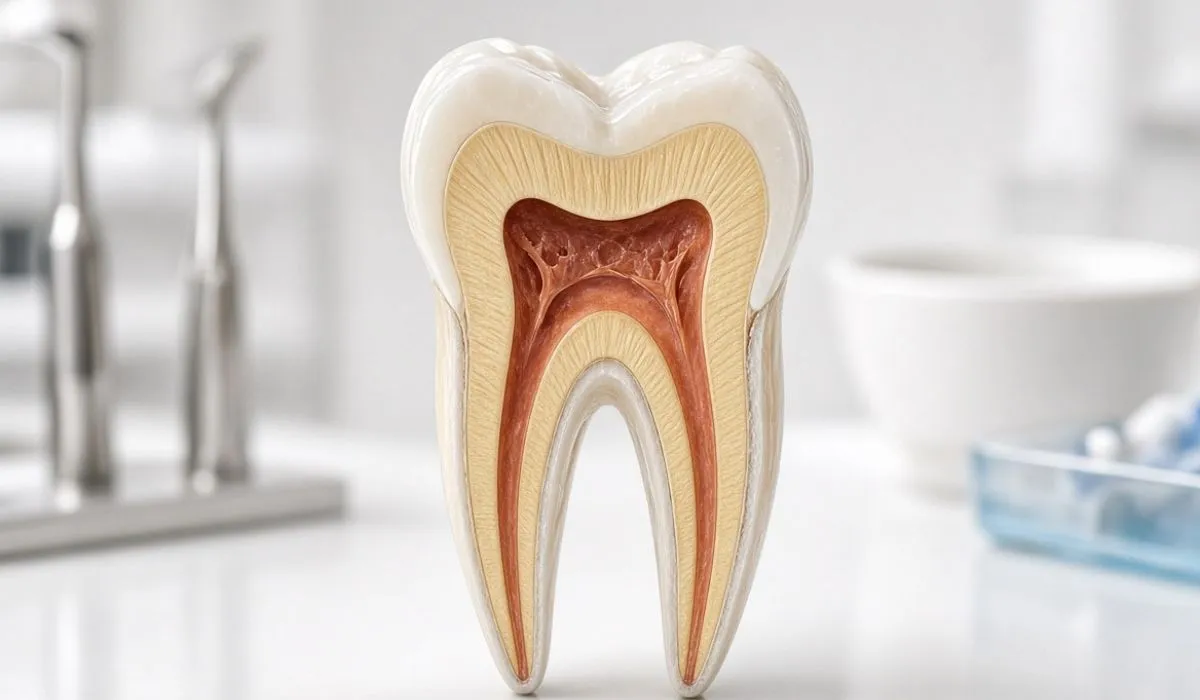
Root filling, which many people call a root canal, is a treatment where the dentist takes out the damaged or infected nerve tissue inside a tooth, cleans the empty space, and seals it up. The point is simple: you keep your own tooth.
Table of Contents
My friend Sana put hers off for almost two months. She kept telling everyone it was “just a sensitive tooth.” Then one night she was sitting on the kitchen floor at 2 a.m. with her cheek pressed against the cold fridge door, and she finally booked the appointment. I think most root filling stories start somewhere close to that.
So what’s going on in there? Every tooth has a soft middle called the pulp, and it’s packed with nerves and tiny blood vessels. When decay gets deep, or a tooth cracks, bacteria slip in and the pulp gets infected. It swells, it hurts, and it can’t fix itself. If you wait too long, the infection can move down into the bone and form an abscess, and that’s when faces swell up and people end up in urgent care.
The treatment itself is less dramatic than the build-up. You get numbed first, properly numbed, so mostly you feel pressure and hear some buzzing. The dentist opens the top of the tooth, cleans out the pulp from the thin canals with tiny files, rinses everything, and packs the space with a rubber-like material. Some dentists finish in one visit, others split it into two. After that the tooth usually gets a crown, especially if it’s a back tooth, because a tooth without its pulp can turn a bit brittle over time.
Afterwards it’s normal to feel tender for a few days. Chewing on that side feels odd. A pharmacist or your dentist can tell you what pain relief suits you, and that matters more than people think if you’re pregnant, because not every painkiller on the shelf is a good idea then.
Which brings me to something a lot of moms worry about. Can you actually have a root filling while pregnant? In most cases, yes. ACOG and the American Dental Association both say that dental care is safe during pregnancy, and an infected tooth is a bigger risk to maternal health than the treatment is. Most dentists like to work in the second trimester, when you can lie back without feeling awful and the nausea has usually calmed down. Just tell them you’re pregnant before they start. If you need an X-ray, a lead apron and thyroid collar are standard, and dental X-rays are considered low risk.
It also helps to look after your teeth from the inside. Calcium, vitamin D and enough folic acid all feed into good prenatal nutrition, and your teeth get a share of that too. Pregnancy hormones can make your gums puffy and bleed more easily, so don’t skip brushing and flossing just because you’re tired.
A few things I’d say to anyone about to have this done. Go easy on the treated tooth until the final filling or crown is in, since the temporary one is fragile. Don’t take it as good news if the pain suddenly vanishes before your appointment, because that can mean the nerve has died and the infection is still sitting there. And if you’re handed antibiotics, finish them.
FAQs
Does a root filling hurt?
Not much. The numbing works, so most people describe it as long and boring rather than painful.
Is a root filling the same as a root canal?
Yes. Root filling is the usual term in the UK, root canal is more common in the US.
How long does it last?
Often for many years, sometimes for life, if the tooth gets a good crown and you keep cleaning it well.
Is it safe in pregnancy?
Usually, yes. Check with your dentist and your OB-GYN or midwife first.
What if I just leave it?
The infection tends to spread, and you can end up with an abscess or lose the tooth anyway.