

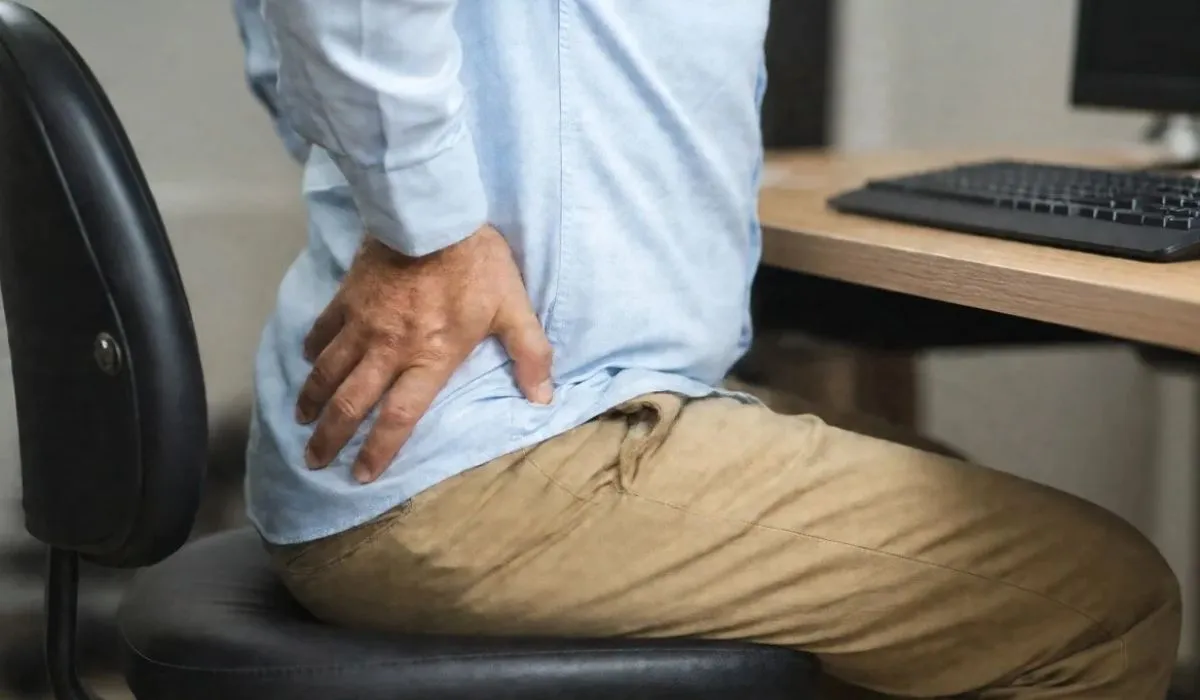
Hip discomfort while sitting mostly comes from tight hip muscles, a tipped pelvis, or a chair that doesn’t back you up. In pregnancy it’s worse, since your joints are looser and your belly pulls you forward. Changing how you sit usually helps more than you’d expect.
Table of Contents
Say you’ve been on the couch for twenty minutes. Feet up, finally resting. And then your hip starts to throb, a deep ache that makes you shift left, then right, and nothing fixes it.
That’s really common. Sitting keeps your hips bent for ages, so the muscles in front get short and cranky while the ones behind just stop working. Stand up after an hour and everything feels rusty.
When you’re pregnant, your body also makes relaxin, a hormone that loosens the ligaments in your pelvis so there’s room for the baby. Loose joints take more strain from an ordinary chair. Then the belly gets heavier and tips your pelvis forward, and that’s why the second and third trimester are when most women notice it. ACOG counts hip, pelvic and low back aches among the usual pregnancy complaints, so you’re not imagining it.
Now, how do you tell if it’s normal? Normal is dull and stiff, and it fades once you walk around. Not normal is sharp or burning pain, pain that shoots down your leg, or numbness. Swelling in just one leg is another red flag. NIH guidance says sudden pain with swelling in one leg needs quick medical care because it could be a blood clot. Fever or bleeding along with the ache? Phone your doctor or midwife that same day.
Let’s talk fixes, starting with the chair. Put both feet flat on the floor, and if they don’t reach, use a small stool or even a stack of books. Knees should sit level with your hips or a little lower. Roll up a towel and tuck it behind your lower back. Please skip those deep squishy sofas, because they roll your pelvis backward and your hips take the strain.
Get up more often than feels necessary, roughly every thirty minutes. You don’t need a workout. Grab water, wander to the kitchen, shake out your arms. The CDC backs regular light movement during pregnancy, and your hips seem to agree.
For a quick stretch, sit near the front edge of a chair, rest one ankle on the opposite knee, and lean forward a bit. You should feel a pull in the buttock, not a pinch. Count to twenty and switch sides. Pelvic tilts on your hands and knees are good too, and they feel nicer than they sound.
A warm compress on the sore spot can take the edge off. Just warm, never hot. At night, a pillow between your knees keeps your hips stacked while you sleep on your side, which matters because a rough night makes the next day’s sitting miserable.
Food has a small role. Calcium, magnesium and vitamin D help your muscles and bones, and plenty of prenatal vitamins cover part of that. I’d ask your provider what’s right for you before adding anything, rather than guessing at amounts.
A few habits make it worse. Crossing your legs for hours twists the pelvis. Sitting on a thick wallet or a phone does the same thing. Powering through the pain “just to finish this one thing” costs you the whole evening, when five minutes of walking would’ve fixed it. And skipping stretches because they feel too tiny to count? They count.
A few quick questions
Is this normal in pregnancy?
Yes, very. Relaxin loosens the joints and the belly shifts your balance.
What’s the best way to sit?
Feet flat, knees level with or just below your hips, back supported, and change position often.
Does a birthing ball help?
For many women, yes, because it eases pressure on the hips. Check with your provider first if you’ve had complications.
When do I call someone?
If the pain is sharp, hits one side with swelling, or comes with fever, bleeding or numbness.
Does it go away after the baby?
Usually within a few weeks or months, once the ligaments tighten back up.