

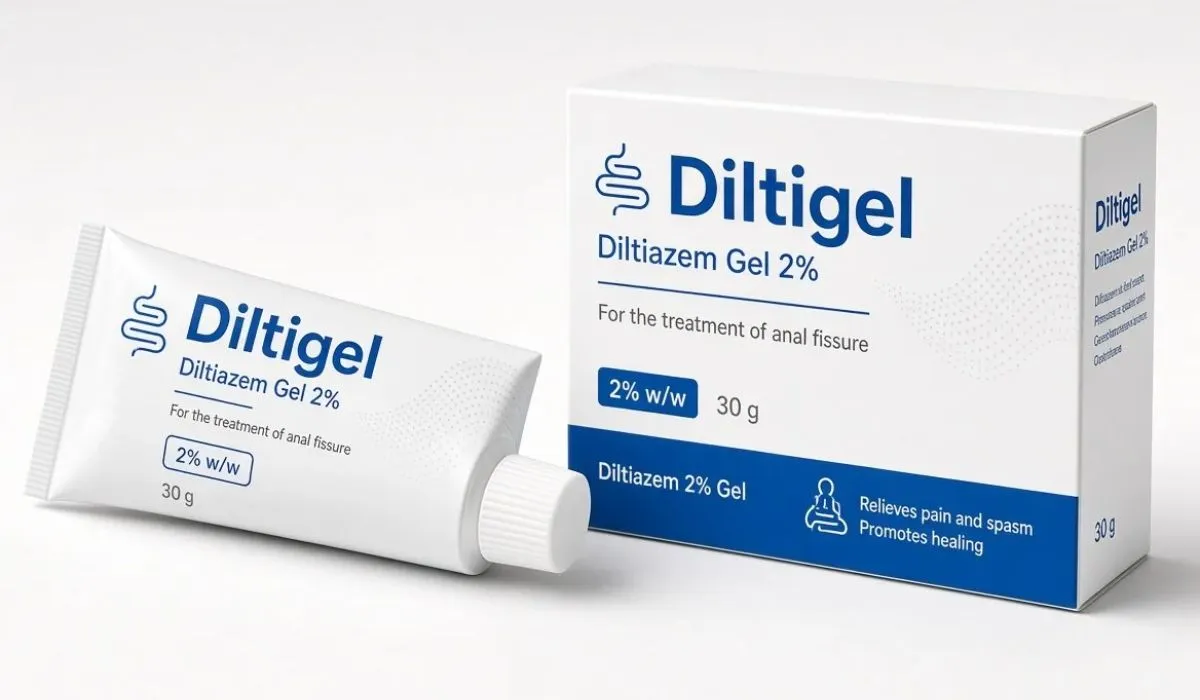
Diltigel is diltiazem 2% gel, a prescription gel for anal fissures. In pregnancy, ask your doctor before you touch it. Some pharmacy listings say it’s unsafe, and others only say the data is thin.
Table of Contents
Let me paint the picture, because if you’re reading this you probably already know it. You’re deep into the second or third trimester. You sit down on the toilet, and it hurts like nothing else. Then comes the blood on the paper, bright red, and a small wave of panic.
Most of the time it’s a fissure, which is just a tiny tear in the skin near the anus. Pregnancy sets you up for it. Progesterone slows your gut down, and the iron in your prenatal vitamin can make things harder still. Hard stool, small tear, more pain, more clenching, and the tear never gets a chance to heal.
That clenching is what diltigel goes after. The active ingredient, diltiazem, relaxes the ring of muscle around the anus. Pressure drops, blood flow improves, and the tear can finally close. Doctors usually reach for it when a fissure has dragged on for weeks. Treatment often runs about eight weeks, sometimes a bit longer.
Now the big question. Is it okay while pregnant?
Honestly, nobody gives a clean yes. One pharmacy page I read says there’s limited safety information and tells you to talk to your doctor. Another says it isn’t recommended because animal studies showed a risk to the baby. A third just calls it unsafe. Some also add that a doctor may still prescribe it if the benefit is bigger than the risk.
It’s a gel on the skin, not a tablet, so you might think it’s harmless. Maybe. But I wouldn’t gamble on “maybe” when it’s your baby. Call your OB-GYN or midwife and ask. It’s a quick question for them.
Meanwhile, the boring stuff really does work, and a lot of fissures in pregnancy heal once the constipation eases. Groups like ACOG and NIH say much the same thing: drink more water, eat more fiber, move a little every day. In real life that’s oats with chia seeds in the morning, a couple of prunes or a ripe pear in the afternoon, and a short walk after dinner. A warm sitz bath for ten minutes takes the sting out too.
If you suspect your prenatal vitamin is part of the problem, don’t just quit it. Folic acid, iron, and DHA for pregnancy matter. Tell your provider and ask whether a different brand, a different time of day, or a stool softener could help. We’ve covered that in our guide to the best stool softener for pregnancy.
If your doctor does prescribe the gel, the routine is simple. Put on a glove or finger cover, apply a small amount at the opening of the anus, then wash your hands. It’s for outside use unless you’re told otherwise. Side effects are usually mild, like a headache, a bit of dizziness, or some burning where you applied it. If you feel lightheaded, stand up slowly.
A few mistakes I’d steer you away from. Don’t borrow a leftover tube from your sister or a friend. Don’t stop the minute it feels better, because the tear may still be healing underneath. And if the bleeding is heavy, don’t wait. Call your provider that day.
Quick Answers
What is diltigel for?
Anal fissures. It relaxes the muscle so the tear can heal.
Can I use it while pregnant?
Only if your doctor says yes. The advice online isn’t consistent, and some listings say to avoid it.
How long does it take to work?
Expect weeks, not days. Eight weeks is a common course.
What can I do without medicine?
Fiber, water, soft stools, and warm baths. Ask about a pregnancy-safe stool softener.