
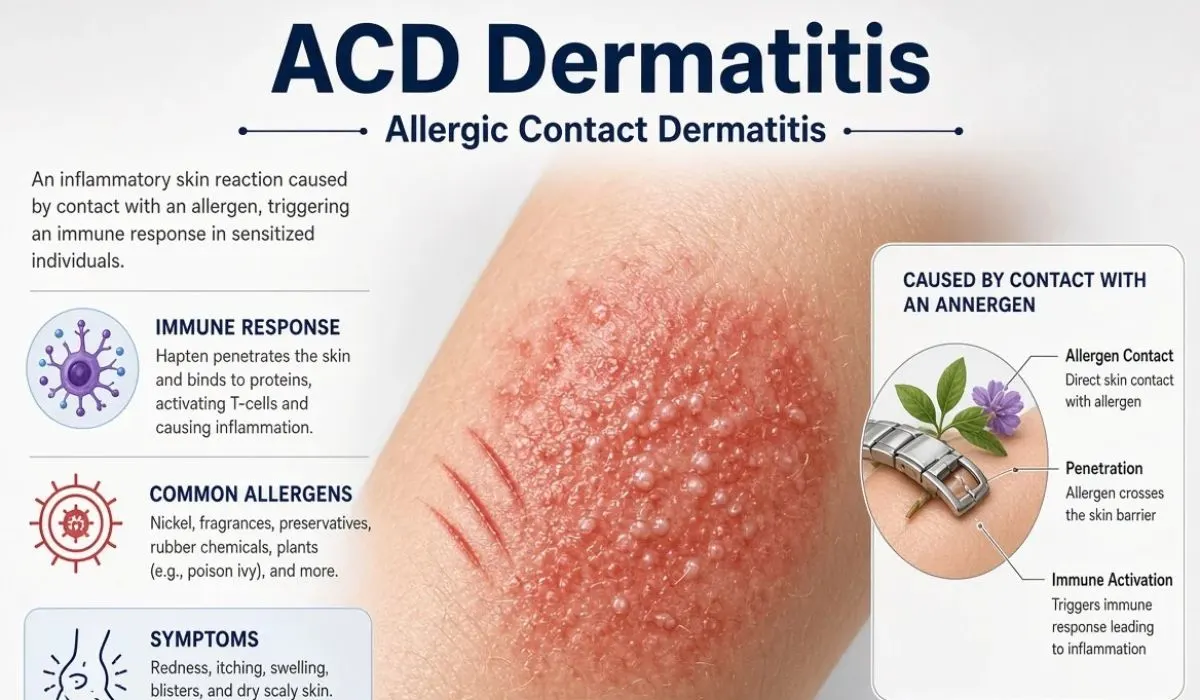
Allergic contact dermatitis, or ACD dermatitis, is the itchy red rash you get when your skin touches something it’s allergic to. It shows up within a day or two of contact and fades when you stop touching the trigger. Pregnancy makes it more likely.
Table of Contents
Imagine you’re twenty-two weeks along, sitting on the couch, and you realize you’ve been scratching your belly through the whole episode of whatever’s on. You look down. Red patches, little bumps, a rash with edges. Same lotion you’ve used for years, so it can’t be that. Except it can. Skin changes its mind in pregnancy, and it doesn’t send a memo first.
What’s happening under there
Your immune system decides something harmless, a fragrance or a speck of nickel, is a threat. So it reacts every time your skin meets it. The result: redness, itch, sometimes tiny blisters or dry, cracked patches.
Hormones and extra blood flow make skin touchier during pregnancy. ACOG says skin changes are common in pregnancy, but a rash that won’t stop itching is worth a call to your provider.
The usual suspects
Fragrance wins, by a mile. Then preservatives in wipes and creams, nickel (jean buttons, earrings), hair dye, latex, and laundry detergent. “Natural” belly oils too, which surprises people, since plant oils are a classic cause.
And here’s the weird part. The rash doesn’t always show up where the product went. Put on hand cream, rub your eyes, and your eyelids may be the ones that flare.
ACD or something else?
Pregnancy has its own rashes. PUPPP is one, and it usually starts in stretch marks. A contact rash tends to copy the shape of what touched you: a stripe from a waistband, a ring under a watch. A rash spreading everywhere with no obvious cause? Don’t wait it out. Get it looked at.
What to do about it
Stop the new product. If you can’t tell which one, stop all of them for a bit. Rinse with cool water, pat dry, use a plain fragrance-free moisturizer. A cool damp cloth on the itch helps a lot, and so do loose cotton clothes.
Skip steroid creams and antihistamines until your doctor or midwife okays them. The CDC advises checking with a provider before taking medicines in pregnancy.
Food isn’t a cure, but steady prenatal nutrition helps your skin heal. Protein, zinc, water and DHA for pregnancy all pitch in, and your regular prenatal vitamins cover most of that. New pregnancy supplements “for the rash” are a no until you’ve asked.
Easy mistakes
Scratching is the obvious one. It breaks skin and invites infection. Starting five new “gentle” products at once is another, because if it flares you’ll have no idea why. Add one thing at a time. And not reading labels. Look for “fragrance” or “parfum.”
When to call
Call if it’s spreading fast, oozing, really painful, or comes with a fever. Call too if a few days away from the trigger changes nothing. Patch testing with a dermatologist is possible, but your provider decides the timing during pregnancy.
FAQs
Can ACD dermatitis hurt my baby?
No. It’s a skin reaction and doesn’t pass to your baby. Mention it to your doctor anyway.
Can pregnancy cause new allergies?
Skin can get more sensitive, so you may react to things that never bothered you.
How long does it take to clear?
Usually one to three weeks after you stop touching the trigger. It varies.
Is hydrocortisone safe while pregnant?
Mild versions are often used. Ask your provider first.