

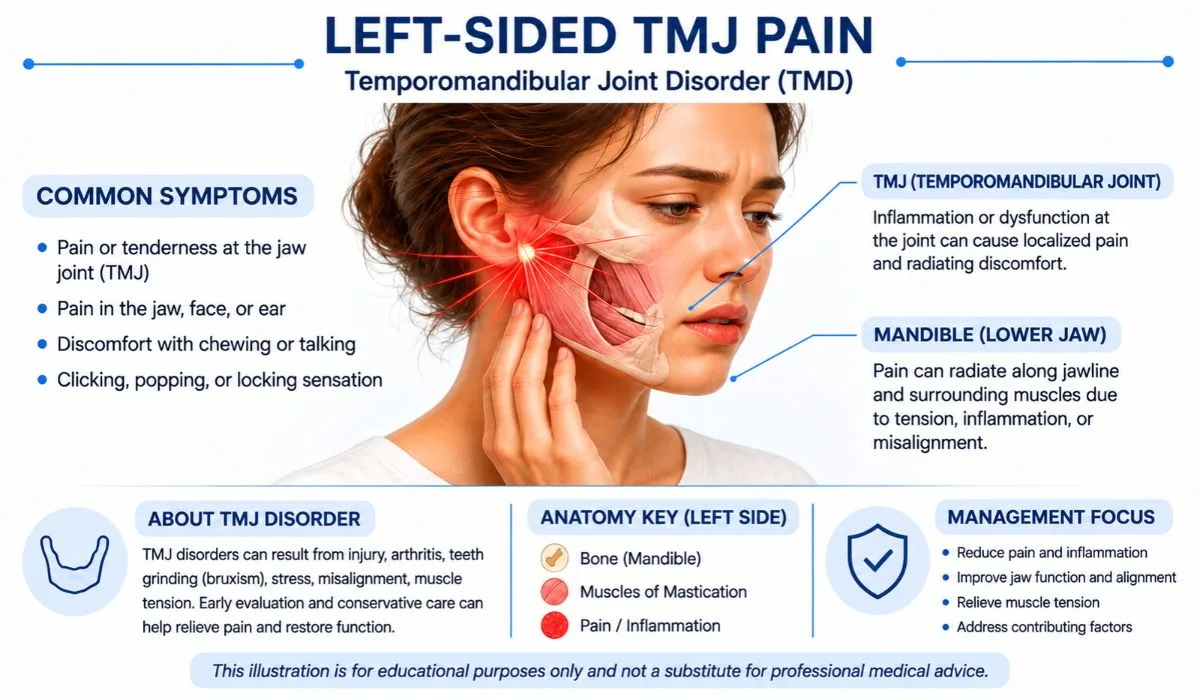
A sore left jaw is usually your jaw joint, your teeth, or a clenching habit. Sometimes, not often, it’s your heart. If the ache comes with chest pressure, trouble breathing, cold sweats or nausea, call emergency services now.
Table of Contents
That’s the short version. Here’s the rest.
Most of the time, it’s the joint
Put a finger just in front of your left ear and open your mouth. That little hinge you feel moving is the TMJ. It works all day, every day, and nobody thanks it. The NIH’s dental research institute says TMJ problems involve that joint plus the chewing muscles around it, and the soreness spreads easily, so people often think it’s an ear problem.
Stress doesn’t help. Lots of people clench their teeth while driving, answering emails, or sleeping, and they have no idea until the jaw complains. Chew mostly on one side because the other tooth is sensitive? Same story, that side gets overworked.
Or a tooth
Dental pain is a trickster. A cracked tooth or a cavity can ache along the whole jawline, even up near the ear, while the tooth itself barely hurts. Wisdom teeth do this a lot. So do sinus infections, which can leave a heavy, pressing feeling along the cheek and jaw. If you’ve also got a stuffy nose, think sinuses first.
Okay, now the heart part
I’d rather bring it up than skip it. The American Heart Association lists jaw pain among heart attack warning signs, since pain from the chest can spread outward, and the jaw is a common place for it to land. Women are more likely to get it without much chest pain, and that’s the version that gets missed.
So how do you tell the difference? Not perfectly, honestly. But jaw pain that changes when you press on it, chew, or yawn is almost always the jaw. A deep, heavy ache you can’t point to, especially one that shows up when you’re climbing stairs or walking fast, is different. Go get it checked. Same if you just can’t tell.
What to do at home
Be gentle with it for a few days. Soft food. No gum. A warm washcloth against the sore spot for ten minutes or so. Try this too: lips together, teeth apart, tongue resting on the roof of your mouth. It feels silly, but it stops the clenching. Pain relievers are okay if you follow the label. Pregnant? Ask your doctor or midwife before you take anything, even the usual stuff.
Still hurting after a week or two, see a dentist or doctor. Sooner if there’s swelling, a fever, or your jaw gets stuck.
If you’re expecting
Jaw pain in pregnancy is more common than you’d think. Bad sleep, hormones and worry all feed into clenching. Mostly harmless. But mention it at your next prenatal visit, particularly if it feels unlike your normal aches. Calcium and vitamin D matter for your teeth and bones too, so keep an eye on those.
A few quick ones
Can stress do this?
Yes, easily.
Does it matter that it’s the left side?
A little. Left-sided pain is still usually the jaw or a tooth, but it’s the side people watch for heart trouble, so pair it with other symptoms before you decide.
Why does it feel like my ear hurts?
Same neighborhood. The joint sits right beside the ear canal.
Could it just be a tooth?
Quite possibly, even if the tooth feels fine.