

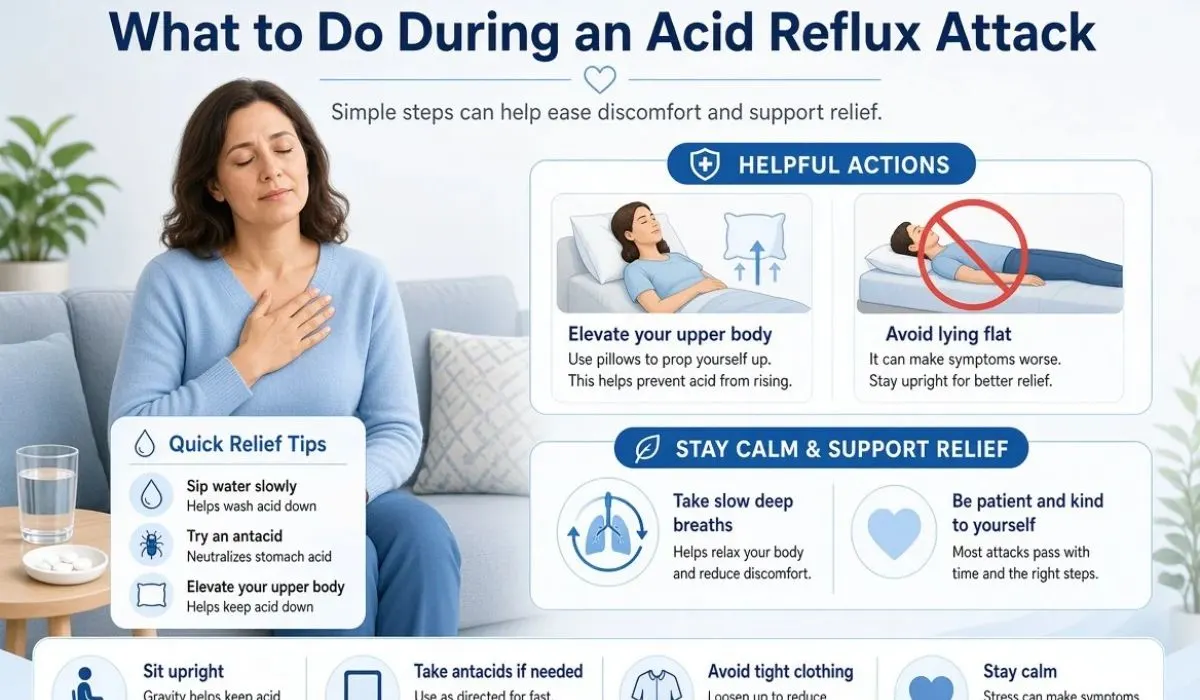
Sit up straight first. Loosen your waistband, sip a little water, and if the burning won’t let go, a Tums or any calcium antacid usually helps within a few minutes. That’s really the whole answer. The one exception: if your chest feels squeezed, you’re sweating, or the pain runs into your arm or jaw, skip all of this and call emergency services.
Table of Contents
It always seems to hit at the worst time. You’ve eaten, you’ve finally lain down, the house is quiet, and then something hot and sour starts climbing up behind your breastbone. Sometimes there’s a nasty taste in your mouth too. The first time, it’s honestly frightening. Most of the time, though, it’s just acid sneaking up where it shouldn’t be.
What to Do During an Acid Reflux Attack
So, sit up. And I mean actually up, not one more pillow shoved behind your head. Stay that way for twenty minutes or half an hour, because lying flat lets acid travel up easily. Then deal with whatever’s tight: jeans, a bra, a belt, even a stretchy waistband that’s digging in. Squeezing your stomach pushes things north. It’s the step most people skip.
Water comes next, but slowly. A big gulp fills your stomach and can make things worse, so a few sips will do. Some people chew sugar-free gum, which gets you making more saliva, and saliva is surprisingly good at rinsing acid back down.
Still burning? Take an antacid with calcium carbonate and read the label. If you’re pregnant, ask your doctor or midwife before you take anything. ACOG and other health experts generally see calcium antacids as fine in pregnancy, but your provider knows your situation better than a website does.
Why Reflux Shows Up Out of Nowhere
There’s a small muscle between your esophagus and your stomach, and mostly it stays shut. Now and then it loosens when it shouldn’t, and up comes the acid. Heavy dinners do it. So do fried food, coffee, chocolate, tomato sauce, and that late bowl of cereal.
Pregnancy makes everything worse. Hormones soften that muscle, and a growing baby leaves your stomach less room, which is why a lot of women get hit hardest in the second and third trimester. Iron in some prenatal vitamins can upset the stomach too. If you notice heartburn right after taking yours, mention it at your next appointment. Smaller, more frequent meals are one of the easiest prenatal nutrition changes you can make.
A Few Things That Backfire
Lying down right away is the big one. Milk feels soothing but often bounces back. Fizzy drinks add gas and pressure. And if you’re chewing antacids every single day, that’s a sign to call someone, not to buy a bigger bottle.
For next time, eat smaller meals, stop eating a couple of hours before bed, and raise the head of your bed a few inches with a wedge. Jot down what you ate before each flare-up. After a week or two the pattern usually jumps out at you. The NIH says reflux more than twice a week could be GERD, so that’s worth booking a visit for, and the CDC lists chest pain as a reason to get emergency help.
FAQ
How long does an acid reflux attack last?
Anywhere from a few minutes to a couple of hours. If it drags on or keeps coming back, see your doctor.
Can acid reflux feel like a heart attack?
It can, yes. If you’re not sure, or you have sweating, shortness of breath, or pain spreading to your arm or jaw, call emergency services.
Does water help?
Small sips can rinse acid out of your esophagus for a little while. It won’t cure anything, but it’s a decent first move.
Is acid reflux dangerous during pregnancy?
It’s very common and usually doesn’t harm the baby. Tell your provider if it’s severe or you can’t keep food down.