

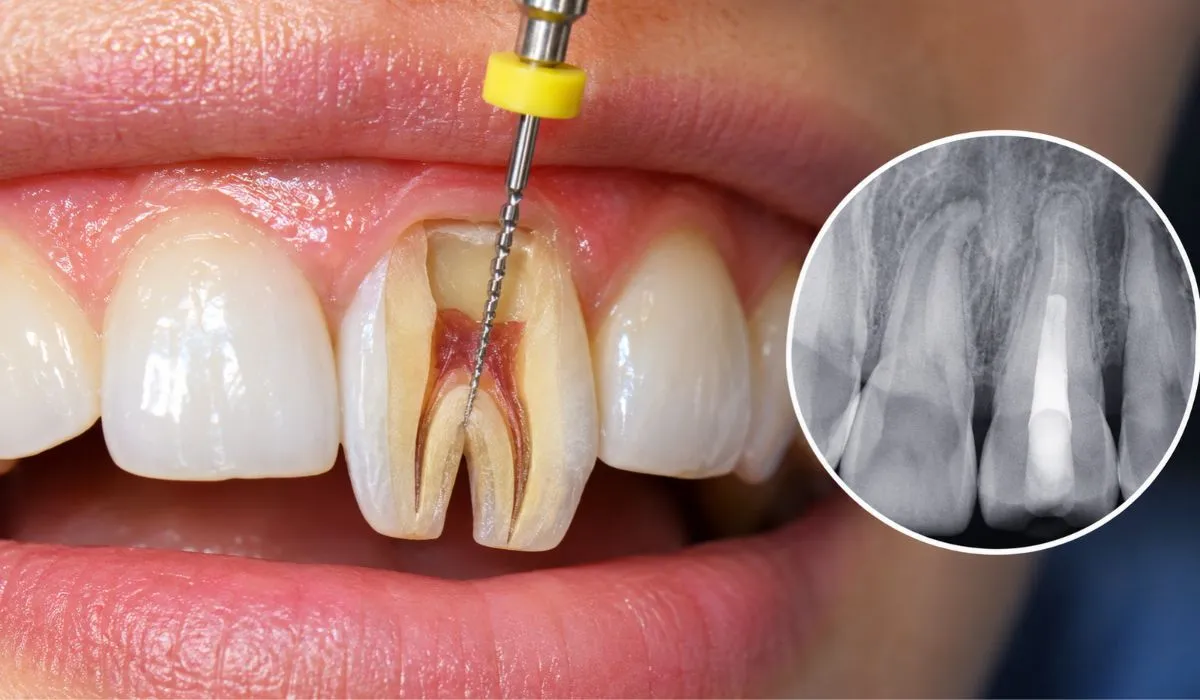
So your dentist said “root canal” and pointed at a front tooth. Here’s the short version: a root canal front tooth treatment pulls out the sick nerve inside the tooth, cleans it up, and seals it, so the tooth stays in your mouth instead of getting yanked. Usually there’s a crown afterwards. Done.
Table of Contents
I know, I know. You’re not really thinking about nerves right now, you’re thinking about your smile and whether anyone’s going to notice. Fair. Let’s go through it the way I’d explain it over tea.
Why it’s your front tooth, of all of them
Honestly it’s often something that happened ages ago. You slipped on a wet floor at twelve, or your brother’s elbow caught you, or a little crack formed and nobody looked at it. The nerve gets bruised, then slowly gives up. Sometimes with zero pain, which is the annoying part.
When it does show up, people usually describe a few things. A dull throb that gets worse when you lie down at night. Cold water that stings and keeps stinging. A tooth that’s turned a bit gray or yellow compared to the one next to it. A tiny bump on the gum, kind of like a pimple, that sometimes leaks. If you’ve got even one of those, book the appointment. Waiting just lets the infection spread toward the jawbone.
The appointment itself
Front teeth are about the easiest to treat, since they mostly have one canal. Think an hour, maybe a bit more.
You get an X-ray first. Then the numbing shot, which is honestly the worst bit, and it’s over in seconds. After that you lie there hearing a whining sound and feeling pressure but not pain. The dentist makes a small opening on the back of the tooth, so the front looks the same, scoops out the damaged pulp, cleans the canal with tiny files, flushes it, and fills it with gutta-percha, which is a rubbery material that seals it. A temporary filling goes over the hole.
The American Association of Endodontists describes the feeling as similar to getting a normal filling. Plenty of people head back to work afterward, though I’d take the afternoon if you can, because the numbness is weird.
About the crown, since people skip it
After the nerve is gone, the tooth gets drier and more brittle, and it can darken over time. A crown protects it. For a front tooth you’d normally pick porcelain, which can be matched to the shade of your other teeth pretty closely. If it’s already stained, ask your dentist about internal whitening first. It’s a thing, and it works.
Don’t skip the crown just because the tooth feels okay. I’ve heard of people snapping a treated tooth on a piece of toast.
Those first few days
Some soreness, yeah. An over-the-counter painkiller usually covers it if your dentist says it’s fine for you. Baby that tooth till the crown is on: no biting apples, no ice, no tearing bread with your front teeth. Keep brushing and flossing normally. Ring the dentist if the swelling gets bigger, you spike a fever, or the pain is getting worse after three days rather than easing off.
Questions people keep asking
Does a root canal on a front tooth hurt?
Mostly no. You’ll feel the needle and then pressure. Afterwards it can ache a little for a couple days.
How long will it last?
Decades, if there’s a good crown and you look after your teeth. Some last a lifetime.
Will it stay gray?
No need. A porcelain crown or whitening fixes it.
Why not just pull it?
Because your own tooth keeps your jawbone healthy, and replacing it with a bridge or implant costs more and takes longer. The CDC also lists keeping your natural teeth as part of good oral health.
Can I work the next day?
Most people do. Same day is fine too if you’re feeling up to it.