

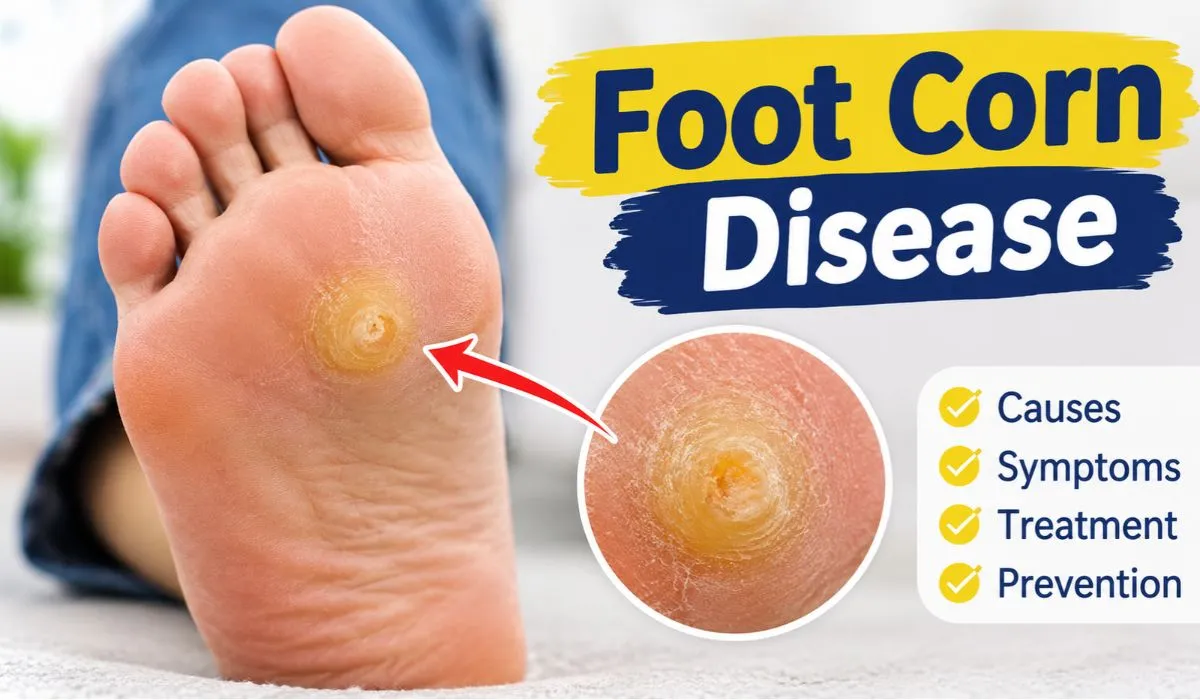
A foot corn isn’t a disease. It’s a hard little lump of skin that grows where your shoe keeps rubbing or pressing. It isn’t contagious, and it usually fades once the pressure stops.
Table of Contents
A friend texted me last week, a bit panicked. “I think I’ve got some kind of foot disease,” she wrote. “There’s a hard bump on my little toe and it hurts every time I put my shoes on.” I asked her to send a photo. It was a corn. Totally normal, and honestly one of the most common foot complaints out there.
So what is a corn, exactly?
Think of it as your skin’s way of defending itself. When a spot gets rubbed day after day, the skin piles on extra layers to protect what’s underneath. Eventually those layers become a small, firm, round patch, sometimes with a harder core in the middle. Press on it and it can feel sore or sharp.
You’ll usually find corns on the tops or sides of toes, and sometimes tucked between them. A callus is similar but flatter and wider, and it usually doesn’t hurt as much.
Where do they come from?
Mostly shoes. Too tight, and your toes get squashed. Too loose, and your foot slides around all day. High heels push your weight onto the front of your foot, which is a recipe for trouble. Going without socks doesn’t help either.
Some people are just more likely to get them because of their foot shape. Bunions and hammertoes both create spots where bone presses against a shoe.
And if you’re pregnant, this matters even more than you’d think. Feet swell, your posture changes, and shoes that fit fine a few months ago can suddenly pinch. Comfortable footwear is a small but real part of looking after your maternal health.
What you can try at home
Fix the shoe problem first, otherwise the corn will just keep coming back. Pick something roomier, add soft socks, and let your feet rest when you can.
After that, soak your foot in warm water for around ten minutes to soften things up. Then rub the corn gently with a pumice stone. Gently is the key word here. You’re thinning it out slowly, not trying to wipe it off in one go. Put on some moisturizer afterward, because dry skin gets harder, faster.
A little cushioned pad over the spot can take the pressure off while it heals. You’ll also see medicated corn pads in the pharmacy. Those usually contain salicylic acid, which can irritate the skin around the corn. If you’re expecting, check with your doctor or pharmacist before using one.
One thing I’d really say no to is cutting it off. The American Academy of Dermatology advises against trimming corns yourself, since it can lead to infection. I know it’s tempting, but just leave the razor alone.
When it’s time to get it checked
Most corns are harmless. But if yours bleeds, turns red, leaks fluid, or hurts so much that you’re limping, see a doctor or podiatrist. The NHS gives similar advice. People with diabetes, poor circulation, or numb feet should get any foot problem looked at early, even a tiny one, because small wounds can turn serious fast.
Keeping them from coming back
Buy shoes in the afternoon when your feet are at their biggest, and leave a little wiggle room at the toes. Keep your nails trimmed and your feet moisturized. Eating well helps your skin too, and that includes enough protein, zinc, and vitamin-rich foods, especially during pregnancy when your body is working overtime.
Quick answers
Is a foot corn contagious?
No. It comes from pressure and friction, not germs.
Will it go away by itself?
Often, yes, if the pressure stops. It can take a few weeks, and it may return if you go back to the same shoes.
How can I tell a corn from a wart?
A corn has a smooth, hard center. A wart comes from a virus and can show tiny dark dots. Not sure? Have someone take a look.
Are corns more common in pregnancy?
They can be. Swollen feet and shifting weight put new pressure on your skin.