

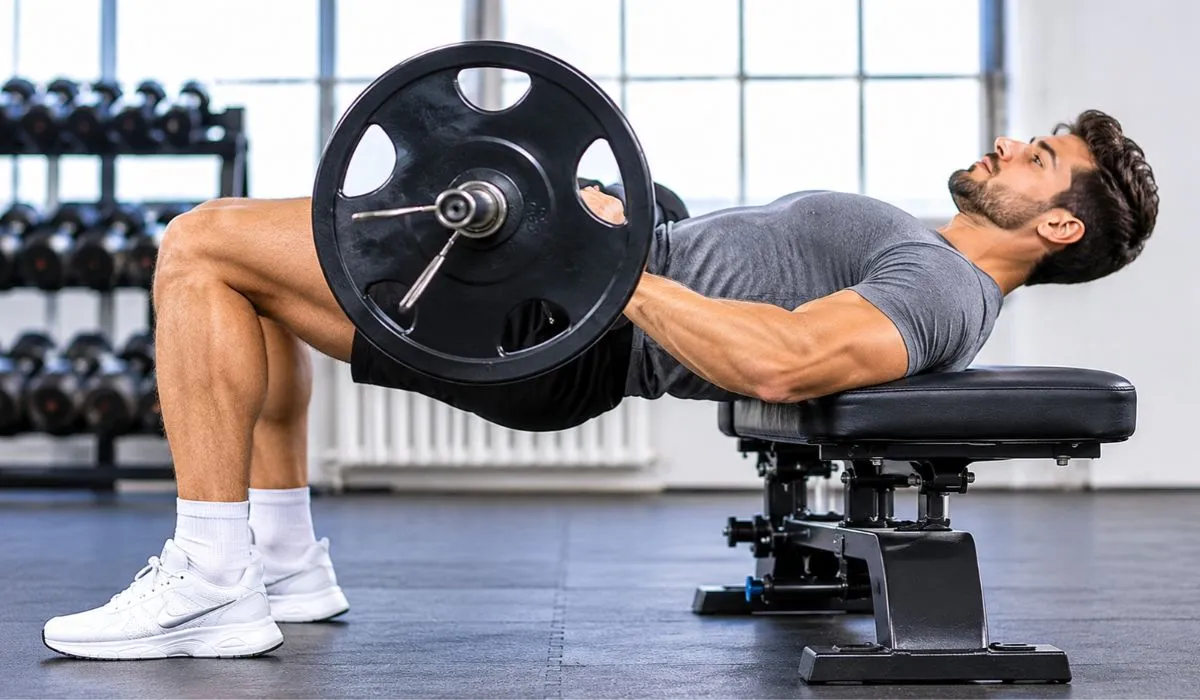
The best glute workouts are glute bridges, hip thrusts, squats, Romanian deadlifts and step-ups. Do them two or three times a week, add a little weight when the reps get easy, and throw in some band work for the sides of your hips. You can do all of it at home or at a gym.
Table of Contents
A friend of mine did squats every day for a month. Every single day. Her butt looked the same, and she was pretty annoyed (I would be too). The trouble was she only trained one part of the glutes. You’ve got three glute muscles, and the best glute workouts hit all of them.
Meet the Three Muscles You’re Training
The gluteus maximus is the big one. It does the heavy lifting when you stand up or climb stairs. The gluteus medius and minimus sit on the side and keep your pelvis level when you walk. Strong glutes also take pressure off your lower back and knees, so this isn’t just about how your jeans fit.
The Best Glute Exercises, in the Order I’d Learn Them
Start with the glute bridge. Lie on your back, knees bent, feet flat, and push your hips up until your shoulders, hips and knees line up. Squeeze at the top for a second. That’s it. It’s easy on the joints, and it shows you what “feeling your glutes” even means. When it gets boring, move to hip thrusts. Same idea, but your upper back rests on a bench and a dumbbell sits on your hips. Muscle-sensor studies suggest bridges and thrusts light up the glutes more than a regular squat does.
Next, learn to hinge. A Romanian deadlift with two dumbbells means pushing your hips back, knees slightly bent, until you feel a stretch behind your thighs, then standing tall. Most people feel it in their hamstrings first. That’s normal. Go light until it feels smooth.
Then try single-leg work like step-ups, reverse lunges or Bulgarian split squats. They feel wobbly at first, but they train your balance and the small muscles on the side of your hips. Finish with a resistance band. Lateral walks, clamshells and fire hydrants are kind of dull, I’ll admit, but that’s how you train the gluteus medius.
How Often and How Heavy?
For most beginners, two or three glute days a week is plenty, with a rest day between. Pick three or four moves and do three sets of 8 to 12 reps. The weight should make the last couple of reps hard, but your form should still look decent. Once 12 reps feel easy, add a little weight. That slow climb is called progressive overload, and it’s what actually changes the muscle. Eat enough protein and sleep well too, because muscles grow while you rest, not while you lift.
Common Mistakes to Avoid
The biggest one is arching your lower back at the top of a thrust. It feels like more range, but then your back is working instead of your glutes. Rushing is next, so slow down on the way back down. Skipping the warm-up, grabbing heavy weights too early and only ever doing squats are the other usual culprits. If your back aches more than your glutes after a session, drop the weight and check your form.
Glute Workouts During Pregnancy and After Birth
Good news for moms-to-be: ACOG says regular exercise is safe and helpful for most healthy pregnancies. The CDC recommends at least 150 minutes of moderate activity a week during pregnancy, and the WHO says about the same. Stronger glutes and hips can ease lower back strain as your posture changes. Bridges, side-lying leg lifts and supported squats are common starting points. After the first trimester, doctors usually say to avoid lying flat on your back for long, so ask your doctor or midwife how to adjust. This is general information, not medical advice.
After delivery, wait for your provider’s okay before lifting again. That’s often around six weeks, and longer after a C-section. Good prenatal nutrition and postpartum habits help too: enough protein, iron-rich foods and as much sleep as a newborn allows.
Frequently Asked Questions
How long until I see results from the best glute workouts?
Most people feel stronger in a few weeks. A real visible change usually takes a couple of months of steady training and decent food.
Can I train my glutes without equipment?
Yes. Single-leg bridges, split squats, stair step-ups and donkey kicks all work with just your body weight.
Are glute workouts safe during pregnancy?
For most healthy pregnancies, yes, once your doctor says okay. If something hurts or you feel dizzy, stop and call your provider.
Should I train glutes every day?
No. Muscles need rest to grow, so two or three sessions a week is a good target.