

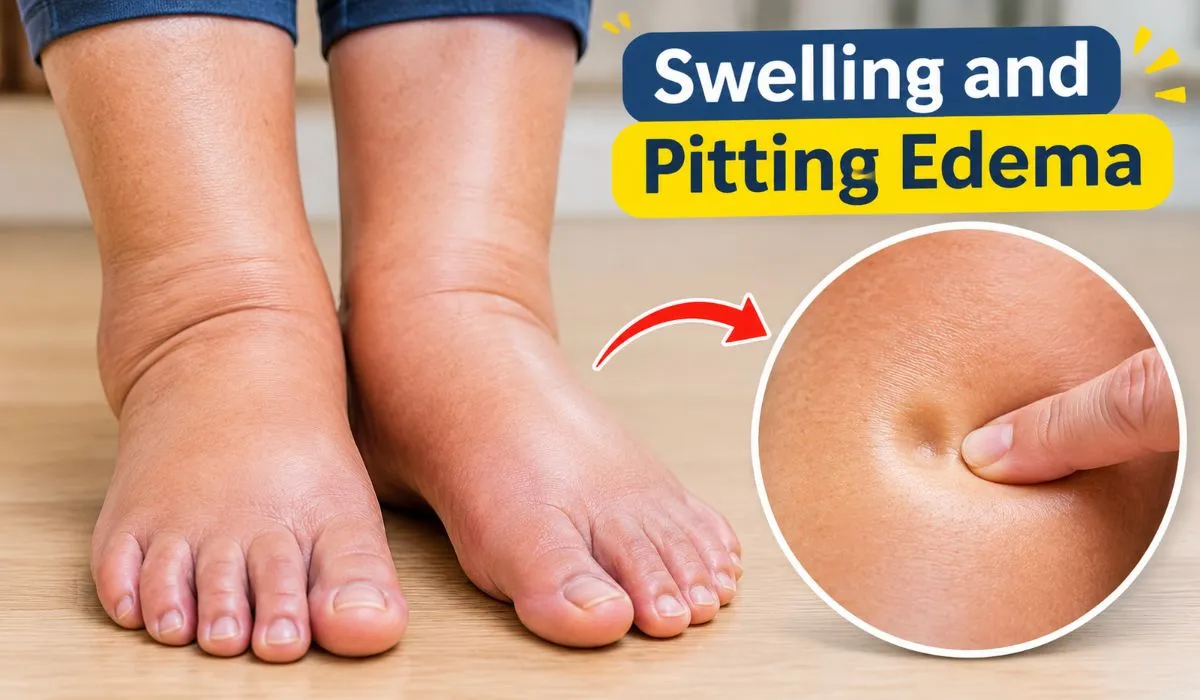
If your socks leave deep marks on your ankles by evening, or your shoes feel snug by the afternoon but fine in the morning, you have probably wondered what is going on. That puffiness is often edema, the medical term for swelling caused by extra fluid trapped in the body’s tissues. Sometimes it is nothing more than a long day on your feet. Other times it is your body’s way of telling you something deserves a closer look.
Table of Contents
This guide walks through what swelling looks like, what “pitting edema” means, how doctors grade it, what you can do to ease it, and when it is time to get help.
What Is Edema, Exactly?
Edema happens when fluid builds up in the spaces between your cells. You see it as visible swelling, and you feel it as tightness or heaviness. Gravity does a lot of the work here, which is why the feet, ankles, and lower legs are the most common places to notice it. This is known as peripheral edema, and it is the most common type. Large population studies suggest that chronic leg and ankle swelling affects roughly one in five people age 50 and older, and it becomes more likely with age, obesity, diabetes, high blood pressure, and limited mobility.
The everyday causes are fairly ordinary: sitting or standing for long stretches, eating a lot of salt, hormonal changes, and pregnancy. Some medicines can also play a part, including calcium channel blockers, NSAIDs, and steroids.
The more serious causes are the reason persistent swelling should never be brushed off. Heart failure, chronic kidney disease, liver disease, lymphatic disorders, blood clots such as deep vein thrombosis, and chronic venous insufficiency can all show up first as swollen legs. Venous insufficiency, where damaged valves in the leg veins let blood flow backward and pool, is a leading cause of long-term leg swelling in older adults.
Signs of Swelling to Watch For
Seeing puffiness in your feet and ankles is the obvious sign, but edema often announces itself in other ways too. You might notice that:
- Your skin looks stretched and shiny
- The skin feels tight or painful
- Your shoes and socks suddenly feel too small
- The swollen area is a different color from the rest of your skin
- Your foot or leg feels heavy
- It is hard to move your ankle or toes, or even to walk comfortably
- The area hurts when you touch it
- Your weight jumps by two to three pounds overnight, which is usually fluid rather than real weight gain
If you live with congestive heart failure or a related condition, that overnight weight change is especially worth paying attention to, and your care team may ask you to check your feet and lower legs regularly.
So What Is Pitting Edema?
Pitting edema is a specific kind of swelling you can test for at home. When you press a finger firmly into the swollen area and hold it for about 10 seconds, the skin keeps a dent, or “pit,” after you let go. Normal skin bounces right back. Swollen skin full of excess fluid takes its time.
That little dent is useful information. Doctors often ask for the grade of the pitting when you call, because it helps them judge how significant the fluid buildup is and whether it is changing.
How to Check and Grade It
Press your foot or lower leg for 10 seconds, let go, and watch what happens. The grades below follow a common home-check guide:
| Grade | What you see |
|---|---|
| 0 | No pitting. The skin bounces back right away. |
| 1+ | You can barely see a dent. |
| 2+ | A light dent that disappears within about 15 seconds. |
| 3+ | A deeper dent that takes up to 30 seconds to fade. |
| 4+ | A deep dent that lasts longer than 30 seconds. |
Grading scales can vary a little from one clinic to another, so treat this as a helpful way to describe what you are seeing, not a diagnosis. Writing down the grade, the spot you checked, and the date makes it much easier to notice changes and to explain them to your doctor.
Why Swelling Is Often Worse by Evening
Most people notice little or no swelling when they wake up. Overnight, lying down lets the fluid in your body spread out and level off. Once you are upright again, gravity pulls it back down toward your feet and ankles, and the swelling builds as the day goes on. That pattern is common with both everyday swelling and vein-related swelling, which is why puffiness that gets worse through the day is worth mentioning to a doctor if it keeps happening.
How to Help Prevent and Ease Swelling
The right approach depends on the cause, but a few habits help many people:
- Take your medicines exactly as prescribed, and learn what each one does. This matters most if your swelling is related to the heart, kidneys, or liver.
- Keep moving. Walking regularly helps push fluid back toward your heart, and try not to sit or stand in one position for too long.
- Put your feet up. When you sit, elevate your legs, ideally above heart level when you can.
- Cut back on sodium. Choosing lower-salt foods means your body holds on to less extra fluid.
- Wear compression socks or stockings if your doctor recommends them.
These steps can make swelling more comfortable, but they cannot repair damaged vein valves or treat an underlying heart, kidney, or liver problem. If swelling keeps coming back, lifestyle changes alone are not enough, and a medical evaluation is the way to find out why.
When Edema Is Not Just in the Legs
Leg swelling is the type most people meet, but edema can affect other parts of the body, and some of these forms are emergencies. Fluid in the lungs (pulmonary edema) causes shortness of breath, rapid breathing, coughing, or a feeling of suffocation, and it needs emergency care. Swelling in the brain (cerebral edema) can bring a sudden headache, vomiting, confusion, seizures, or trouble speaking, and it is also life-threatening. Fluid in the macula of the eye (macular edema) tends to be painless at first but can blur or distort central vision and may lead to permanent vision loss if untreated.
When to Get Medical Help
Some swelling is a reason to call your doctor soon. Other swelling is a reason to get help right away.
Make an appointment if swelling is persistent, keeps getting worse through the day, leaves a dent that is getting deeper, or comes with leg pain, heaviness, skin changes, or visible varicose or spider veins. Untreated venous insufficiency can progress to skin breakdown, ulcers, and mobility problems, so early answers really do help. If you have a heart condition and use a zone chart from your care team, check it daily and follow its guidance on when to call your doctor or go to the emergency room.
Seek emergency care if swelling appears suddenly, especially in one leg, and comes with pain, redness, or warmth, since that can signal a blood clot. Go immediately for shortness of breath, chest pain, or any sudden neurological symptoms such as confusion, severe headache, or trouble speaking.
Frequently Asked Questions
Is pitting edema serious?
Not always. It can come from long hours on your feet or a salty meal, but it can also point to a problem with your veins, heart, kidneys, or liver. A deeper dent that is slow to fade, or swelling that keeps returning, deserves a medical check.
How long should I press to test for pitting?
About 10 seconds on the foot or lower leg, then watch how quickly the skin returns to normal.
Can leg swelling be caused by vein disease?
Yes. Chronic venous insufficiency is one of the most common causes of long-term leg swelling, especially after age 50. Swelling often comes with heaviness, aching, skin changes, or varicose veins.
Can I fix swelling with lifestyle changes alone?
They can relieve mild swelling, but they cannot fix the underlying cause. If swelling lingers or worsens, see a doctor to find out why.