

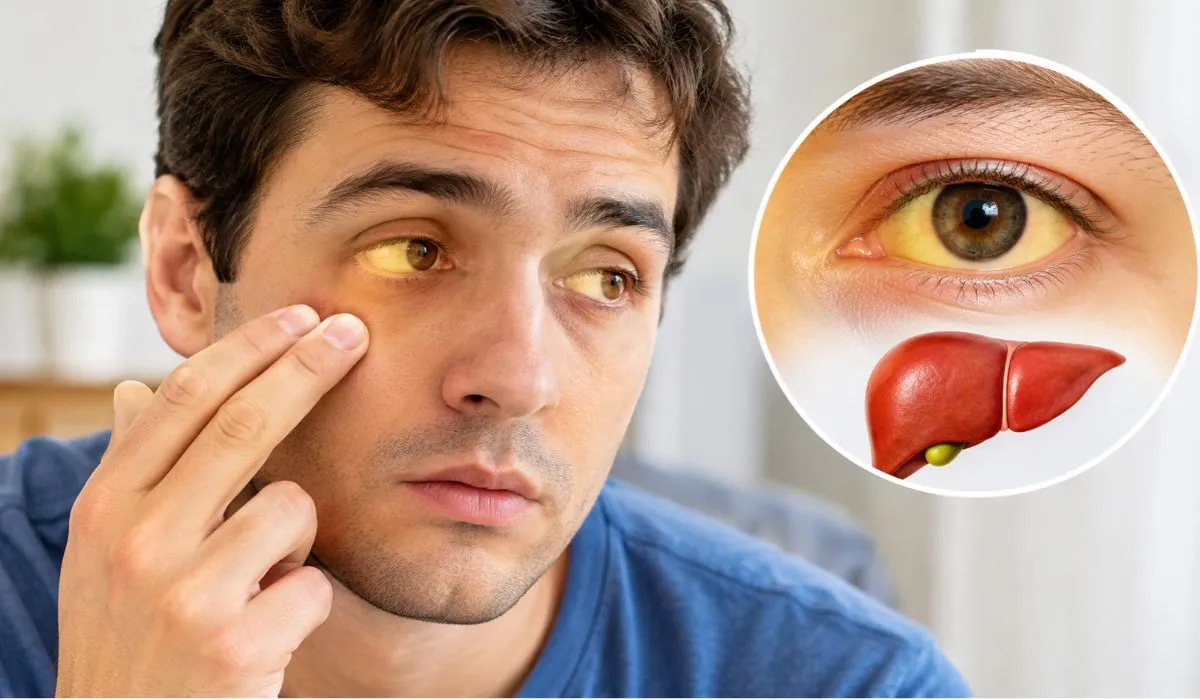
Imagine getting a routine blood test and being told your bilirubin is a little high, even though you feel perfectly fine. Or noticing a faint yellow tinge in the whites of your eyes after a stressful week of missed meals and poor sleep. For many people, that’s how they first meet Gilbert’s syndrome: a common, harmless liver condition that often goes unnoticed for years.
Table of Contents
If you’ve just heard the term, take a breath. Gilbert’s syndrome is considered mild and manageable, and it doesn’t increase your risk of liver disease. Here’s what it is, why it happens, and how to live with it comfortably.
First, a quick word about your liver
To understand Gilbert’s syndrome, it helps to know what the liver does all day. It’s the second largest organ in your body, sitting under your rib cage on the right side. It weighs about three pounds and is shaped a bit like a football that’s flat on one side.
The liver has plenty of jobs. It turns what you eat and drink into energy and nutrients your body can use, and it filters harmful substances out of your blood. It also deals with old red blood cells, and that’s where bilirubin comes in.
What is Gilbert’s syndrome?
Bilirubin is a yellow substance that forms naturally when old red blood cells break down. Normally, the liver processes it and passes it into bile, and it leaves your body through your stool. In Gilbert’s syndrome, the liver doesn’t clear bilirubin as efficiently as it should, so a little extra stays in your bloodstream.
That’s really all it is: slightly higher than normal bilirubin levels. It’s a mild genetic disorder, and it’s also known by older names such as constitutional hepatic dysfunction and familial nonhemolytic jaundice.
It’s also quite common. Estimates in the United States put it at roughly 3 to 7 percent of people, and The London Clinic suggests around one in twenty people overall. The true number is hard to pin down because so many people never have symptoms. It’s more common in men than in women, and although you’re born with it, it’s usually noticed in the late teens or early twenties, around puberty and beyond.
What causes it?
Gilbert’s syndrome is hereditary, meaning it runs in families. People with the condition have a change in a gene (the UGT gene) that leads to lower amounts of a liver enzyme responsible for breaking down bilirubin. With less of that enzyme, bilirubin isn’t passed into bile at the normal rate, and it builds up in the blood. You usually need to inherit the altered gene from both parents to develop it.
There’s no other known risk factor. It isn’t caused by your lifestyle, your environment, or a serious liver problem like cirrhosis or hepatitis C, so there’s nothing you did to cause it.
What does it feel like?
Here’s the surprising part: many people feel nothing at all. Around one in three people with Gilbert’s syndrome have no symptoms, and they may only find out when a blood test for something unrelated shows raised bilirubin.
When symptoms do appear, the most typical one is jaundice, a yellowing of the skin and the whites of the eyes. Because the rise in bilirubin is usually small, the yellowing tends to be mild, and the eyes are often affected most. Episodes are short-lived and pass on their own.
Some people also report tiredness, tummy pain, nausea, loss of appetite, dizziness, headaches, trouble concentrating (the dreaded brain fog), or just a general sense of feeling unwell. It’s worth knowing that these other symptoms aren’t necessarily caused by the higher bilirubin and may have another explanation.
What can set off an episode?
If you do get symptoms, you may start to notice patterns. Certain things can push bilirubin levels up in people with Gilbert’s syndrome:
- Being ill, especially with an infection
- Fasting or skipping meals for long stretches
- Dehydration
- Strenuous exercise or physical exertion
- Not getting enough sleep
- Stress, including emotionally hard times
- Having surgery
- Menstruation
The good news is that knowing your triggers gives you some control. Staying hydrated, eating regularly, getting decent sleep and managing stress can all lower the chance of an episode.
How is it diagnosed?
Doctors usually reach the diagnosis through blood tests. A bilirubin test measures how much is in your blood, and a liver function test checks that everything else is working normally and that something like hepatitis or haemolytic anaemia isn’t behind the jaundice. If bilirubin is high but your other liver numbers are normal, a diagnosis of Gilbert’s syndrome can usually be made.
Because bilirubin levels in Gilbert’s syndrome can go up and down, your doctor may repeat the test a few times. In some cases a genetic test is used to confirm a change in the UGT gene.
One important point: if you notice jaundice for the first time, see your doctor promptly. Gilbert’s jaundice is usually mild, but yellowing of the skin can also point to more serious liver conditions, and those need to be ruled out. Once you’ve been diagnosed, you generally don’t need to seek help for each mild episode unless you have additional or unusual symptoms.
Do you need treatment?
No. Gilbert’s syndrome is lifelong, but it doesn’t threaten your health or cause complications, so it doesn’t need treatment. There’s also no reason to change your diet or exercise routine. The usual advice about eating a balanced diet and staying active still applies, though extreme exertion and long gaps between meals are worth avoiding if they bring on symptoms.
The one thing to watch: medications
The main practical issue is how your body handles certain medicines. Because the same liver pathway is involved, some drugs may cause jaundice or other side effects in people with Gilbert’s syndrome. Examples mentioned by The London Clinic include atazanavir and indinavir (used for HIV), gemfibrozil (a cholesterol-lowering drug), and irinotecan (used for advanced bowel cancer). Paracetamol is partly processed by the same enzyme, so some specialists suggest considering a different painkiller. Statins, by contrast, are only partly processed this way and are safe for most people with the condition.
The simple rule: talk to a doctor or pharmacist before starting any new medication, and mention your Gilbert’s syndrome to any doctor treating you for the first time. Some people with the condition also find hangovers hit harder, so you may want to go easy on alcohol.
The bottom line
Gilbert’s syndrome sounds more alarming than it is. It’s a common inherited quirk in how the liver handles bilirubin, it often causes no symptoms at all, and when it does, the effects are usually mild and temporary. Look after the basics, stay aware of your triggers, check with your doctor about medications, and you can carry on with life as normal.