

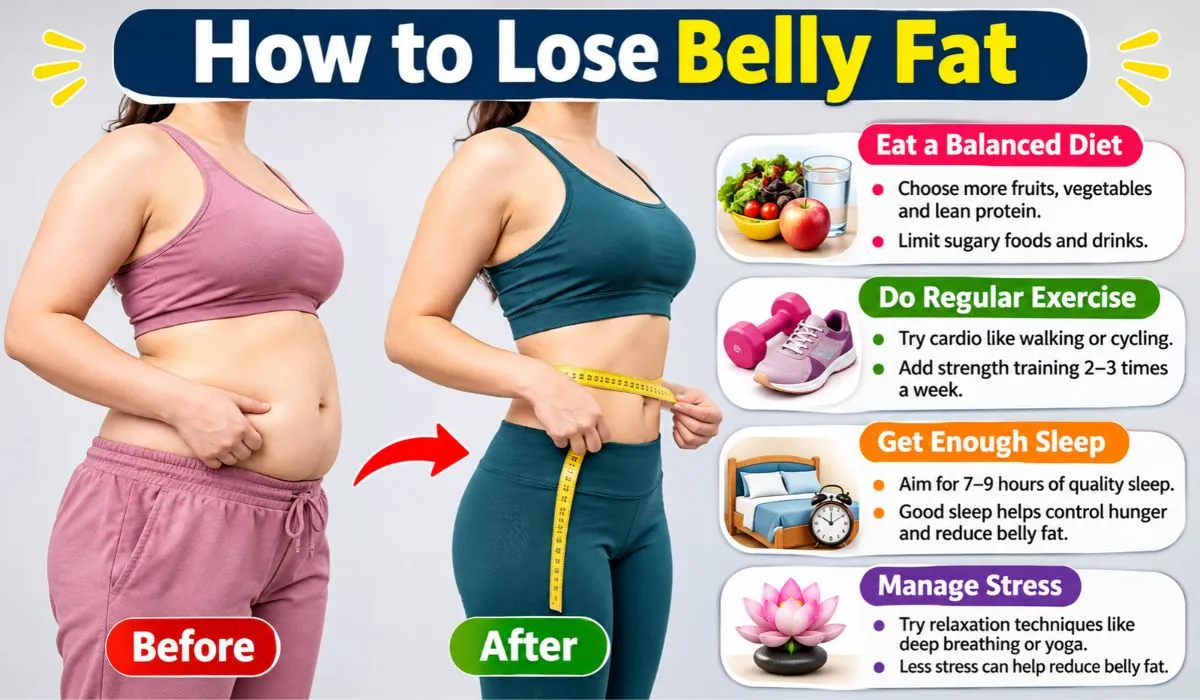
Picture this. You’re getting dressed on a normal morning, and your favorite jeans just won’t close the way they used to. You haven’t changed your routine much, maybe the scale has barely moved, yet your middle feels different. If you’ve been quietly searching for how to lose belly fat, you’re far from alone, and the good news is that it really can be done.
Table of Contents
It won’t happen overnight, and it won’t happen with a hundred sit-ups a day. But with a few steady changes to how you eat, move, sleep and handle stress, the fat around your waist can shrink.
Why Belly Fat Is Different From Other Fat
Not all fat behaves the same way. Some of it sits just under your skin, and you can pinch it. That’s subcutaneous fat. The other kind, visceral fat, lies deeper inside your abdomen and wraps around organs like your liver and intestines. You can’t see it or pinch it, and it’s the one doctors worry about more.
Visceral fat isn’t just sitting there. It releases chemicals that can drive inflammation in the body, and a larger amount is linked with higher blood pressure, heart disease, type 2 diabetes, fatty liver, sleep apnea and some cancers. That’s why people who look fairly slim can still carry risky fat around the middle.
Some of this comes down to life stage. We lose muscle as we get older, and less muscle means the body burns fewer calories. Many women also notice fat moving toward the belly after menopause, probably because estrogen levels drop. Genes, alcohol and smoking play a part too.
Check Your Waist, Not Just the Scale
The scale only tells part of the story. A tape measure is more honest. Wrap it around your bare stomach just above your hip bones, keep it snug but not digging in, breathe out, and don’t suck in your tummy. For women, a measurement above about 35 inches (89 cm) signals more risk. For men, the usual line is around 40 inches, though guidelines vary a little depending on ethnic background, with lower cut-offs often used for South Asian, Chinese and Japanese adults.
This matters because when you build muscle and lose fat, the scale can stay stubbornly put while your waistline shrinks. If your trousers feel looser, that’s real progress.
How to Lose Belly Fat With the Food You Eat
Here’s the honest truth first: you can’t choose to lose fat from just your belly. Spot reduction doesn’t work. What works is losing fat overall, and visceral fat tends to respond well when you do.
That starts with eating a little less energy than you burn, without turning meals into a punishment. Build your plate around vegetables, fruit, whole grains, beans, fish and lean protein. Cut back on sugary drinks, juices, white bread, pastries and packaged snacks, since added sugar, and fructose in particular, is linked with visceral fat growth. Reading labels helps more than you’d think. Some “low-fat” yogurts are loaded with sugar, and sauces and dressings can sneak in a surprising number of calories.
In one Johns Hopkins study, people on a lower-carb plan lost more weight over six months than people on a low-fat plan with the same calories. The takeaway isn’t that carbs are evil. It’s that moving away from refined, sugary foods toward fiber and protein works well for many people. Pick a way of eating you can actually live with, because the best plan is the one you’ll still follow in three months.
Portion size counts too, even with healthy food. Splitting a restaurant meal or boxing half of it up is an easy win.
Move More, and Lift Something
Diet helps, but exercise does something special for belly fat. Regular activity lowers the insulin hanging around in your blood, and high insulin tells the body to hold on to fat. Exercise also nudges the liver to burn fat stored close by. Research suggests exercise can trim visceral fat even when the number on the scale doesn’t change much.
A solid goal is at least 150 minutes a week of brisk walking, cycling or similar activity, or 75 minutes of harder exercise like jogging, plus strength training at least twice a week. If weight loss is your aim, you may need more than that. Some research points toward 300 minutes or more of moderate activity a week to lose weight and keep it off.
Don’t skip the weights. More muscle means you burn more calories all day, even while sitting on the couch. Intervals, where you alternate short bursts of effort with easier periods, may also help.
And about crunches: they’ll strengthen your core, but they won’t melt the fat on top of it.
Stress and Sleep Matter More Than You’d Think
Stress can send you straight to the snack cupboard, and it also triggers hormones that encourage fat storage around the middle. Even 15 minutes of quiet time a day, a walk without your phone, some slow breathing or a bit of meditation, can help take the edge off.
Sleep works in a similar way. When you’re short on rest, hunger hormones go up and stress hormones follow. Most adults need seven to nine hours a night. A calm bedtime routine goes a long way.
Small Habits That Make It Stick
A few simple things help the whole process feel easier. Park farther away and take the stairs. Keep water within reach instead of soda. Cook more at home so you know what’s in your food. And try to spend time with friends or family who also care about eating well and moving, because habits really do rub off on each other.
The Bottom Line on How to Lose Belly Fat
Losing belly fat takes patience, and slow, steady weight loss is more likely to stay off. There’s no magic food or single exercise. It’s the everyday combination of decent meals, regular movement, strength training, calmer days and better sleep.
If you have a health condition, take medication, or aren’t sure where to begin, talk to your doctor, a dietitian or an exercise professional first. They can help you build a plan that fits your body and your life. Start with one small change this week, and let the others follow.