

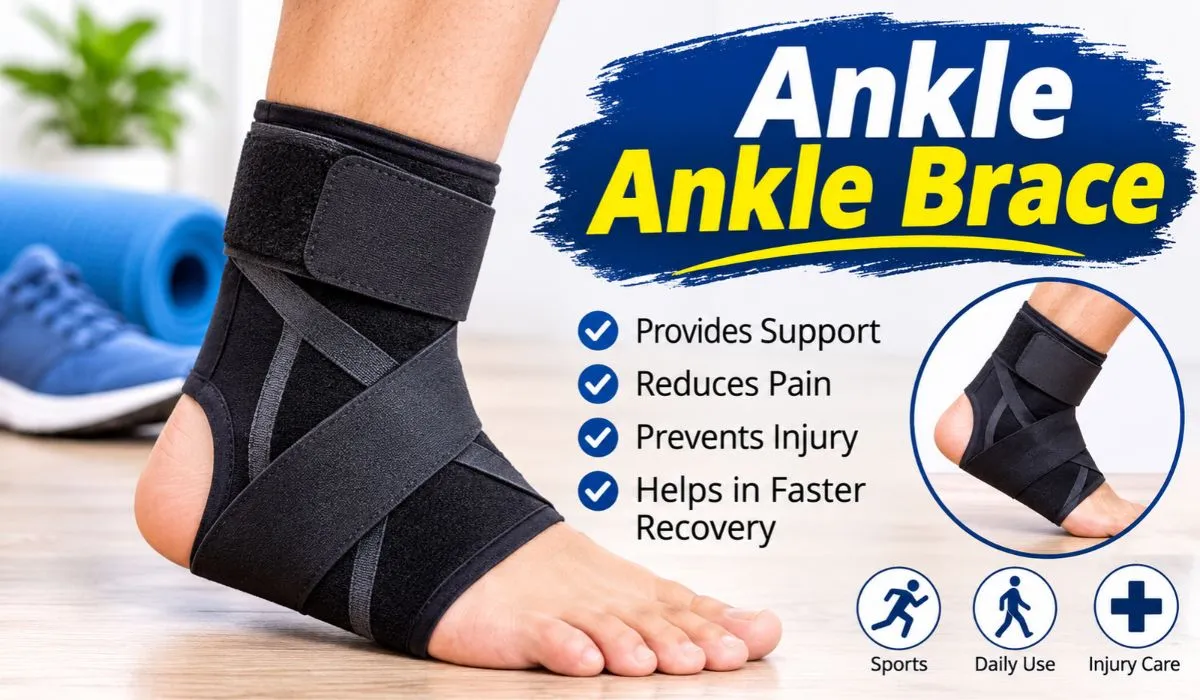
Most of us don’t think about our ankles until they let us down. One wrong step off a curb, one awkward landing during a game, and suddenly every walk to the kitchen feels like a negotiation. If that sounds familiar, you’ve probably typed something like “ankle ankle brace” into a search bar, hoping for a simple answer. Let’s walk through it together.
Table of Contents
Why ankles get hurt so easily
Your ankles carry you through the whole day. Standing, walking, climbing stairs and working out all put steady tension on the tendons and joints around them. According to research in the Journal of Athletic Training, ankle sprains are among the most common musculoskeletal injuries, with roughly two million happening in the U.S. every year.
The part that surprises people is that one sprain makes the next one more likely. Evidence shows a strong link between an earlier ankle sprain and re-injury. So when a sprain heals and you feel “mostly fine,” your ankle may still be a little wobbly. That’s where an ankle ankle brace comes in.
What a brace actually does
Dr. Joshua Goldman, a clinical professor of family medicine and orthopedic surgery at UCLA and team physician for the Los Angeles Chargers, says braces have been shown to add stability and support to the ligaments after an injury. He also notes they can lower the risk of re-injury as people return to sports, fitness and everyday activity.
A brace is worth thinking about if you’ve had a sprain, feel your joint giving way, are dealing with ligament damage, or just have ankle pain that keeps nagging at you.
Three braces worth a look
The Good Housekeeping Institute’s fitness experts tested a range of braces and checked their choices with doctors, weighing price, materials, ease of use and support. Here are three that stood out.
The Med Spec ASO Ankle Stabilizer (best overall). This one gives you three layers of support: laces, stabilizing straps and an elastic cuff that wraps over both. You slip your foot in, feed the laces, fasten the straps, then Velcro the cuff down. It takes a few minutes to put on, which is the only real downside. In return, you get a firm, secure fit. It comes in sizes from XXS to 3XL, and you can wash it by hand or in the machine. At the time of the review it cost about $32 on Amazon.
The Bodyprox Ankle Support Brace (best value). If you want something simple and cheap, this breathable neoprene brace costs around $10 to $12. You cross the Velcro straps, pull them snug, and the brace comes off just as easily. The open-heel design leaves you more room to move, which helps if you’re wearing it for much of the day. It fits up to an 11-inch foot circumference, and it’s hand-wash only.
The SS Sleeve Stars Ankle Brace (best for flexibility). This is the pick for people who want support without feeling locked in. It’s a good fit if your ankle needs a little backup rather than a full cage.
How to pick the one that fits your life
Think about what you need the brace to do. If you’re recovering from a sprain and want serious stability, the layered ASO design makes sense. If you only need light support for walking around, or you’re on a budget, the Bodyprox is a gentler choice. And if you move a lot and hate feeling restricted, flexibility might matter most.
Fit matters too. A brace that’s too loose won’t help, and one that’s too tight can be miserable. Check the size chart before you order, especially with a lace-up style where sizing runs wide.
A final word
A good ankle ankle brace won’t replace rest, rehab or a doctor’s advice. If your pain is severe, your ankle looks swollen or you can’t put weight on it, get it checked first. But once you’re cleared, a well-chosen brace can give you the confidence to get back to your day, one steady step at a time.