

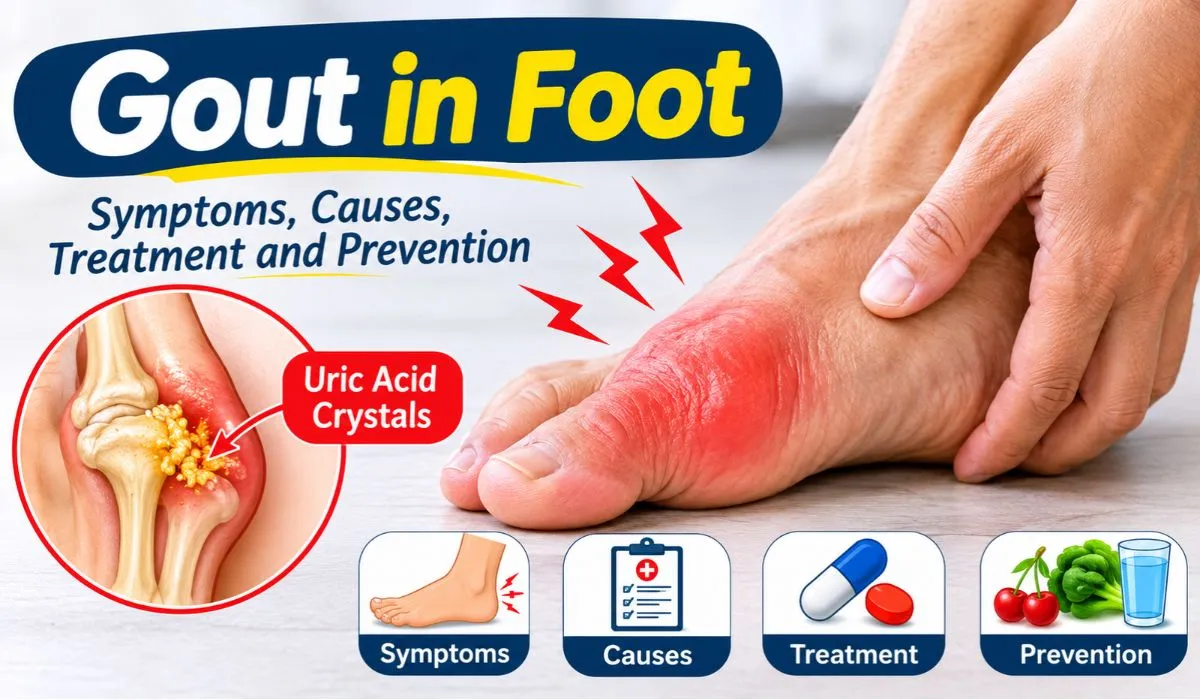
It’s two in the morning and your foot is throbbing. The big toe is hot, swollen, and so tender that the weight of the bedsheet feels unbearable. If that sounds familiar, you may be dealing with gout in foot, and you probably want answers fast.
Table of Contents
What’s Actually Going On
Gout is a type of inflammatory arthritis. Your body makes uric acid when it breaks down purines, which are found in certain foods and in your own tissue. Normally the kidneys filter it out. When levels climb too high, the excess can form tiny, needle-shaped crystals inside a joint.
Your immune system sees those crystals as invaders and sends white blood cells to attack. That reaction is what causes the heat, redness, swelling, and pain. Crystals tend to settle in the cooler parts of the body, which is why gout in foot is so common. Your feet are the farthest point from your core.
What It Feels Like
Gout doesn’t creep in. It usually hits hard, often at night, and the pain can peak within 12 to 24 hours. People describe it as burning, throbbing, or crushing, like the joint is on fire. The skin often looks shiny, tight, and red or purplish, and the joint may look noticeably bigger than the same one on your other foot.
The base of the big toe is the classic target, but gout can also show up in the midfoot, ankle, or heel. Some people get a short warning first, like tingling or a mild ache a few hours before the flare. Without treatment, an attack can last anywhere from a few days to about ten, and it usually fades into a dull ache before it clears.
Could It Be Something Else?
Quite possibly. Gout in foot is often mistaken for a sprain, a bunion flare, another type of arthritis, or an infection. The biggest clue is how it started. A sprain follows a twist or a fall, while gout often arrives overnight with no injury at all.
One warning matters most. If the swollen joint comes with a fever, chills, or you simply feel unwell, get seen the same day. That can point to a joint infection, which is more urgent than gout.
What to Do When a Flare Starts
The sooner you act, the better. Treatment in the first 24 hours can shorten a flare and make it less severe. Here’s what helps:
- Use the medicine you already have. Over-the-counter ibuprofen or naproxen can help. Skip aspirin, because it can make a flare worse. If your doctor has already prescribed colchicine or a uric acid-lowering drug like allopurinol, keep taking it as directed.
- Ice it, gently. Wrap an ice pack or a bag of frozen peas in a cloth and hold it on the joint for 20 to 30 minutes a few times a day.
- Call your doctor. They may adjust your medication or offer a corticosteroid injection. They may also test fluid from the joint to confirm it’s gout.
- Drink plenty of fluids. Staying hydrated helps flush out uric acid and lowers the risk of kidney stones. Aim for lots of nonalcoholic fluids, with at least half of them water.
- Skip the drink. Alcohol, especially beer, raises purine intake and makes it harder for your body to clear uric acid.
- Take the weight off. Prop your foot above chest level on pillows. A cane can help you walk without loading the sore joint.
- Cut your socks. Snip the toe off a cheap pair so your foot stays warm without pressure on the sore toe.
- Try to relax. Stress can aggravate gout, so a movie, a book, or a chat with a friend isn’t a bad idea.
Why Food and Lifestyle Matter
Diet is only one piece of the puzzle, but it counts. Red meat, shellfish, sweetbreads, gravies, beer, spirits, and sugary drinks sweetened with fructose are the usual troublemakers. Other things raise your risk too, including family history, excess weight, kidney disease, high blood pressure, diabetes, and some blood pressure medications.
Don’t Stop at “It Went Away”
When the pain eases, it’s tempting to forget about it. But repeated flares can damage the joint, and over time they can cause hard uric acid lumps called tophi. If you’ve had more than one flare, or your uric acid stays high, long-term treatment can help prevent the next one.
If this might be your first flare, if the pain hasn’t improved within 48 hours, or if you have diabetes or poor circulation in your feet, call a podiatrist or your doctor. A proper diagnosis is the best way to stop gout in foot from becoming a regular, painful visitor.