
If you wake up with a scratchy throat and a heavy head, it’s natural to wonder whether it’s a cold, the flu or covid. Covid symptoms can look like all three. They range from a mild, cold-like illness to something much more serious. Most people feel better within a few weeks, though some take longer to bounce back.
Table of Contents
Key Points
Covid affects people in very different ways. Some barely feel unwell, while others have symptoms that linger. Because the signs look so much like other common illnesses, it can be hard to tell what you’re dealing with. If you’re pregnant, aged 60 or over, or have a weakened immune system, it’s especially worth getting advice early.
Signs and Symptoms of COVID-19
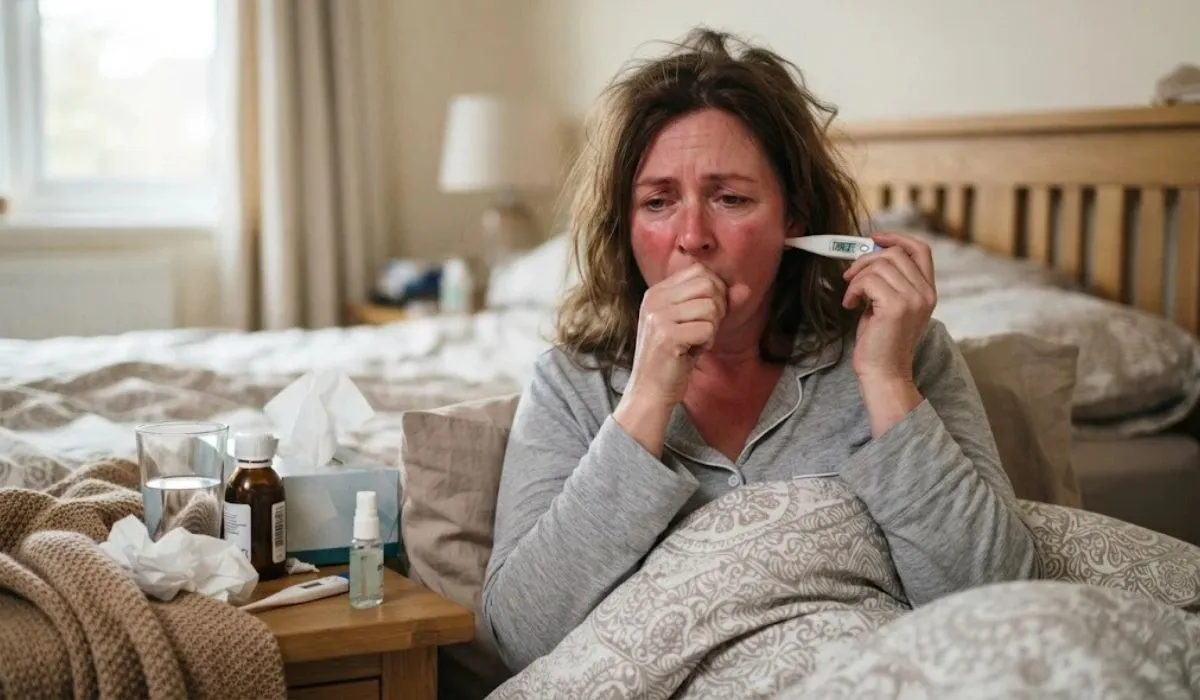
The most common sign is a high temperature. You might feel hot, cold or shivery, or notice that your chest or back feels hot to the touch. You don’t need a thermometer to know something’s off.
Then there’s the cough. With covid it’s usually new and continuous, meaning you’re coughing a lot for more than an hour, or having three or more coughing episodes in 24 hours. Many people also notice a loss or change in their sense of smell or taste. Food suddenly seems bland, or coffee doesn’t smell like coffee.
Beyond those, covid can bring shortness of breath, tiredness or exhaustion, an aching body, a headache, a sore throat, and a blocked or runny nose. Some people lose their appetite, have diarrhoea, or feel or are sick. You may have just a couple of these or quite a few, and this list doesn’t cover every possible symptom.
If You Feel Unwell, What Should You Do?
If you or your child have symptoms and either have a high temperature or don’t feel well enough for work, school, childcare or your normal routine, try to stay home and keep away from other people. You can go back to normal life once you feel better or your temperature is gone. If your child only has mild symptoms, like a runny nose, sore throat or mild cough, and feels well enough, they can still go to school or childcare.
Most people don’t need a rapid lateral flow test when they have symptoms. If you choose to test and it comes back positive, the advice depends on age. Children and young people under 18 should try to stay home for 3 days after the day of the test, since they tend to be infectious for less time than adults. If you’re 18 or over, try to stay home for 5 days after your test. For 10 days after the test, it’s also kind to avoid anyone more likely to get seriously ill, such as people with a weakened immune system. And if you’re eligible for covid treatments, take a rapid test as soon as symptoms start.
How to Look After Yourself at Home
There isn’t always a treatment for covid, but you can ease the worst of it. Rest as much as you can and drink plenty of water. Your pee should be light yellow or clear. If you’re uncomfortable, paracetamol or ibuprofen can help. For a cough, a teaspoon of honey can be soothing, but never give honey to babies under 12 months. A pharmacist can also suggest cough treatments if you’re not sure what to try.
If you’re feeling breathless, a few small changes can make a real difference. Turn the heating down or open a window. Sit upright in a chair, relax your shoulders so you’re not hunched, and lean forward slightly with your hands on your knees or something stable. Breathe slowly in through your nose and out through your mouth with your lips together, as if you were gently blowing out a candle. And try not to panic, because that can make breathlessness worse.
A couple of things are best avoided. Don’t lie on your back if you have a cough. Lie on your side or sit upright instead. And skip the fan to cool your room, as it may spread the virus.
When to Get Medical Help
Trust your instincts. If you’re worried about your own or a child’s symptoms, or you’re just not sure what to do, ask for an urgent GP appointment or contact NHS 111. The same goes if symptoms are getting worse or aren’t improving, or if you or your child have other signs of illness like a rash, loss of appetite or feeling weak. A high temperature that lasts 5 days or more, or won’t come down with paracetamol, is another reason to call.
Extra care is needed with very young children. Get help if a baby under 3 months has a temperature of 38°C or higher, or a baby aged 3 to 6 months has a temperature of 39°C or higher. Do the same if you simply think they have a high temperature. And if you’re pregnant, aged 60 or over, or have a weakened immune system, don’t wait it out. Getting help early matters most for you.
Covid, Colds and Flu: Can You Tell the Difference?
Honestly, not by symptoms alone. Covid, colds and flu are all respiratory illnesses and they share a lot of the same signs. What sets them apart is the virus behind them. COVID-19 is caused by a coronavirus called SARS-CoV-2, while flu is caused by influenza viruses. If you need to know for sure, a test is the only reliable way.
Frequently Asked Questions
What are the most common covid symptoms?
A high temperature, a new continuous cough, tiredness, an aching body, a headache, a sore throat, and a change in your sense of smell or taste are among the most common.
How long do covid symptoms last?
Most people feel better within a few weeks. For some, recovery takes longer and symptoms can last longer.
Can I look after myself at home?
Usually, yes. Rest, fluids, paracetamol or ibuprofen, and the breathing tips above can help you feel more comfortable.
Do I need a covid test if I have symptoms?
Most people don’t. If you’re eligible for covid treatment, though, take a rapid test as soon as symptoms begin.