

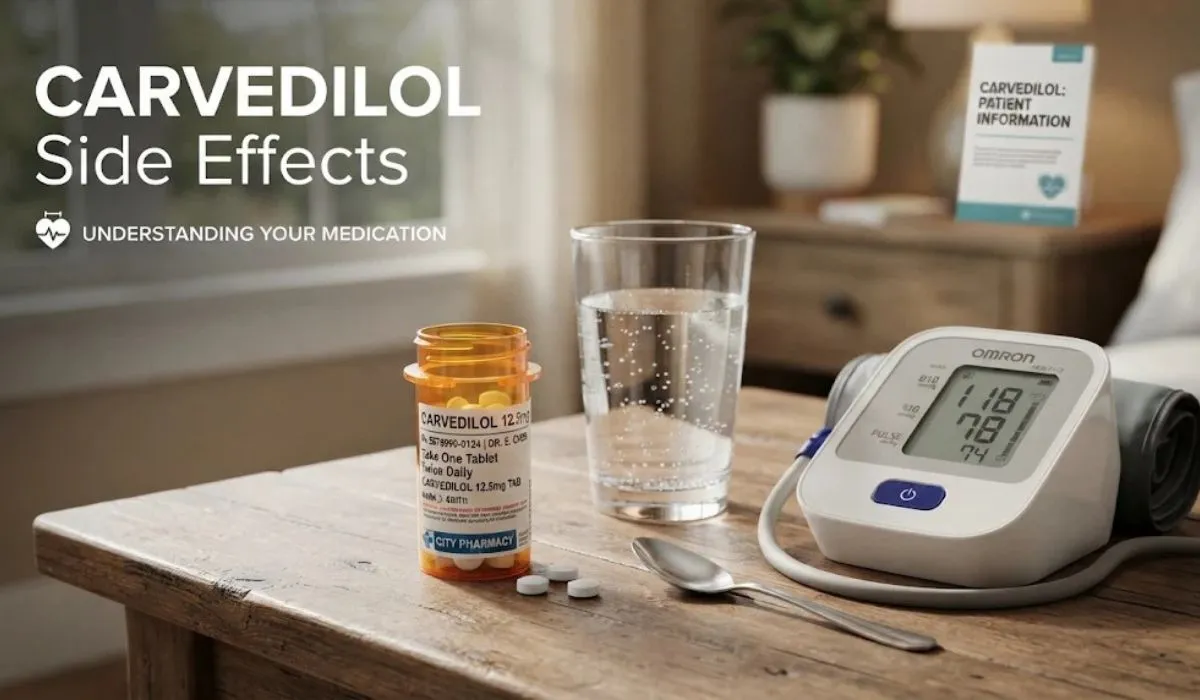
Like all medicines, carvedilol can cause side effects in some people. Many people have none at all, or only mild ones. Carvedilol is a beta-blocker, prescribed to treat high blood pressure and heart failure and to help the heart after a heart attack. It works by slowing the heartbeat and lowering blood pressure, so most of its side effects come from that same action. They usually ease as your body gets used to the medicine.
Table of Contents
Common side effects of carvedilol
The most common side effects are usually mild. They tend to show up when you first start carvedilol or when your dose goes up, and they often fade within days or weeks. Here’s what people most often notice, and what can help.
Feeling dizzy, lightheaded, sleepy or tired. Because carvedilol lowers blood pressure, you may feel dizzy, especially when you stand up quickly from lying or sitting. If this happens, stop what you’re doing and sit or lie down until it passes. Don’t drive, cycle or use tools or machinery until you feel steady again. Getting up slowly helps, and so does knowing how the medicine affects you before you do anything that needs full alertness. Tell your doctor if the dizziness doesn’t settle or you actually faint.
Cold hands and feet. Beta-blockers can slow circulation to your fingers and toes. Warm running water, gentle massage and a bit of wiggling can bring the feeling back. Warm socks and mittens (warmer than gloves) help, and it’s best to avoid tight watches or bracelets.
Feeling sick or being sick. Some people get nausea or vomiting, and some get stomach pain. Taking carvedilol with food is recommended anyway, so a meal or snack may settle your stomach. Keep to simple meals, skip rich or spicy food, and sip fluids regularly so you don’t get dehydrated. Check with a pharmacist or doctor before taking anything else for the sickness.
Diarrhoea. Drink plenty of fluids, and talk to a pharmacist or doctor before taking an anti-diarrhoea medicine. If you take the contraceptive pill and have vomiting or severe diarrhoea, your contraception may not protect you, so check the pill packet for what to do.
Other common effects. Some people also notice back pain, a tingling or prickling sensation, a runny nose or sore throat, or unusual tiredness or weakness. Less commonly, people report blurred vision, headache, trouble sleeping, sweating, joint or muscle aches, and a reduced interest in sex or difficulty getting or keeping an erection.
If a side effect is still bothering you after trying these tips, or it doesn’t go away, speak to your doctor or pharmacist. There’s often something they can adjust.
Side effects that need a doctor’s attention
Some side effects are less common but shouldn’t be ignored. Contact your doctor straight away if you notice any of the following:
- Signs your heart failure may be getting worse: unexplained weight gain, swelling in your feet, ankles or lower legs (or your face and fingers), increased trouble breathing, or unusual tiredness.
- A very slow or irregular heartbeat, or a pounding heartbeat that feels wrong.
- Easy bruising or unusual bleeding, including blood in your urine or black, tarry stools.
- Signs of liver or kidney problems: yellow skin or eyes, dark urine, pain on the upper right side of your body, or passing much less urine than usual.
- Skin and mouth problems: blistering or peeling skin, red skin lesions with a purple centre, or sores and ulcers in the mouth.
- Mood changes: depression, anxiety, confusion or nightmares.
Call emergency services straight away if
Get emergency help right away if you have:
- chest pain that doesn’t ease after a few minutes, especially with sweating, nausea, lightheadedness or shortness of breath, as this could be a heart attack
- sudden, severe weakness on one side of the body, slurred speech or inability to speak, which can be signs of a stroke
- shortness of breath, wheezing and tightness in your chest
If you’ve already been diagnosed with angina and get chest pain, follow the plan your doctor gave you. Don’t drive yourself to hospital. Call for an ambulance.
Serious allergic reaction
A serious allergic reaction to carvedilol (anaphylaxis) is rare, but it’s an emergency. Call emergency services now if:
- your lips, mouth, throat or tongue suddenly swell
- you’re breathing very fast, wheezing or struggling to breathe
- your throat feels tight or you can’t swallow
- your skin, tongue or lips turn blue, grey or pale
- you suddenly feel very confused, drowsy or dizzy, or someone faints and can’t be woken
- a child is limp, floppy or not responding as they normally would
You may also have a rash that is swollen, raised, itchy, blistered or peeling.
Extra things worth knowing
Diabetes. Carvedilol can change blood sugar levels and may hide the warning signs of low blood sugar, especially a fast heartbeat. If you have diabetes, keep a closer eye on your readings and tell your doctor about any changes. People who are fasting, not eating regularly or vomiting may be at higher risk of low blood sugar.
Contact lenses. Carvedilol can reduce tear production, so your eyes may feel dry. Mention it to your doctor if that happens.
Surgery. Before any surgery, including dental or cataract surgery, tell the doctor or dentist you take carvedilol. A serious eye problem called Intraoperative Floppy Iris Syndrome has occurred in some people having cataract surgery while taking it.
Never stop suddenly. Don’t stop carvedilol or skip doses without checking with your doctor first. Stopping abruptly can make some heart conditions worse, which can be dangerous. Your doctor may want you to reduce the dose gradually.
Who shouldn’t take it. Carvedilol isn’t suitable for people with asthma or similar breathing conditions, certain heart rhythm problems (second- or third-degree AV block, sick sinus syndrome, severe bradycardia without a pacemaker), cardiogenic shock, decompensated heart failure needing IV treatment, severe liver disease, or a past serious allergic reaction to carvedilol.
Other medicines. Tell your doctor and pharmacist about everything you take, including over-the-counter medicines and supplements. Colchicine isn’t recommended with carvedilol, and many others, such as certain antidepressants, heart rhythm drugs, diabetes medicines and anti-inflammatory painkillers, can interact with it.
Other side effects
This article doesn’t list every possible side effect of carvedilol. For the full list, read the leaflet inside your medicine packet. If you notice anything unusual, tell your doctor or pharmacist. In the US, you can also report side effects to the FDA.