

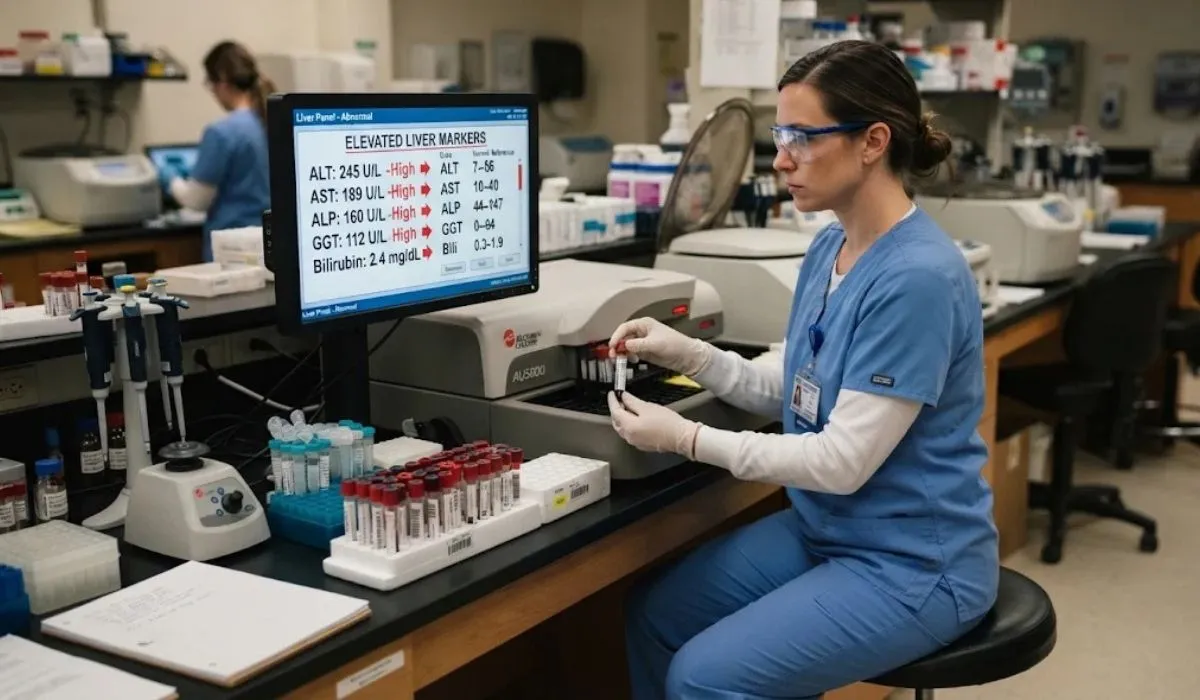
Elevated liver markers mean that certain enzymes made by your liver show up in your blood at higher levels than normal. It usually points to irritated or injured liver cells. Sometimes it’s temporary, and sometimes it’s a clue to something that needs attention.
Table of Contents
First, Don’t Panic
Picture this. You go in for a routine blood test, and a few days later the report says “elevated liver markers.” Your stomach drops a little.
Take a breath. According to the Liver Institute of Texas, in about a third of cases the numbers return to normal within a few weeks. A high result is a signal to look closer, not a diagnosis.
So What Are Liver Markers, Exactly?
Your liver is a busy organ. It makes bile for digestion, helps your blood clot, breaks down food and toxins, and helps fight infections. Enzymes are the proteins that help it do all that work faster.
When liver cells get hurt, they leak those enzymes into your bloodstream. Doctors look at four main ones: ALT, AST, GGT and ALP. Cleveland Clinic notes that ALT and AST are the ones that most often rise first.
What Can Push Them Up?
There’s a long list, which is why your provider will ask a lot of questions. The more common causes include:
- fatty liver disease (MASLD), whether or not alcohol is involved
- medicines such as statins and acetaminophen
- hepatitis A, B and C
- certain herbal and vitamin supplements, like iron and vitamin A
- cirrhosis and metabolic syndrome
Less common causes include autoimmune hepatitis, celiac disease, thyroid disease and some antibiotics. If you’re pregnant, that can also be a risk factor, so it’s worth mentioning to your provider.
Things that raise your risk include alcohol use, diabetes, obesity, rapid weight loss or gain, and a family history of liver disease.
Would You Even Notice?
Often, no. Many people feel completely fine. When the liver is actually damaged, though, symptoms can show up, such as:
- stomach pain
- dark urine or pale stools
- itching
- tiredness
- nausea
- loss of appetite
- yellowing of the skin or eyes
If you notice any of these, don’t wait for your next checkup.
How Doctors Figure Out the Cause
The markers are found with a liver function test, also called a liver panel. It’s a simple blood draw. If your numbers are high, your provider will usually dig deeper with more blood tests to check for infections, diabetes or thyroid problems. They may also order an ultrasound, CT scan or MRI to look at your liver and bile ducts.
Often they’ll just repeat the blood test after a few weeks to see whether things settle down. That repeat matters. According to Cleveland Clinic, high enzymes left alone can lead to serious liver damage.
Treatment depends entirely on the cause. That might mean changing a medication, cutting back on alcohol, or treating an underlying condition.
Looking After Your Liver
You can’t prevent every cause, but a few habits help. Health experts generally recommend:
- eating a balanced diet and keeping a healthy weight
- skipping alcohol, or keeping it moderate
- exercising regularly
- managing blood sugar if you have diabetes
- getting vaccinated against hepatitis A and B
- never sharing needles or anything with blood on it
- checking with your provider before starting any medication or supplement
That last one catches people out. “Natural” doesn’t always mean harmless for your liver.
Common Mistakes
- Ignoring the result because you feel fine
- Skipping the repeat blood test
- Starting new supplements without telling your provider
- Googling your way to a diagnosis instead of asking your doctor
FAQ
Are elevated liver markers serious?
Not always. They can be temporary, but they can also signal conditions like hepatitis or cirrhosis, so they need follow-up.
Can elevated liver markers go back to normal?
Yes. Many people see their levels settle within a few weeks, especially when the cause is something like a medication or alcohol.
Which medications can raise liver enzymes?
Statins and acetaminophen are two well-known examples. Never stop a prescribed medicine on your own, though. Talk to your provider first.
When should I see a doctor?
If you have risk factors for liver disease or symptoms like dark urine, itching or yellow skin, get checked. Catching it early is the best way to protect your liver.