
If you’ve been eyeing that shrimp stir-fry and then Googling “is shrimp safe during pregnancy” out of sheer paranoia — you’re not alone, and the short answer is yes. Cooked shrimp is not only safe, it’s one of the smarter seafood choices you can make right now.
Here’s where the confusion usually comes from: mercury warnings around fish get applied broadly, and shrimp gets swept up with tuna and swordfish even though it doesn’t belong in that group. The FDA and EPA actually list shrimp as a “Best Choice” for pregnant women — the same low-mercury category as salmon, cod, and pollock. These are fish the agencies want you eating more of, not avoiding.
So the real question isn’t whether shrimp is safe. It’s how it’s cooked, and how much of it you’re eating.
Table of Contents
Why shrimp is actually a good pick right now
A 3-ounce cooked serving gives you about 18 grams of protein for around 100 calories — solid nutrition for not a lot of food, which helps on days when your appetite is smaller than usual.
It’s also carrying nutrients your baby is actively using:
| Nutrient (per 3 oz cooked) | Amount | Why it matters |
|---|---|---|
| Choline | ~78mg | Brain and spinal cord development |
| Iodine | High | Baby’s thyroid and brain development |
| Omega-3s (EPA/DHA) | Present | Brain and eye development |
| Vitamin B12 | ~30%+ DV | Nervous system development |
| Selenium | High | Thyroid and immune support |
That cholesterol number people worry about — around 130-160mg per serving — turns out to matter less than the internet makes it sound. Most people’s blood cholesterol is driven far more by saturated fat than by cholesterol from food, and shrimp is naturally low in saturated fat. The American Heart Association has shifted its focus accordingly.
How much shrimp can you actually eat?
The FDA and EPA recommend 8 to 12 ounces of low-mercury seafood a week — roughly 2 to 3 servings, with a serving being about the size of your palm (4 oz). Shrimp counts toward that total the same as salmon or tilapia does, so you don’t need a separate mental limit just for shrimp.
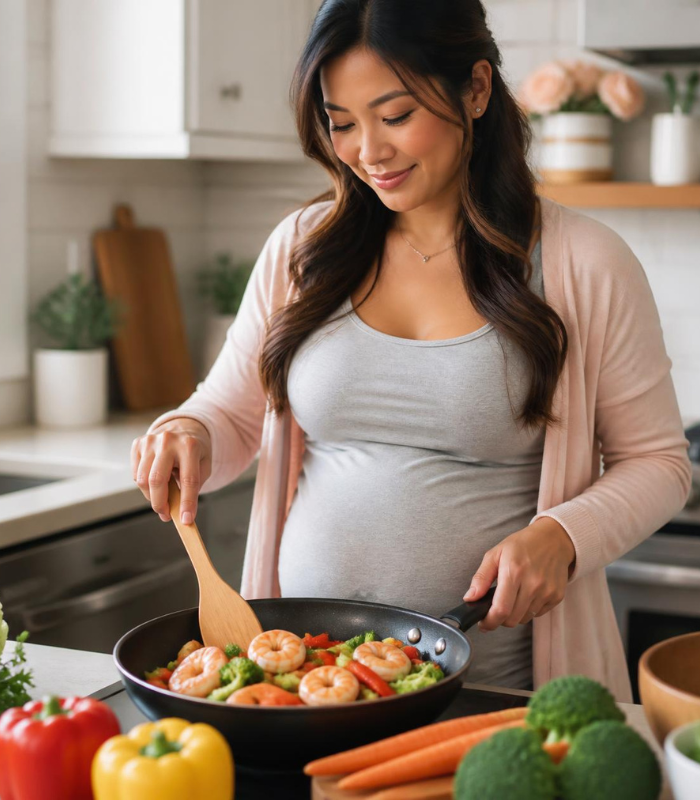
In practice, that might look like a shrimp stir-fry one night and baked salmon later in the week — or three shrimp meals in a row if that’s what you’re craving. Either way, you’re inside the guidelines.
The part that actually matters: how it’s cooked
This is where the real pregnancy rule lives. Shrimp needs to be fully cooked — internal temperature of 145°F, flesh opaque and pink, curled into a loose C shape. Skip anything raw or undercooked: raw shrimp cocktail, shrimp sashimi, ceviche where citrus does the “cooking” instead of heat.
A few other things worth knowing:
- Buffets and raw bars add risk beyond the shrimp itself — think shrimp sitting at room temperature or cross-contamination from raw seafood nearby.
- Reheat leftovers until steaming hot, and eat refrigerated shrimp within 3–4 days.
- If you’ve never eaten shrimp before, pregnancy isn’t the moment to try a big portion for the first time. Introduce it carefully, and if you notice hives, swelling, or trouble breathing, get medical help right away.
The bottom line
Cooked shrimp, prepared properly, is safe in every trimester — there’s no special first-trimester exception or third-trimester cutoff. If you’re not sure where to start, one shrimp-based meal this week, cooked until fully opaque, is an easy way to get protein, choline, and iodine in without much effort. Garlic shrimp with vegetables or a simple shrimp skewer both work well and don’t take long to make.
Fried shrimp is fine as long as it’s cooked through — not the healthiest prep, but not risky. Shrimp sushi is safe if it’s cooked (tempura rolls, cooked nigiri); raw shrimp sushi isn’t. And no, shrimp isn’t high in mercury — that’s the one thing you can stop worrying about.
 Alona Smith