
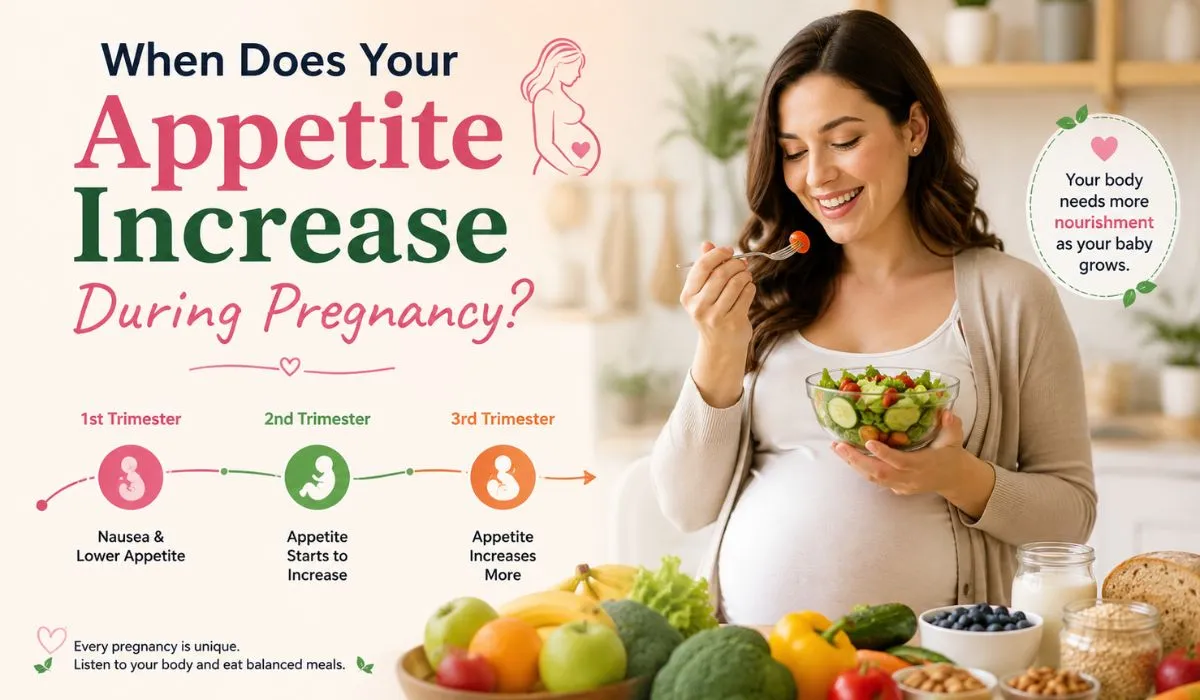
For most women, real hunger kicks in during the second trimester, once morning sickness backs off and the baby’s growth starts pulling more energy from your body. Some feel it much earlier, as early as week 5 or 6. Others don’t notice a shift until they’re halfway through. There’s no single script everyone follows here.
Why the First Trimester Usually Goes the Other Way
It sounds backwards, but plenty of women actually eat less in early pregnancy, not more. Nausea makes food unappealing, certain smells become unbearable out of nowhere, and hormones — hCG and progesterone especially — suppress appetite directly. In one study of over 2,000 pregnant women, most of those with moderate to severe nausea said they were eating noticeably less in early pregnancy. So if your appetite hasn’t shown up yet, or seems to have packed up and left, that’s normal. It’s not a sign something’s wrong.
Calorie guidelines reflect this too. In the first trimester, most recommendations call for little to no extra intake — sometimes as low as 100 extra calories a day. The early priority isn’t more food. It’s better food.
Why the Second Trimester Feels Like a Different Pregnancy
Once nausea eases, usually around week 13 or 14, appetite tends to come back with a vengeance. Part of that’s just relief. Part of it is biology — the baby’s growth speeds up, energy needs rise, and your body responds with genuine hunger. Calorie needs go up by roughly 300 to 340 a day here. A lot of women call this stretch the “honeymoon phase” for good reason: more energy, a steadier mood, and food finally sounding good again.
What Happens Later, in the Third Trimester
Hunger often stays strong into the third trimester, where calorie needs climb again — around 450 to 500 extra a day. But there’s a new obstacle: space. The growing uterus crowds your stomach and other organs, so eating to fullness starts feeling uncomfortable even when you’re genuinely starving. It’s common for appetite to level off or dip a little in these last weeks. Not because your body needs less food, but because there’s nowhere for a big meal to go.
What If Your Appetite Never Really Spikes?
Plenty of women get through an entire pregnancy without the dramatic hunger surge everyone talks about, and that’s not automatically a problem. Appetite comes down to individual hormone response, activity level, stress, and honestly just how different bodies work. As long as you’re eating a reasonably balanced diet and your provider says everything’s progressing normally, a quiet appetite on its own isn’t something to worry about.
When It’s Worth Mentioning to Your Provider
Bring it up if your hunger disappears alongside other symptoms — being unable to eat at all, losing weight instead of gaining appropriately, or fatigue and dizziness that go well beyond typical pregnancy tiredness. Those are worth a check. A simply quiet appetite, by itself, usually isn’t.
The Bottom Line
Appetite tends to dip in the first trimester, climb through the second as nausea fades and the baby grows, then level off in the third once space runs short. The exact timing is different for everyone, and both an early hunger spike and a quiet appetite can be perfectly normal parts of a healthy pregnancy.
 Alona Smith