

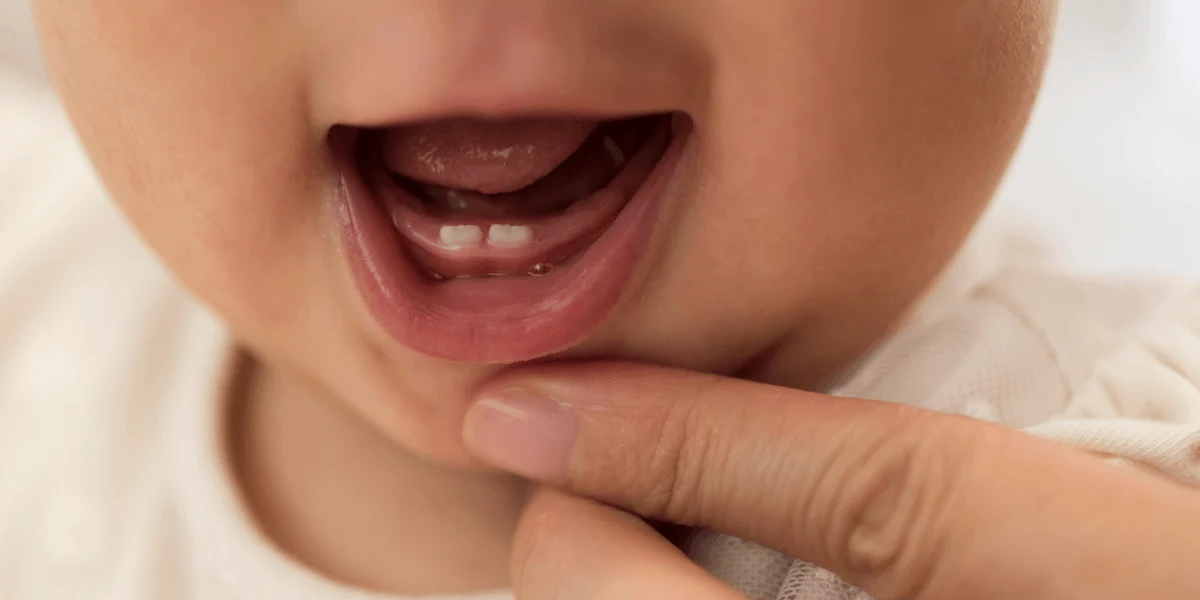
Yes, it happens — and if you’re reading this because your newborn showed up with a little tooth already poking through, you’re not seeing things and you didn’t cause it. It’s called a natal tooth, and while it’s rare, it’s well documented and usually not a big deal.
Table of Contents
Just How Rare Are We Talking?
Somewhere around 1 in 2,000 to 1 in 3,000 babies are born with at least one tooth already visible. There’s a close cousin condition too — neonatal teeth — where the tooth erupts within the first month rather than being there at birth. Same deal, same management either way.
Nine times out of ten, it shows up on the lower front gum, right where the permanent incisors will eventually sit.
Why Does This Even Happen?
Mostly? No clear reason at all. It’s simply an early eruption of a tooth that was going to show up eventually anyway. That said, it’s a little more common when:
- There’s a family history of natal or neonatal teeth (it does seem to run in families sometimes)
- There’s an underlying genetic condition, like Ellis-van Creveld syndrome or Pierre Robin sequence — though this is rare and usually comes with other visible signs, not just the tooth
- There’s simply nothing going on at all, which is the outcome for the vast majority of babies
Most natal teeth are real teeth from the normal set, just early. A small percentage are extra (“supernumerary”) teeth that will eventually fall out and get replaced by a normal one.
Does It Need to Come Out?
Depends entirely on how stable it is. A pediatric dentist will look at:
- How loose it is — a wobbly tooth is a choking and aspiration risk, and that’s usually the deciding factor for removal.
- Root development — natal teeth often haven’t grown much root yet, which is part of why they can feel loose in the first place.
- Whether it’s interfering with feeding — either causing pain for the nursing parent or making it hard for the baby to latch properly.
If it’s firmly rooted and feeding is going fine, plenty of providers will just keep an eye on it instead of pulling it.
Will It Get in the Way of Breastfeeding?
Not automatically, no. Newborns nurse by compressing the breast with their tongue and jaw — teeth barely factor into it at this stage. Still, keep an eye out for nipple pain or damage during feeds, or a tooth with a rough, sharp edge (a dentist can file that down). Actual biting tends to come later, once regular teething kicks in around 6 months, not from a natal tooth in the newborn stage.
If This Is Your Situation
- Flag it for your pediatrician right away if it wasn’t already noted at birth.
- Ask for a referral to a pediatric dentist to check stability and root development.
- Watch the first few feeds closely for pain or latch trouble.
- Resist the urge to touch or try to remove it yourself — there’s a real risk of the tooth (or a fragment) being swallowed, and that’s a job for a professional.
The Short Version
A baby being born with teeth is unusual but not dangerous on its own. What matters is whether the tooth is loose and whether feeding is affected — beyond that, most natal teeth just get watched and cause no lasting issues.
Quick Answers
Will a natal tooth eventually fall out and be replaced, like normal baby teeth?
If it’s one of the standard set, yes — it’ll follow the usual timeline for losing baby teeth later on.
Does a natal tooth point to a bigger health issue?
Rarely. Most babies with one are otherwise perfectly healthy. Your pediatrician may screen for associated conditions only if there are other signs pointing that way.
Can I still breastfeed with a natal tooth in the picture?
In most cases, yes. If nipple pain or latch issues show up, a lactation consultant or pediatric dentist can help sort it out.
 Alona Smith