

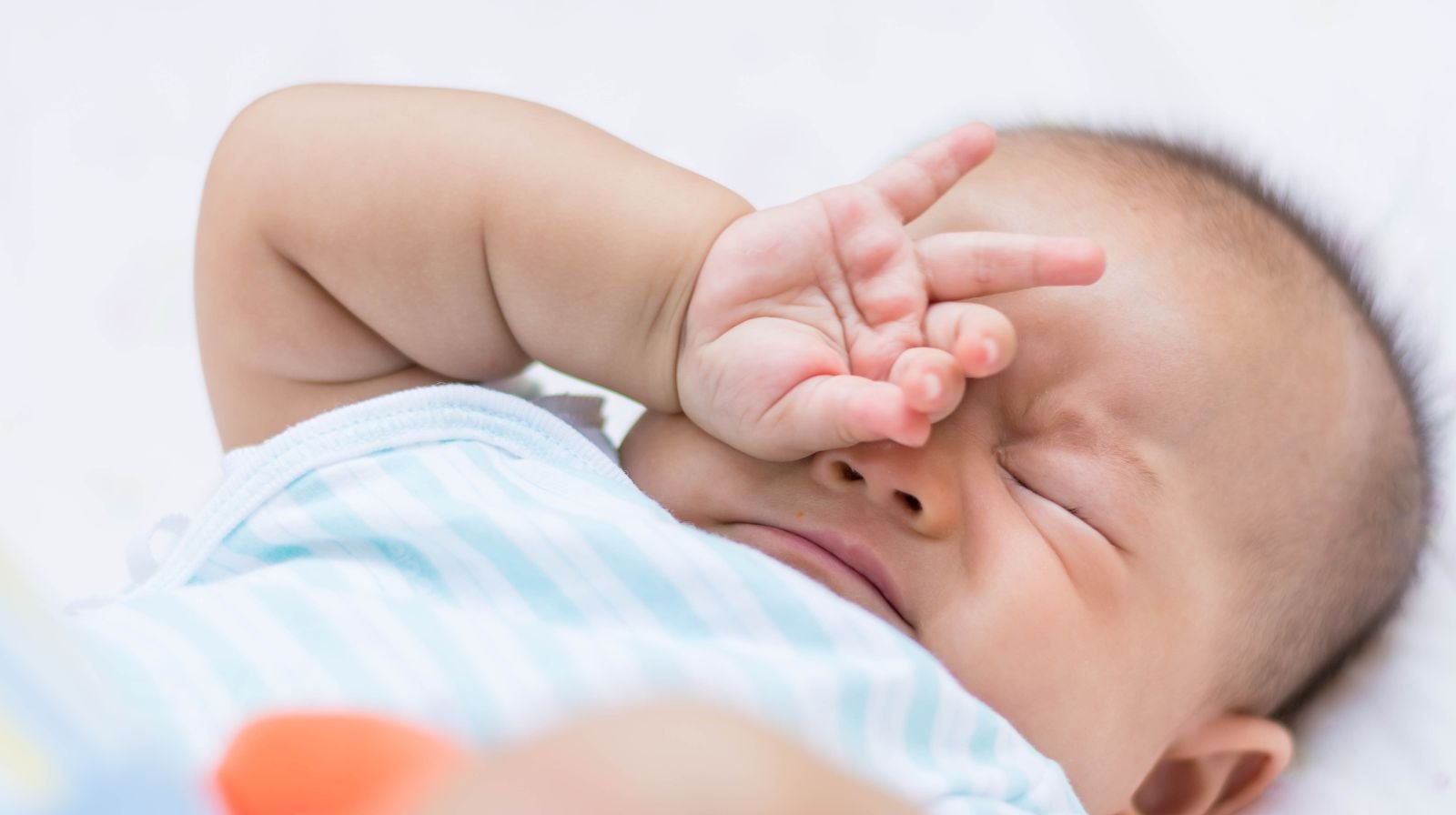
You know the move — tiny fist dragging across a tiny eye, right before the mood turns. If you’ve caught it, you’ve spotted one of the most dependable tired cues a baby gives off. It’s not a fluke. It’s a small stack of reflexes working together, and once you learn to read it, you can usually beat the meltdown to the punch.
Table of Contents
What’s Actually Going On
Tired eyes get irritated. As a baby gets sleepy, blink rate and tear production both drop a bit, which leaves the eyes feeling dry or scratchy. Rubbing is just the natural response — the same reason you rub your own eyes at 11pm.
It’s also weirdly calming. Pressure on the eyes gently stimulates the vagus nerve, which can trigger a parasympathetic response — slower heart rate, slower breathing. Some sleep specialists think babies do this almost on instinct, similar to how thumb-sucking self-soothes.
And sometimes it’s just… clumsy hands. Younger babies, especially under 6 months, don’t have much fine motor control yet. A general urge to touch the face often lands squarely on the eyes, simply because they’re sensitive and get noticed.
It Rarely Shows Up Alone
Eye-rubbing usually travels with a small entourage of other tired signs:
- Yawning
- A glazed, unfocused stare or less eye contact
- Ear-pulling
- Extra clinginess or fussiness
- Jerky arm and leg movements
- Suddenly losing interest in toys or people
The more of these stack up together, the more urgent that sleep window really is.
Why Speed Matters Here
Babies only have so long they can stay awake comfortably — what sleep folks call a wake window. Push past it, and the body starts producing cortisol to keep the baby going, which sounds helpful but backfires: cortisol actually makes it harder to fall asleep, not easier. That’s the whole “overtired baby who won’t sleep” paradox in a nutshell.
| Age | Typical wake window |
|---|---|
| 0–8 weeks | 45–60 minutes |
| 2–4 months | 1–2 hours |
| 4–6 months | 2–3 hours |
| 6–12 months | 2.5–4 hours |
Eye-rubbing tends to show up near the tail end of that window. Treat it as your cue to start winding down, not as the moment to wait for actual crying.
What to Do the Second You Spot It
- Start your sleep routine right away — dim the lights, cut the noise, head to the sleep space.
- Keep things low-key. This is not the moment for a new toy or an exciting game.
- Lean on your usual routine — swaddle, sleep sack, whatever your baby associates with “it’s time.” Consistency does a lot of the work here.
- Don’t wait for crying as your signal. By the time crying starts, you’re already playing catch-up.
When It Might Not Be About Sleep
Occasionally eye-rubbing has nothing to do with tiredness. Worth a call to your pediatrician if it’s paired with redness, swelling, discharge, or if it’s happening well outside typical tired windows — those can point to irritation, a blocked tear duct, or an eye infection.
Quick Answers
Do newborns rub their eyes when tired?
Yes, though with their limited motor control it often looks more like a general face-swipe than a targeted rub.
Is eye-rubbing an early or late tired sign?
More middle-to-late. Yawning and reduced eye contact usually come first.
My baby is rubbing her eyes but fighting sleep hard — should I let her stay up?
No — follow the cue. Forcing extra awake time or ignoring the signal both tend to make bedtime worse, not easier.
 Alona Smith