

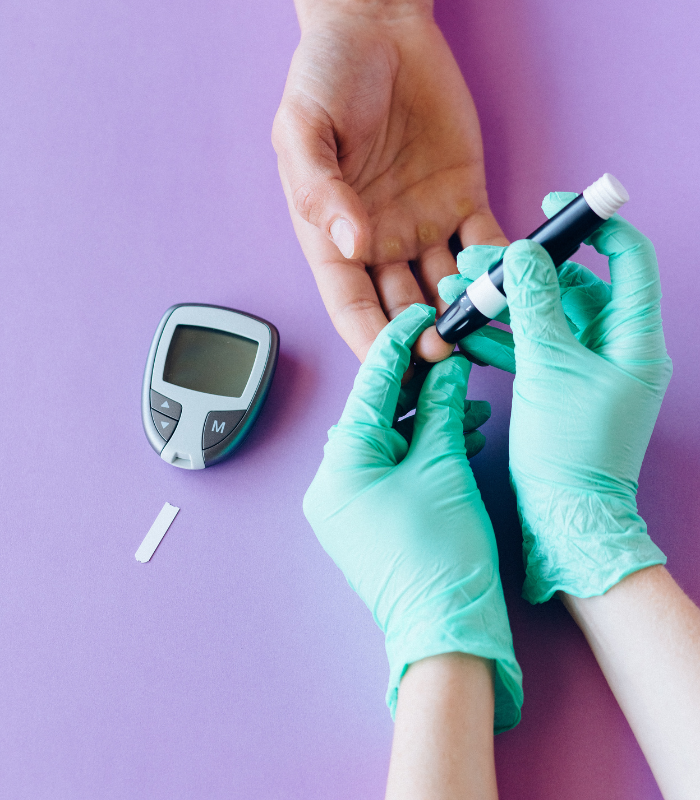
I still remember the exact moment my client Priya called me, half-crying, half-laughing at herself, holding a granola bar in one hand and her glucose meter in the other. “I don’t even know what a carb IS anymore,” she said. “I ate an apple and my number went to 165. I’m scared of fruit now.” She’d just been diagnosed with gestational diabetes three days earlier, and her OB’s office had handed her a photocopied sheet with numbers on it and sent her home to figure out the rest herself.
That conversation happens more than you’d think. So let’s actually walk through this the way I wish someone had walked Priya through it that first week — not with a scary list of “banned” foods, but with real numbers you can build a plate around.
Table of Contents
The number that actually matters
Here’s where we usually land, and it’s the same range I’ve used with dozens of clients since: 30–45 grams of carbohydrate at lunch and dinner, a bit less at breakfast (15–30 grams), and 15–20 grams for snacks, spread across three meals and two to three snacks a day. This isn’t a number I’m inventing — it’s the framework used consistently across maternal-fetal medicine clinics and diabetes education programs, and it held up when I checked it against Priya’s own glucose logs a few weeks in.
Why her “healthy” breakfast kept spiking her
This was the part that genuinely surprised Priya, and it surprises almost everyone I work with. She’d been eating oatmeal with banana every morning because it felt virtuous — and her numbers were the worst of the whole day, every single time.
It’s not you doing anything wrong. Cortisol peaks in the morning, and pregnancy dials up insulin resistance right along with it, so your body is least equipped to handle carbs first thing. That’s why breakfast usually needs to be the smallest carb meal of your day — often just 15-30 grams — even though it feels backwards. When we cut Priya’s breakfast oatmeal in half and added two eggs, her one-hour reading dropped from 165 to 128 within days. If you want a full rundown of what tends to work at that specific meal, I’ve put together a good breakfast for gestational diabetes guide with the combinations I use most with clients.
What her day actually looked like, once we dialed it in
| Meal/Snack | Target | What she actually ate |
|---|---|---|
| Breakfast | 15-30g | 1/2 cup oats + 2 eggs |
| Snack | 15g | String cheese + 6 almonds |
| Lunch | 30-45g | Turkey sandwich, 1 slice bread, side salad |
| Snack | 15g | Greek yogurt |
| Dinner | 30-45g | Salmon, roasted veg, small sweet potato |
| Bedtime | 15-20g | Apple + peanut butter |
Nothing here is exotic or expensive. That’s on purpose — the plan that actually works is the one you can keep doing for the rest of your pregnancy, not the one that looks perfect on day one and falls apart by week two.
The mistake almost everyone makes at first
Priya’s instinct — and I see this constantly — was to just cut carbs as low as possible across the board, figuring less is safer, and she started eyeing our low-sugar foods for pregnancy list like it was a punishment list rather than a resource. It backfires two ways. First, you still need a real minimum of carbs each day (around 175 grams total) to fuel your baby’s brain growth, so going too low isn’t actually the safety move it feels like. Second, when you under-eat carbs at one meal, you tend to overcorrect and eat more than planned at the next one, which is exactly the swing you’re trying to avoid.
What actually moved Priya’s numbers wasn’t eating less — it was eating differently. Pairing every carb with protein or fat. Swapping her white bread for sprouted grain. Never eating a carb completely alone. If you need ideas for what to pair things with, our list of protein-rich foods for pregnant women is a good place to build your pairings from.
One carb “choice” = about 15 grams
This is the mental shortcut I give every client because it makes grocery shopping and eating out so much easier. A meal of 30-45g is roughly 2-3 “choices” — picture a fist-sized portion of rice, one slice of bread plus a small piece of fruit, or a cup of oatmeal with half a cup of berries.
And a reminder I give everyone: beans, lentils, corn, peas, and starchy vegetables all count as carbs too, even though they don’t look like the “classic” bread-and-rice category. Non-starchy vegetables — broccoli, spinach, peppers — are the one category you genuinely don’t need to count.
What I’d tell you if you were sitting across from me right now
Test your assumptions. Don’t trust a food to be “safe” just because it’s healthy in general — Priya’s oatmeal was a perfectly good food that was simply wrong for her body at 7 a.m. Actually measure your carbs against a label for a few days instead of eyeballing it; almost everyone underestimates. And when your numbers come back higher than you expected, that’s data, not a failing grade. Bring it to your dietitian and adjust — that’s literally the whole process.
Six weeks after that first phone call, Priya texted me a photo of her lunch — a very ordinary turkey wrap — with the caption “under 120 an hour later, I feel like a scientist.” That’s really the goal here: not perfection, just enough understanding that you stop being afraid of your own plate.
 Alona Smith