
Let’s be real — cereal gets a bad reputation, but it doesn’t deserve all of it. It can absolutely be part of a healthy pregnancy breakfast. You just have to know what you’re pouring into that bowl. Go whole grain, keep the sugar low, make sure it’s fortified with folic acid and iron, and don’t eat it alone — add something with protein, like milk, yogurt, or a handful of nuts. That’s really the whole idea.
But if you’ve ever stood in the cereal aisle at 7am, turning a box around to squint at the fine print, you know it’s never quite that simple. So let’s actually go through it, together, like two people just trying to figure out breakfast.
Table of Contents
Why mornings feel harder right now
Pregnancy mornings are a strange combination — “I need food immediately” one minute, “the idea of eating makes me want to lie down” the next. If that’s you, you’re not doing anything wrong. It’s just how it goes for a lot of people.
Here’s the thing though: even on the mornings you don’t feel like eating, your body still needs the fuel. So does the baby you’re growing. A decent breakfast can take some of the edge off morning sickness, keep you from crashing by 10am, and give you an early start on nutrients like folic acid and iron — both of which matter a lot in the first trimester especially. Health experts recommend keeping folic acid intake steady every day, not just some days, and a fortified breakfast is honestly one of the easiest ways to chip away at that without much effort at all.
What’s actually worth checking on the label
Here’s something nobody tells you: the front of a cereal box is basically an advertisement. The real story is always on the side, in the ingredient list, in tiny print nobody wants to read before their coffee.
So flip the box over. Look at the first ingredient. If it says “whole wheat,” “whole oats,” or “whole grain corn” — good, you’re starting in the right place. If it opens with “enriched flour” instead, that usually means the grain got stripped down first, then had a few nutrients added back in artificially. Not quite the same as never taking them out to begin with.
Next, sugar. Aim for 6 grams or less per serving if you can. It’s easy to assume something’s healthy just because it’s marketed to kids, or slapped with the word “granola” — but plenty of those boxes are quietly sitting at 12, even 15 grams of sugar a serving. That kind of sugar spike (and the crash that follows) can genuinely make nausea and fatigue worse, not better.
Then there’s fortification. A lot of cereals are fortified specifically with folic acid and iron, because so many of us fall short on both. The CDC recommends 400 micrograms of folic acid a day for women who could become pregnant. A fortified cereal can help you get closer to that — alongside your prenatal vitamin, not instead of it. Worth saying twice, honestly.
And don’t forget fiber. Pregnancy constipation is incredibly common, especially once iron supplements enter the picture, so a cereal with 3 grams of fiber or more per serving can make a real difference here. Small thing, big impact.
The pairing matters just as much as the cereal itself
Here’s what I mean by that: the cereal is really just the base. What you eat it with does most of the heavy lifting.
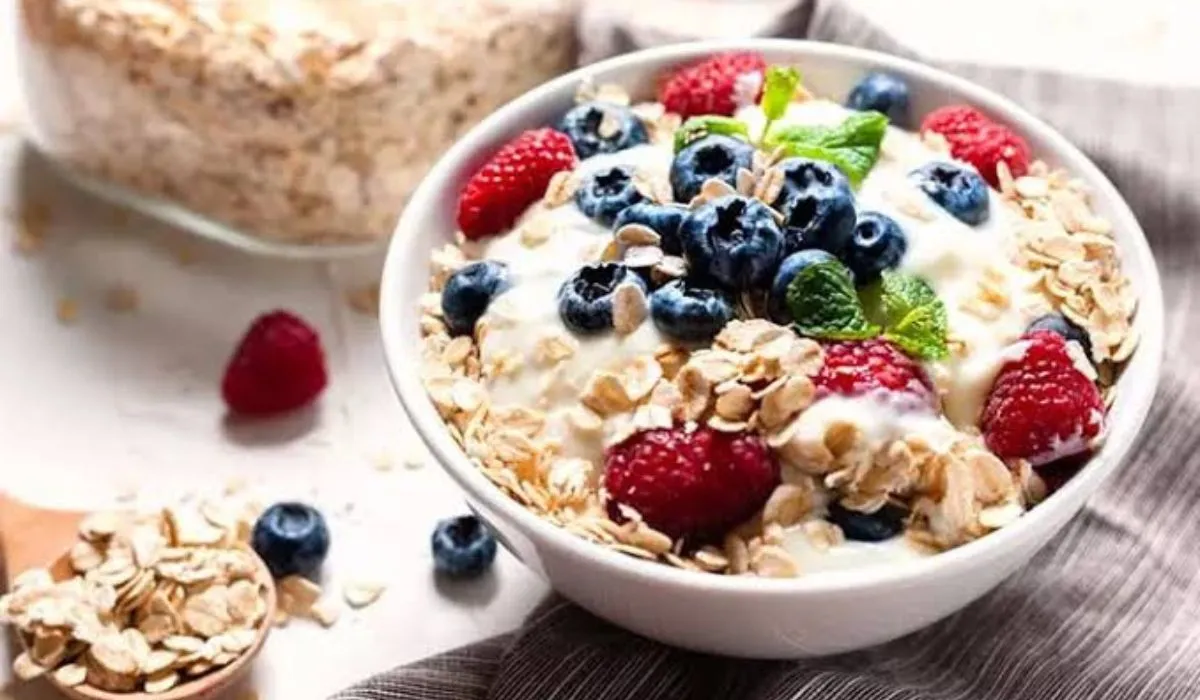
Milk — or a fortified plant milk, if that’s more your thing — brings calcium and vitamin D into the mix, both important for your baby’s developing bones. A spoonful of Greek yogurt on the side adds protein, which slows digestion down and keeps you from getting hungry again an hour later (we’ve all been there). Sliced strawberries or banana add natural sweetness, sure, but they’re doing more than that — the vitamin C actually helps your body absorb the iron from the cereal more efficiently. And a small handful of walnuts, or a spoonful of chia seeds stirred in, rounds things out with a bit of DHA-supportive fat.
None of this needs to be fancy. A bowl, a few extras, five minutes. That’s it.
A few easy mistakes to watch for
It happens to almost everyone — grabbing a box because it says “multigrain” or “made with real fruit” on the front, without ever flipping it over to check what’s actually inside. Worth breaking that habit if you can.
Skipping protein is another common one. A bowl of cereal on its own tends to leave you hungry again way too soon. And granola has a reputation it doesn’t always earn — plenty of varieties are higher in sugar and fat than a basic flaked cereal, so don’t assume it’s automatically the healthier pick just because it sounds wholesome.
One more, gently: cereal is a nice supporting player for your folic acid intake. It shouldn’t be standing in for your prenatal vitamin. Keep taking that too.
FAQ
Is it safe to eat cereal every day during pregnancy?
Yes — as long as it’s a whole grain, lower-sugar variety, and you’re pairing it with some protein. Mixing in eggs, oatmeal, or a smoothie a few days a week doesn’t hurt either, just for variety.
Can cereal replace my prenatal vitamin?
No. Fortified cereal helps supplement your daily folic acid and iron, but it isn’t concentrated enough to replace a prenatal vitamin your provider has recommended.
What cereals should I avoid during pregnancy?
Steer clear of anything paired with unpasteurized milk, and go easy on granolas or clusters that are basically candy in a bag. Check the sugar line before you trust the packaging.
Is oatmeal better than boxed cereal?
Generally, yes — oatmeal tends to have less added sugar and more fiber. But a well-chosen whole grain cereal is still a perfectly good option, especially on the mornings when oatmeal feels like too much effort.
Does cereal help with morning sickness?
For a lot of women, yes. Plain, mild cereals tend to sit easier than heavier breakfasts, especially early on. A cup of ginger tea alongside it can help too.