
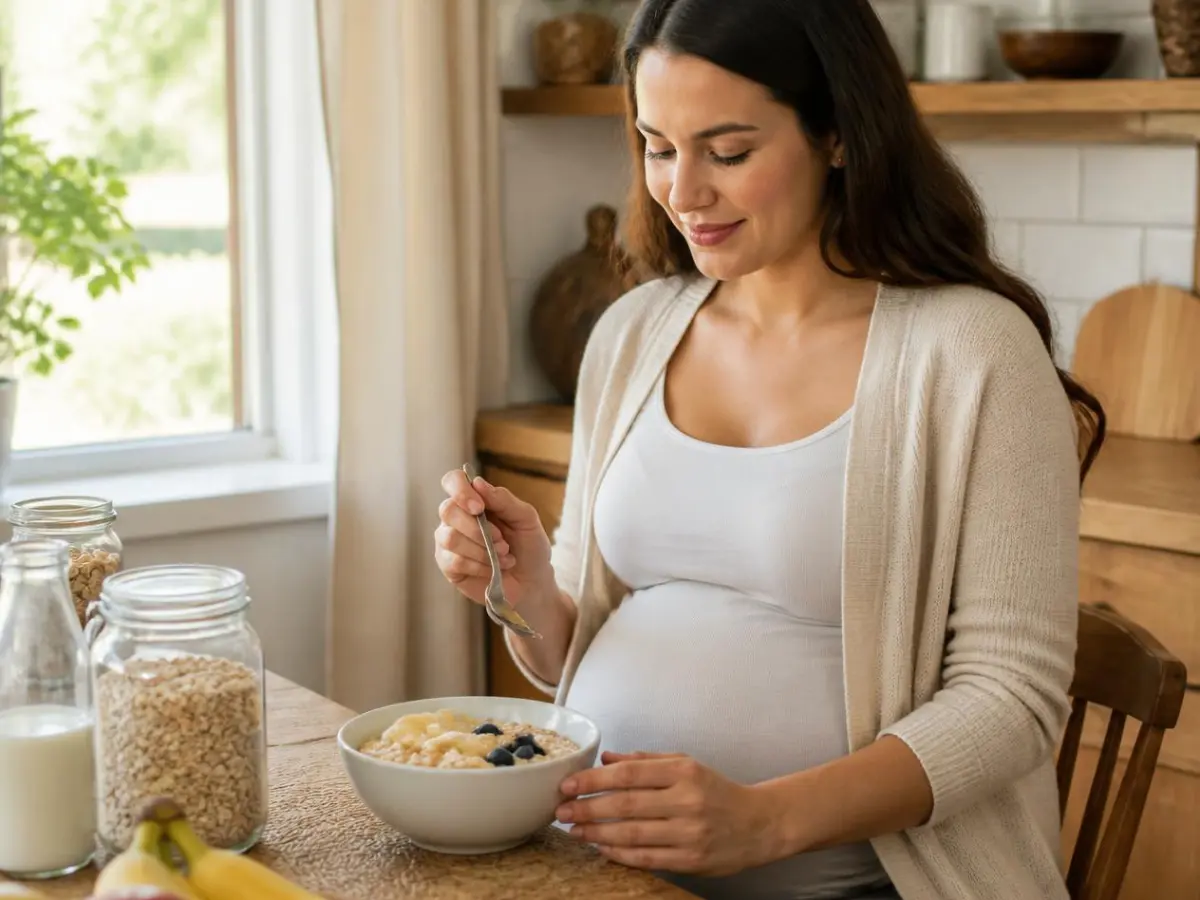
Yes — oatmeal is one of the safest and most nutrient-dense breakfasts you can eat during pregnancy. It’s a whole grain packed with fiber, iron, B vitamins, and magnesium, and it’s linked to lower gestational diabetes risk, better digestion, and steadier energy. There’s no medical reason to avoid it, and most providers actively recommend it.
Here’s the full nutrient picture, when it helps most, and the few things worth knowing before you eat it every morning.
Table of Contents
What’s actually in a bowl of oatmeal
| Nutrient (1 cup cooked, ~234g) | Amount | Why it matters in pregnancy |
|---|---|---|
| Fiber | ~4 g | Eases constipation, a top-3 pregnancy complaint |
| Iron | ~2 mg | Contributes toward your 27 mg/day target |
| Protein | ~6 g | Supports tissue growth for you and baby |
| Magnesium | ~61 mg | Supports muscle, nerve, and bone development |
| B vitamins (B1, folate) | Present | Support energy metabolism and neural development |
| Beta-glucan (soluble fiber) | High | The specific fiber tied to blood sugar and cholesterol benefits below |
Why oatmeal stands out for pregnancy
1. It may lower gestational diabetes risk
Oats are high in beta-glucan, a soluble fiber that slows how fast sugar enters your bloodstream after eating. Research on high-fiber diets in pregnancy has linked higher fiber intake to a lower risk of gestational diabetes (GDM), and fiber supplementation trials in women with GDM have shown improvements in fasting and post-meal blood sugar. Oatmeal is one of the easiest whole-food ways to get that fiber at breakfast, when blood sugar spikes are common.
2. It relieves constipation
Pregnancy hormones slow digestion, and iron supplements make it worse. Oatmeal’s soluble fiber adds bulk and softness to stool, which is why it’s one of the first foods often recommended for pregnancy constipation — no extra supplement needed.
3. It supports your iron needs
Pregnancy nearly doubles your iron requirement, to 27 mg/day. A cup of oatmeal won’t get you there alone, but pairing it with a vitamin-C food — sliced strawberries or orange segments — helps your body absorb the iron oats do provide.
4. It supports heart health during a high-blood-volume pregnancy
Your blood volume rises by up to 50% by the third trimester, putting extra demand on your cardiovascular system. Beta-glucan has a recognized cholesterol-lowering effect, and regular oat consumption has also been linked to modest blood pressure reduction — both useful during a period when your heart is working harder.
5. It gives you steady, lasting energy
Because oats digest slowly, they release energy gradually instead of causing a sugar spike and crash — helpful for the fatigue that shows up in the first and third trimesters especially.
Is oatmeal safe in every trimester?
Yes. There’s no trimester-specific restriction on oatmeal — it’s considered safe from week 1 through delivery. The main shift is why you might lean on it more at different points:
- First trimester: gentle on nausea, easy to eat when appetite is low
- Second trimester: good vehicle for extra protein/iron toppings as needs rise
- Third trimester: fiber becomes more valuable as the growing uterus slows digestion further
What to actually watch for
Oatmeal itself isn’t risky, but a few related things are worth knowing:
- Flavored instant oatmeal packets are often loaded with added sugar — up to 12g per packet in some brands. Plain oats with your own fruit and cinnamon give you the benefits without the sugar spike you’re trying to avoid.
- If you have celiac disease or a gluten sensitivity, oats are naturally gluten-free but frequently cross-contaminated during processing. Choose a certified gluten-free label if this applies to you.
- Oatmeal ≠ oat supplements. Oat straw or Avena sativa extract supplements are a different product from the whole grain you eat for breakfast, and haven’t been studied the same way for pregnancy safety — stick to food-form oats unless your provider says otherwise.
- Moderation still applies. Oats aren’t a problem food, but no single food should replace variety — pair it with protein and healthy fats to make it a full breakfast, not just a fiber bomb.
Easy ways to eat it (without the sugar crash)
- Rolled oats + Greek yogurt + berries + a spoon of nut butter (protein + fiber combo)
- Overnight oats with chia seeds and sliced banana
- Savory oats with a fried egg and spinach, if sweet breakfasts aren’t appealing
- Oat bran stirred into a smoothie for extra fiber without the texture
FAQ
Is oatmeal good for morning sickness?
Many people find plain oatmeal easier to tolerate than greasy or strongly flavored foods in the first trimester, since it’s bland and low in fat. It’s not guaranteed to help everyone, but it’s a reasonable food to try.
Can oatmeal help with gestational diabetes?
Oatmeal’s soluble fiber can help moderate post-meal blood sugar, but if you’ve been diagnosed with GDM, portion size and toppings matter — plain oats with protein, not sweetened instant packets. Work with your provider or a dietitian on exact portions.
How much oatmeal is safe per day?
There’s no upper limit specific to pregnancy. A standard serving (about 1/2 cup dry, 1 cup cooked) once daily as part of a varied diet is a reasonable, well-tolerated amount for most people.
Is steel-cut, rolled, or instant oatmeal healthiest?
Steel-cut and rolled oats are nutritionally very similar and both good choices. Plain instant oats are also fine — the difference is texture and cook time, not nutrition. The thing to avoid is sweetened flavor-packet instant oatmeal, not instant oats themselves.
 Alona Smith