

There’s a very specific kind of pregnancy misery that nobody warns you about ahead of time, and it involves standing in your bathroom feeling personally betrayed by your prenatal vitamin. Iron does that. By my third trimester, I’d gone from “regular” to “actively dreading it,” and my midwife’s answer was almost annoyingly simple: more fiber, more consistently, more water alongside it. It worked, but it took me actually organizing a list like this one to make it stick — so here’s the version I wish I’d had from the start.
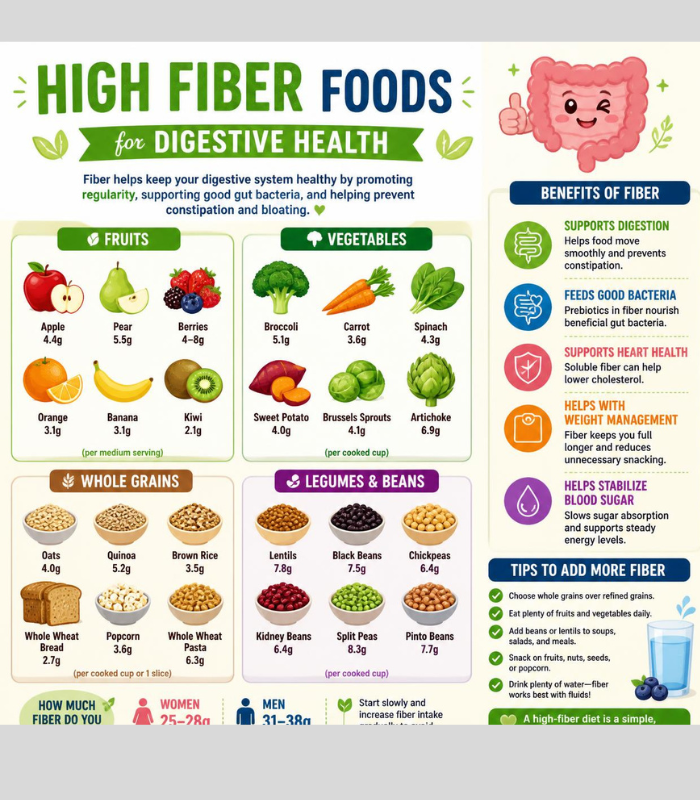
The target most providers use: 25-30 grams of fiber a day (you’ll also see 28g cited as the specific Adequate Intake figure). Most people, pregnant or not, land closer to 15-17 grams without trying — so this is less a dramatic overhaul and more closing a gap that was probably already there before you got pregnant. If you’re already dealing with the problem right now, my foods to help constipation in pregnancy post is the faster-relief version of this same list.
Table of Contents
The actual fridge list
Fruits
- Raspberries — 8g per cup
- Prunes — 7g per 100g (~12g per cup), and yes, they’re the classic for a real reason
- Dates — 12g per cup
- Pear, skin on — ~5.5g
- Mango — 5g per cup
- Apple, skin on — ~4g
- Orange — ~3g
- Banana — 3g
- Strawberries — 3g per cup
- Figs
Vegetables
- Broccoli
- Brussels sprouts
- Carrots
- Sweet potato, skin on
- Peas
- Leafy greens (spinach, kale)
- Artichokes
Legumes — some of the highest-fiber foods period
- Lentils — ~15.5g per cup, cooked
- Black beans — ~15g per cup, cooked
- Chickpeas
- Kidney beans
- Split peas
Whole grains
- Oats
- Whole wheat bread — check the label, “wheat” bread isn’t always whole grain
- Brown rice
- Quinoa
- Bran cereal
- Air-popped popcorn, in moderation
Nuts and seeds
- Chia seeds — 10g per 2 tablespoons, became my personal MVP
- Ground flaxseed (grind it — whole seeds pass through mostly undigested)
- Almonds
- Walnuts
What actually worked for me, not just what’s “supposed to” work
I went slow, and I’d tell you to as well. My first instinct was to eat a huge bran-and-prune breakfast and call it solved. It was not solved. It was, in fact, a much worse day. Jumping fast from 15g to 30g just traded one problem for bloating and cramping. Adding one or two high-fiber foods every few days is the boring, unglamorous version that actually works.
Water is not optional — I learned this the hard way too. Fiber works by absorbing water to soften and bulk stool. Add fiber without adding water and you can genuinely make things worse, not better. I started keeping a water bottle physically next to wherever I was eating, which sounds silly but actually changed my intake more than any reminder app did. Eating your way to more fluids helps too — my water-rich foods list became a genuine part of the strategy, not just a backup.
Prunes, specifically, earned their reputation. Beyond fiber, they contain sorbitol, a natural sugar alcohol with a mild laxative effect. I started with 3-4 a day rather than a whole handful — a sudden larger amount is a fast way to regret your choices.
Stack fiber sources instead of relying on one hero food. My actual go-to became overnight oats with chia seeds and berries — three fiber sources in one bowl, and it didn’t feel like “eating for fiber,” it just felt like breakfast.
A day that got me to about 28-30g
| Meal | Food | Approx. fiber |
|---|---|---|
| Breakfast | Overnight oats, chia seeds, raspberries | ~12g |
| Snack | Apple with almond butter | ~5g |
| Lunch | Lentil soup, whole-grain bread | ~10g |
| Snack | 3-4 prunes | ~5g |
| Dinner | Roasted broccoli, brown rice, baked chicken | ~6g |
When it wasn’t quite enough on its own
Even once I’d genuinely upped my fiber and water, there were stretches where it still wasn’t fully cutting it — and that’s worth mentioning to your provider rather than just pushing fiber even higher. Iron supplements are a common contributor to constipation independent of diet, and my midwife had other suggestions ready, including whether a stool softener made sense for a while.
Call your doctor if: you have severe abdominal pain, no bowel movement for several days despite genuinely trying the diet changes, or any blood in your stool.
For an even longer reference once you’ve worked through this one, my foods rich in fiber for pregnancy post has a wider range of options and portion sizes.
What I’d actually have you do right now: pick three items from this list you don’t currently eat, and put them on this week’s grocery list. You don’t need to hit 30 grams tomorrow — a steady climb over two or three weeks, with the water increasing alongside it, is what actually turned things around for me, not any single miracle food.
By Emma Gill
 Alona Smith