
If chugging glass after glass of plain water sounds exhausting some days, you’re not alone — and good news, it’s not the only way to stay hydrated during pregnancy. Foods like watermelon, cucumbers, oranges, and a good bowl of soup are quietly doing a lot of the same work. They top up your fluids, ease things like constipation and swelling, and hand you a bonus round of vitamins while they’re at it. Think of them less like a chore and more like a hydration shortcut you actually look forward to eating.
Why Your Body Is So Thirsty Right Now
Here’s what’s happening behind the scenes: your blood volume is expanding to support your growing baby, your amniotic fluid needs to be topped up constantly, and your kidneys are basically pulling double shifts filtering waste for two people instead of one. It makes sense that you’d need more fluids than you used to — your body isn’t being dramatic, it’s just doing more.
The CDC notes that staying well hydrated during pregnancy helps maintain healthy amniotic fluid levels, lowers your risk of urinary tract infections, and helps you regulate your body temperature. And if you’ve been dealing with nausea, vomiting, or just sweating more than usual, you’re probably losing fluids faster than you realize — often before you even feel thirsty. That’s really the whole case for water-rich foods: they quietly catch you before you fall behind.
Foods Worth Keeping Around
You don’t need to overhaul your meals to make this work. A lot of what you’re probably already reaching for is doing the job.
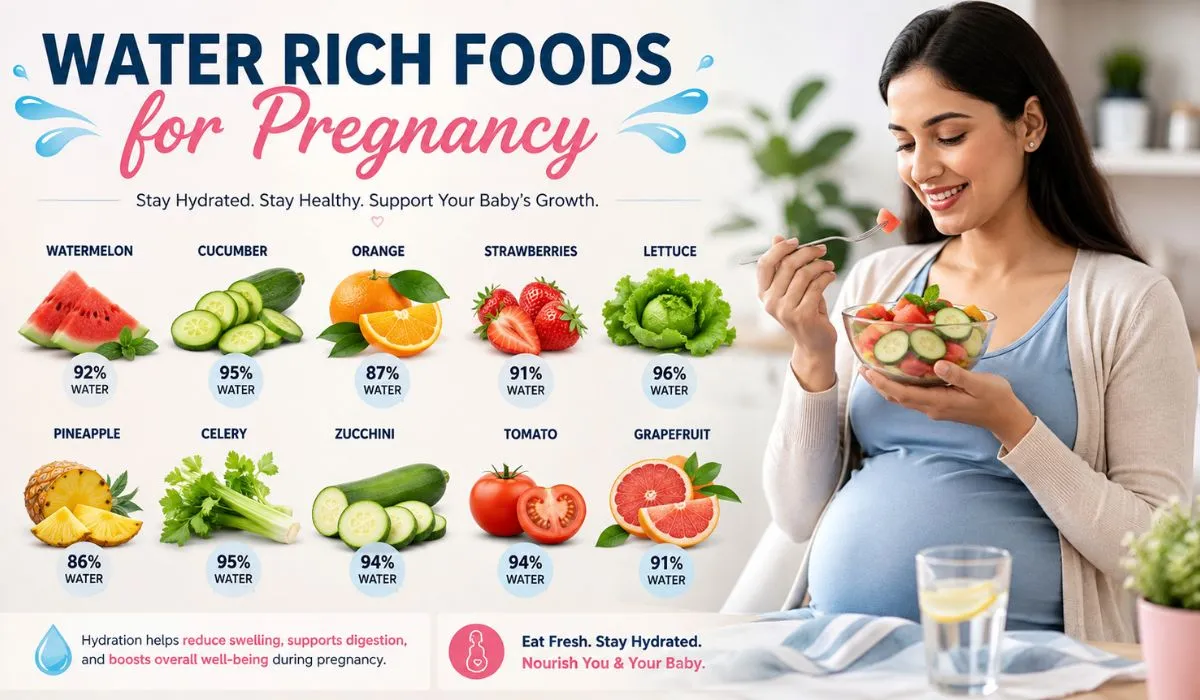
Fruit is the easy one. A slice of watermelon is close to 92% water, and it comes with a nice bonus of vitamin C and lycopene. Oranges and strawberries are right behind it, and they travel well, so they’re an easy thing to toss in your bag for later. Cantaloupe and peaches are worth keeping in rotation too, especially on the days you want something sweet but don’t want to reach for juice.
Vegetables pull their weight just as much, if not more. Cucumbers are around 96% water, which puts them near the top of the list. Lettuce, celery, zucchini, and bell peppers aren’t far off either, and they’re about as low-effort as food gets — rinse, slice, eat, maybe with a little hummus if you’re feeling fancy.
Soup deserves a mention too, especially on the days morning sickness makes heavier meals feel impossible. A light vegetable or chicken broth soup gives you fluids, electrolytes, and a bit of nourishment all in one bowl, and it tends to sit easier on a queasy stomach than most other things will.
And don’t overlook dairy. Milk and plain yogurt carry a good amount of water, plus calcium and protein — two things your body is asking for more of right now anyway.
So How Much Should You Actually Be Eating?
There’s no magic number here — no rule that says you need exactly four servings of watermelon a week. It’s more helpful to think of these foods as backup for your regular water intake, not a substitute for it. Most health experts suggest pregnant women aim for somewhere around 8–12 cups of fluids a day, and food naturally covers part of that.
A simple habit that works well: try to have one water-rich fruit or vegetable at each meal or snack. A handful of cucumber slices at lunch, watermelon after dinner, an orange in the afternoon — none of it feels like effort, but it adds up faster than you’d think.
A Few Things to Watch Out For
- Swapping water for juice. Whole fruit gives you fiber and a lot less sugar than juice does — worth choosing the real thing when you can.
- Assuming food alone is enough. These foods help, but they’re a supplement to drinking water, not a replacement for it.
- Brushing off thirst when you’re nauseous. Even small sips of water or bites of something hydrating throughout the day beat trying to force down one big glass.
- Forgetting about electrolytes. On hot days, or after a bout of vomiting, a broth-based soup can help replace lost sodium and potassium — not just water.
Questions You Might Still Have
Can water-rich foods replace drinking water during pregnancy?
Not entirely. They’re a great addition, but plain water should still be doing most of the heavy lifting.
Is it okay to eat watermelon every day while pregnant?
Yes, in reasonable amounts. It’s hydrating and full of good nutrients, just balance it out since it does have natural sugar.
How do I know if I’m dehydrated?
Dark urine, dizziness, headaches, a dry mouth, or fewer bathroom trips than usual are the common signs. If any of that sticks around, it’s worth a call to your doctor.
Does soup actually count toward my fluid intake?
It does. Broth-based soups are mostly water, so they genuinely add up toward your daily goal.
Can cucumbers help with pregnancy swelling?
Their water and potassium content may support healthy fluid balance, but if swelling comes on suddenly or feels severe, that’s something to flag with your healthcare provider right away.