

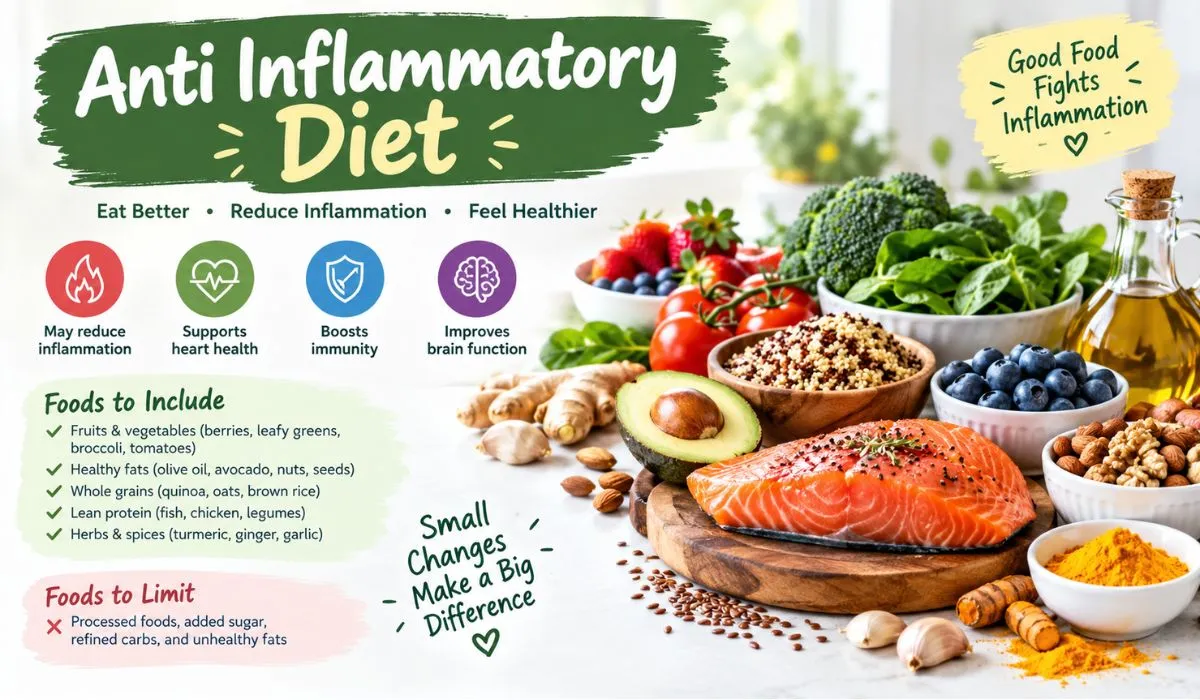
An anti inflammatory diet means eating mostly real, whole foods and cutting back on the packaged, fried and sugary stuff. In pregnancy it’s a simple way to support your prenatal nutrition and keep your energy steadier through the day.
Table of Contents
My mother-in-law used to say a good plate should look like a garden, and I laughed at her for years. Turns out she was pretty much describing this diet.
What’s going on with inflammation
Inflammation gets a bad name, but your body needs it. When you get a cold or scrape your knee, that’s inflammation doing its job. The problem is when it never really settles down, which tends to happen if you’re run-down, sleeping badly, and eating whatever is fastest. Pregnancy is already hard work for your body, so giving it better fuel is a sensible thing to do. That’s the whole thought behind this way of eating.
Building a plate you’ll actually eat
Start with vegetables and fruit, and don’t aim for perfect. Some spinach stirred into your daal is a win. An orange after lunch is a win. Leafy greens carry folate, so a good chunk of those folic acid benefits you hear about can come from food, not just the tablet your doctor gave you.
Healthy fats are next, and honestly this is the part most women are scared of for no good reason. A bit of olive oil, a few walnuts, some flaxseed over your oats. If you eat fish, salmon is a good pick because it gives you DHA for pregnancy, which your baby’s brain uses as it grows. ACOG says two to three servings a week of low-mercury fish is fine, so you really don’t need to fret over it.
Then the filling things, like lentils, chickpeas, oats and roti made from whole wheat atta. They keep you full for ages and lentils bring iron with them. Squeeze a little lemon on top and your body takes in more of it. A pinch of ginger or turmeric in your cooking is nice too, though I’d check with your doctor before ever taking turmeric capsules.
What to ease up on (without feeling awful)
I don’t love lists of forbidden foods. They just make you want a samosa more. So instead, look at what you eat most days. If it’s a fizzy drink, something deep fried and a cake from the bakery, try changing one of them this week. Then another next week. Changes that small usually stick, and the huge overnight ones usually don’t.
Food safety is where I’d be stricter. The CDC says deli meats should be heated until steaming before pregnant women eat them, because of listeria, and unpasteurized cheese and runny eggs are best left alone.
An ordinary day
Maybe you have porridge with berries and a few walnuts, then lentil soup and whole wheat bread at lunch. Around four you’re starving, so you eat an apple with peanut butter. Dinner is baked salmon, rice and a big salad, or a chickpea curry if fish makes you queasy. That’s about it.
Please keep taking your prenatal vitamins as well. Pregnancy supplements cover the gaps that even a careful diet leaves, so they work together.
The biggest mistake I see is women being far too hard on themselves. Worrying over every bite does more harm than a biscuit ever will. Also, don’t drop whole food groups without asking your doctor, and don’t treat a supplement like a replacement for a real meal.
Questions people ask me
Is it safe during pregnancy?
For most women, yes, since it’s mainly ordinary food. If you have gestational diabetes, allergies or another health condition, ask your doctor first.
Will it fix swelling?
It may help you feel better overall, but it won’t cure swelling, and sudden puffiness in your face or hands should be checked.
Is turmeric okay?
In cooking, usually yes. High-dose supplements need a doctor’s okay.
Do I have to give up sweets?
No. One treat won’t undo your week.
How soon will I notice a change?
Some women feel steadier in a couple of weeks, others take longer, and both are normal.