

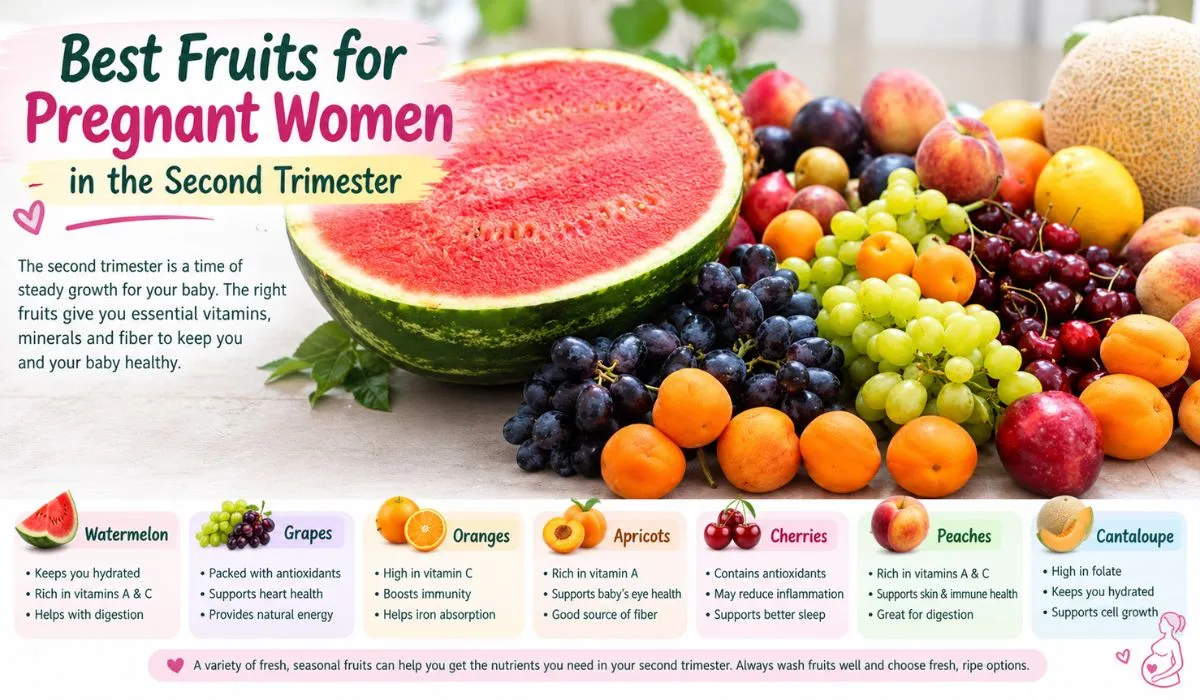
If you’re pregnant and wondering which fruits are good to eat in the second trimester, you have plenty of options. Oranges, berries, bananas, avocados, mangoes, apples, and pears are all nutritious choices. They give you things like vitamin C, folate, potassium, and fiber without requiring much effort in the kitchen.
Table of Contents
The second trimester can feel like a whole new pregnancy.
For some women, the nausea finally starts calming down. Food smells aren’t quite as offensive, and you might actually start looking forward to meals again. Of course, not everyone gets that lucky, but if your appetite is coming back, you may find yourself looking for more snacks throughout the day.
Fruit is an easy option.
You can grab an apple on your way out, cut up some mango when you’re craving something sweet, or throw a banana into a smoothie. Nothing complicated.
Why Eat Fruit During the Second Trimester?
Between about 13 and 27 weeks, your baby is doing a lot of growing. Your body is working hard behind the scenes, too.
You’re making more blood, supporting the placenta, and supplying your baby with the nutrients needed for growth.
That’s where a varied diet comes in.
Fruit can give you fiber, vitamin C, folate, potassium, and other nutrients. It also adds some natural sweetness to your meals, which is pretty nice when pregnancy cravings show up.
But you don’t need to live on fruit. You still need protein, vegetables, whole grains, healthy fats, and your prenatal vitamin.
Think of fruit as one easy part of the bigger picture.
1. Oranges
Oranges are one of those fruits that are just easy to keep around.
They’re juicy, refreshing, and full of vitamin C. Vitamin C also helps your body absorb iron from plant-based foods, which is helpful because your iron needs increase during pregnancy.
Have one with breakfast or grab one when you want something fresh in the afternoon.
And if you’re exhausted, peeling an orange is about as much cooking as some days are going to get.
2. Berries
Strawberries, blueberries, raspberries, and blackberries are all good choices.
They contain fiber and vitamin C, along with other beneficial plant compounds.
You can add them to yogurt, oatmeal, cereal, or a smoothie. Or just wash them and eat them straight from the bowl.
If you’re craving something sweet, berries are an easy way to satisfy that craving while still getting some nutrition.
3. Bananas
Bananas are probably one of the most convenient pregnancy snacks.
No chopping. No cooking. No container required.
They also provide potassium, which your body needs for normal muscle and nerve function.
If you’ve been waking up with those annoying leg cramps, eating potassium-rich foods can be part of a healthy diet, although a banana isn’t a guaranteed cure for cramps.
And if your stomach is still a little unpredictable, bananas may be easier to tolerate than some other foods.
Try one with peanut butter if you want something more filling.
4. Avocado
Avocado is technically a fruit, and it’s a pretty useful one during pregnancy.
It provides healthy fats, fiber, and folate, and it’s filling enough to work as part of a proper meal.
Put it on toast. Add it to eggs. Toss it into a salad. Mash it with a little lemon and eat it with crackers.
There’s a reason avocado toast has become such a popular breakfast—it’s quick and actually keeps you satisfied.
5. Mango
Mango is for the days when you want something sweet.
It’s naturally juicy and sweet, but it also provides vitamin C and vitamin A.
You don’t need a giant bowl of it. A normal serving is plenty.
You may have heard that too much vitamin A can be a problem during pregnancy. That concern is mainly about excessive amounts of preformed vitamin A, especially from certain supplements. Eating normal amounts of fruits and vegetables is different.
So if mango is one of your pregnancy favorites, you can enjoy it as part of a balanced diet.
6. Apples
Apples are the ultimate “I need something right now” snack.
Keep one in your handbag, at work, or on the kitchen counter. When hunger hits, it’s there.
Apples also contain fiber, especially if you leave the skin on.
Constipation is common during pregnancy, so getting enough fiber can be helpful. Just make sure you wash the apple properly before eating it.
Want to make it a little more filling? Slice it and add peanut butter.
7. Pears
Pears are another simple fruit that can be especially useful if you’re trying to eat more fiber.
They’re sweet, juicy, and easy to snack on. Leave the skin on after washing it well for extra fiber.
You can eat a pear by itself or slice it into oatmeal or yogurt.
Nothing fancy. Sometimes that’s exactly what you need.
What About Guava and Pomegranate?
You can enjoy these too.
Guava is a good source of vitamin C and fiber, while pomegranate provides fiber and other plant compounds.
You don’t have to eat the exact same fruits every day. In fact, mixing things up can make healthy eating much less boring.
If you love guava, buy guava. If you’re a pomegranate person, go for it.
There’s no special pregnancy rule saying you have to eat only the fruits on a particular list.
How to Make Fruit Easier to Eat
This sounds simple, but it really helps: make fruit visible.
Wash your berries and put them where you can see them. Keep bananas on the counter. Put apples somewhere easy to grab.
Because when you’re pregnant and hungry, you’re probably going to eat whatever requires the least amount of effort.
A few easy combinations:
- Banana with peanut butter
- Berries with yogurt
- Apple slices with peanut butter
- Mango with yogurt
- Avocado on whole-grain toast
- Pear with nuts
- Orange with breakfast
Smoothies are another good option, especially on mornings when you don’t feel like making a full breakfast.
Blend a banana or some berries with yogurt and milk, and you’re done.
A Few Things to Remember
Pregnancy does mean being a little more careful about food safety.
Wash fresh fruit well before eating it, especially if you’re eating the skin.
It’s also best to avoid unpasteurized juice, since it can contain harmful bacteria.
And while juice can be convenient, whole fruit is usually the better everyday option because it keeps the fiber.
If your doctor has asked you to watch your blood sugar, you may need to pay attention to how much fruit you’re eating and what you eat alongside it.
Dried fruit is worth watching, too. It isn’t necessarily unhealthy, but it’s very concentrated, so it’s easy to eat much more than you intended.
A Few Common Questions
How much fruit should I eat during the second trimester?
There isn’t one exact amount that every pregnant woman needs.
For many adults, around 2 cups of fruit a day can fit into a balanced eating pattern. But your needs can be different depending on your overall diet, activity level, appetite, and health.
If your doctor or dietitian has given you specific advice, use that as your guide.
Can I eat papaya or pineapple during pregnancy?
Ripe papaya and pineapple are generally considered okay in normal food amounts.
The concern with papaya is mainly unripe or semi-ripe papaya, rather than fully ripe papaya.
If your healthcare provider has specifically told you to avoid either one, follow their advice.
Which fruits are good for constipation?
Pears, apples with the skin, berries, and prunes are all good options because they contain fiber.
And don’t forget water. Adding more fiber without drinking enough fluids isn’t going to make things easier.
Do I still need a prenatal vitamin if I eat lots of fruit?
Yes.
Even a very healthy diet with plenty of fruit can’t provide every nutrient you need during pregnancy.