
Let’s be real for a second. Some mornings in pregnancy, the thought of food makes you want to crawl back under the covers. And then someone tells you to “eat a high protein breakfast.” Thanks, very helpful.
Table of Contents
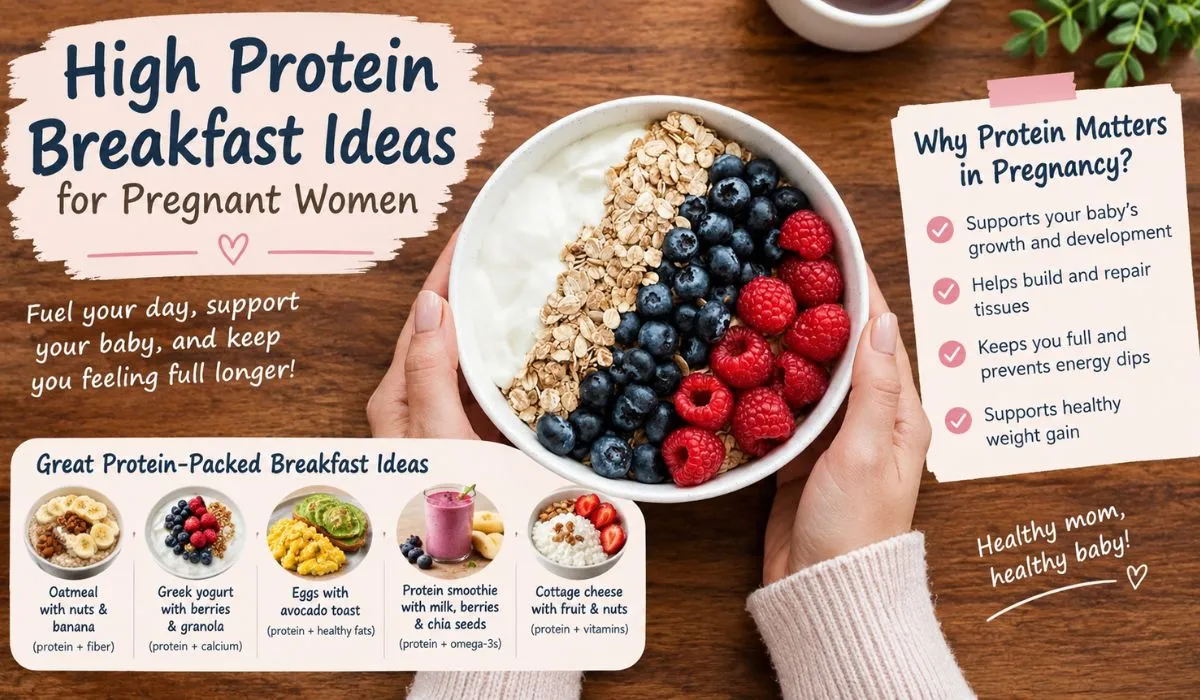
But stick with me, because it’s easier than it sounds. The best high protein breakfast ideas for pregnant women are the humble ones: eggs, Greek yogurt, cottage cheese, and toast with peanut butter. Aim for about 20 grams of protein and you’re doing great.
Why Protein Is Worth the Effort
Your body is building a whole human right now, which is a pretty big job. Protein is the raw material for your baby’s organs, muscles, and brain, and it helps your body make all that extra blood. ACOG says pregnant women need about 71 grams a day. That’s a lot to squeeze into dinner alone, so a good start at breakfast takes the pressure off.
There’s a sweet bonus too. Protein keeps you full and helps steady your blood sugar, and plenty of moms find that calms the queasiness a little. Good prenatal nutrition can start with one small plate.
What to Actually Eat
Eggs are the easy place to begin. Two scrambled eggs give you about 12 grams of protein and a nutrient called choline, which helps your baby’s brain grow. Just cook them all the way through, because the CDC recommends skipping runny eggs while pregnant. A handful of spinach stirred in adds a bit of iron and folate.
Not feeling cooking? Totally fair. Greek yogurt takes about thirty seconds, and a cup of the plain kind can hold around 20 grams of protein. Add berries and walnuts and it honestly feels like a treat. Just check that it’s pasteurized.
Cottage cheese doesn’t get enough love. Half a cup has roughly 12 to 14 grams of protein, and it’s surprisingly good with peaches.
For mornings when you’re running late, mix oats, milk, and peanut butter the night before, or blend a quick smoothie with banana and almond butter. If you don’t eat meat or dairy, a tofu scramble with veggies is warm and filling too.
Don’t Forget Your Prenatal Vitamin
Food does most of the work, but pregnancy supplements fill in the gaps. The CDC recommends 400 micrograms of folic acid every day, and the folic acid benefits for your baby’s early development are well proven. Many women take their vitamin with breakfast because it can be rough on an empty stomach.
Here’s a tiny trick: put some orange slices or strawberries on your plate. The vitamin C helps your body absorb iron. And if your prenatal doesn’t include DHA for pregnancy, ask your doctor whether you need one. The best vitamins for pregnancy look different for everyone, so it’s worth a quick chat. Think of maternal health vitamins as your backup, not a replacement for real food.
Little Things That Help
A bit of prep goes a long way. Boil a few eggs on Sunday, scoop yogurt into small cups, and toss nut butter packets in your bag. If nausea shows up, go cold and mild, and take small bites more often. It’s okay if breakfast is tiny. Something beats nothing.
Try not to skip it entirely, and go easy on sugary pastries that leave you starving an hour later. Skip undercooked eggs and unpasteurized dairy too.
Want more ideas? Have a look at our guides on iron-rich foods for pregnant women, a simple pregnancy diet plan, and folic acid benefits in pregnancy.
Quick Answers
How much protein do I need at breakfast?
About 20 to 25 grams is a good goal, with protein at your other meals and snacks too.
Are eggs okay every day?
Fully cooked eggs are generally safe and nutritious. Check with your provider if you’re unsure.
What if protein foods make me feel sick
Go cold and simple. Yogurt, smoothies, or cheese with crackers are often easier to handle.
Can vegetarians get enough protein at breakfast?
Absolutely. Eggs, dairy, tofu, lentils, nut butters, and seeds all count.