
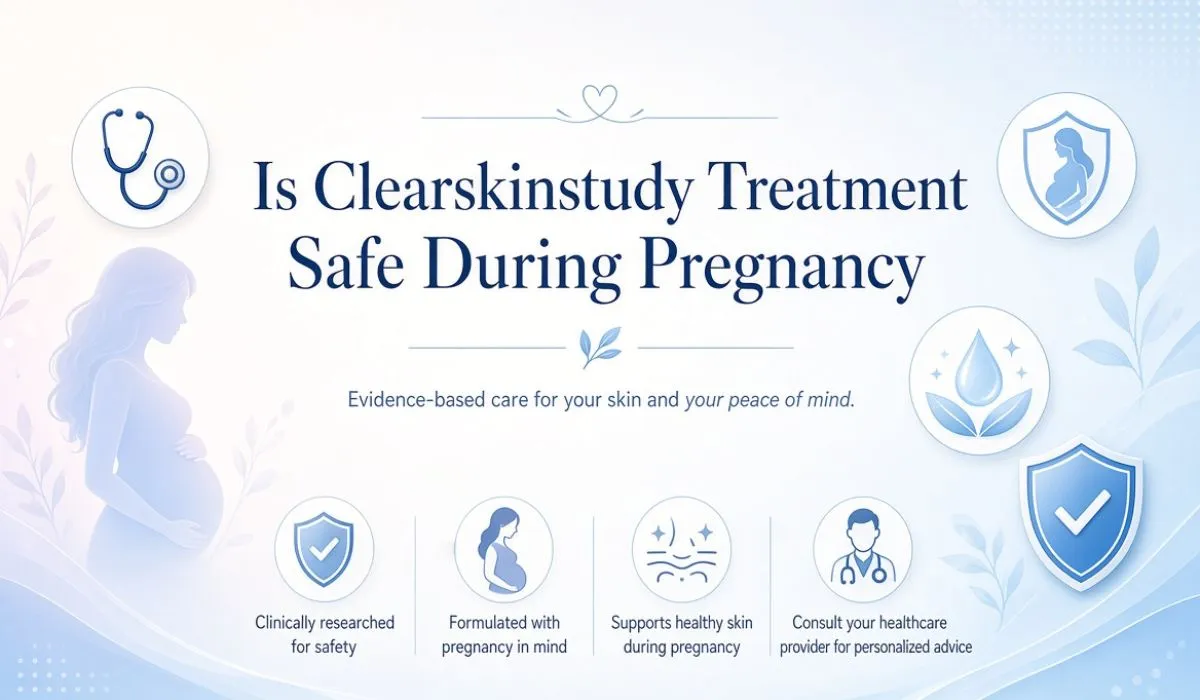
Real talk. You saw two pink lines, and now you’re standing in your bathroom holding a bottle of Clearskinstudy Treatment like it might be a landmine. Deep breath. This happens to basically everyone. Suddenly your entire skincare shelf feels like a suspect lineup, and you’re just trying to do right by this baby.
So here’s the deal, straight up: whether it’s safe depends on what’s actually in the bottle. There’s no universal green light or red light here. It’s about the ingredients, how strong they are, and how you’re using it. Your best next move? Flip the bottle over, read the fine print, and send a photo to your OB-GYN. That’s genuinely the whole strategy.
Not the tidy yes-or-no you were hoping for, I get it. But it’s the truth, and it’s what any dermatologist would tell you too, whether we’re talking a drugstore find or something trendy.
Table of Contents
Your Skin Right Now Is Basically a Different Organ
Pregnancy hormones do not play fair. One week melasma shows up uninvited, the next you’re breaking out like a teenager, and everything just feels more reactive than it used to. Of course you went hunting for something like Clearskinstudy. You just wanted your skin to calm down and feel like yours again.
Here’s the catch though: your body handles ingredients differently now. Stuff that was a non-issue before pregnancy can turn into something worth avoiding.
A handful of ingredients keep showing up in these conversations. Retinoids, think retinol, tretinoin, adapalene, are tied to birth defects at higher doses, so they’re generally off the table. Salicylic acid is usually okay in small amounts, like a gentle cleanser, but not in strong concentrations or as an oral supplement. Hydroquinone, found in some skin-lightening products, just doesn’t have solid safety research behind it yet, so most experts say wait it out. And essential oils, even the “natural” ones, can be more potent than people expect, and plenty haven’t been tested on pregnant women at all.
If Clearskinstudy has any of these on its label, or you can’t track down the ingredient list at all, take that as your cue to pump the brakes.
Actually Figuring This Out for Yourself
Skip the pretty packaging and marketing copy. Go straight for the ingredient list. Anything you don’t recognize, look it up against ACOG or the CDC, both are solid, reliable sources on this stuff.
Then just ask your doctor. I promise it’s not a silly question. Doctors genuinely prefer a two-minute skincare chat over dealing with something that could’ve been caught earlier. You’re not being extra by bringing it up.
One more thing worth knowing: topical products, the ones just sitting on your skin, tend to be lower risk since less actually enters your bloodstream. Lower risk though, not zero. Some ingredients soak in more than you’d think.
Small Habits That Actually Help
Patch-test anything new, even a product you’ve used for years, your skin might react totally differently now. Keep a loose list of what you’re using so it’s easy to mention at appointments. And if something’s promising overnight miracles, that’s usually worth a second glance at what’s driving that.
What I’d Steer You Away From
Don’t assume “natural” means “pregnancy-safe.” Loads of natural ingredients just haven’t been studied enough. Be a little skeptical of online reviews too, random strangers aren’t doctors and don’t know your history. And if you’re already on something your doctor prescribed, please don’t quit it cold turkey without checking in first. Some skin conditions genuinely need steady management through pregnancy.
Quick Answers to Common Questions
Is it safe to start a new skincare treatment during pregnancy?
Usually, yes, as long as you check the ingredients and skip known risks like high-dose retinoids.
What ingredients should I avoid in pregnancy skincare?
Retinoids, high-concentration salicylic acid, hydroquinone, and certain essential oils top the list.
Should I really mention skincare products to my OB-GYN?
Yes. It takes two minutes and helps them catch anything concerning early.
Are topical treatments safer than oral ones during pregnancy?
Generally, since way less reaches your bloodstream, but safer isn’t the same as risk-free.