
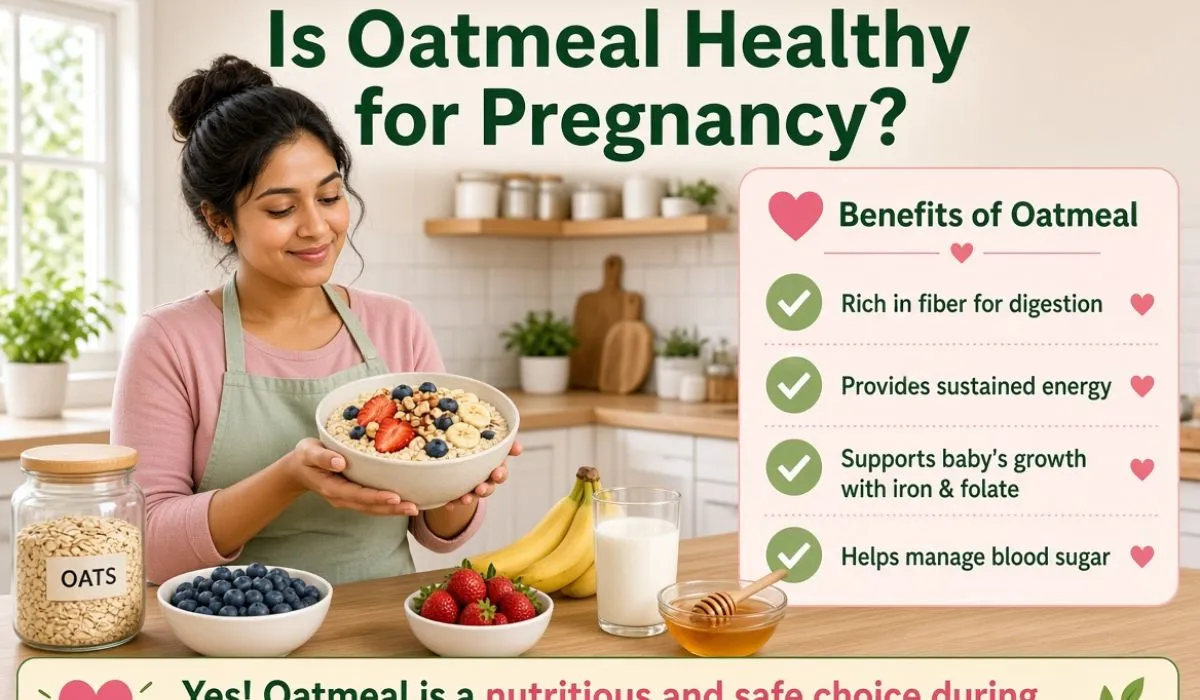
oatmeal is genuinely one of the best things you can eat while pregnant. If you’ve been standing over the pot at 7am half-asleep wondering if you’re just eating it out of habit, or if it’s actually doing anything for you and the baby… it is. It’s gentle on your stomach, loaded with fiber, and gives you that slow, steady energy that can help with nausea, constipation, and those random blood sugar crashes that hit you out of nowhere. So if it’s already your go-to, keep at it. And if not, honestly? Might be time to add it in.
Table of Contents
Why Oatmeal Is a Smart Choice During Pregnancy
Oatmeal gets stuck with the “comfort food” label, which, fair, but it kind of undersells it. There’s actual nutrition science behind why this humble bowl keeps showing up on every pregnancy diet list ever written.
First, fiber. If you’re pregnant, you already know exactly why this matters — no need to spell it out too much. Pregnancy hormones slow your digestion way down, which is basically why constipation becomes such an unwelcome regular by the second and third trimester. A bowl of oats gives you a good dose of soluble fiber that helps keep things moving and supports your gut, and honestly, that alone can change how you feel day to day.
It can also legitimately help with morning sickness. Oats are mild, plain, easy on the stomach — way more appealing than anything greasy or heavy when you’re queasy. A lot of moms swear plain oatmeal is basically the only breakfast they can keep down during those rough first-trimester mornings.
Then there’s the blood sugar thing. Oats digest slowly, so instead of spiking and then crashing you an hour later, they release energy gradually. Big plus if you’re watching for gestational diabetes, or just trying to dodge that sluggish, hangry 10am feeling.
Oatmeal also brings a little iron and B vitamins along for the ride. Not a huge iron source on its own, but every bit counts — and if you pair it with something high in vitamin C, like berries or a few orange slices, your body actually absorbs that iron better. That matters more than you’d think, since your blood volume is expanding to support your growing baby.
Oh, and don’t skip the protein. A cup of cooked oats has about 6 grams, quietly helping you hit your daily needs without you even trying.
According to the American College of Obstetricians and Gynecologists (ACOG), getting enough fiber and iron from whole foods is one of the simplest ways to support a healthy pregnancy. Oatmeal checks both boxes in one bowl — pretty good deal for basically zero effort.
How Much Oatmeal Is Safe During Pregnancy?
No strict rule here, but most experts land around one serving a day — roughly ½ to 1 cup of dry oats — as part of a healthy pregnancy diet. Good news: you can switch it up daily so it never gets boring.
Some combos worth trying: chia seeds or ground flaxseed for extra omega-3s, a spoonful of Greek yogurt for more protein and calcium, berries or banana for natural sweetness and vitamin C, a little nut butter for healthy fats, or just cinnamon when you want flavor without the sugar.
Common Mistakes to Avoid
It’s easier than you’d think to undo oatmeal’s benefits without realizing it. Biggest one: flavored instant packets. Convenient, sure, but a lot of them are basically sugar wearing an oatmeal costume, nowhere near as good as plain oats. Another one — eating oatmeal totally solo with no protein or fat alongside it. Feels filling at first, but you’ll probably be hungry again within the hour. And a drizzle of honey or some fruit is totally fine, but go heavy on syrup or sugar and you basically cancel out the whole blood-sugar benefit that made oatmeal worth eating in the first place.
FAQ: Oatmeal and Pregnancy
Is oatmeal safe in the first trimester?
Yep. Actually one of the most recommended foods for early pregnancy — gentle on the stomach and can genuinely take the edge off nausea.
Can oatmeal help with gestational diabetes?
Plain, unsweetened oatmeal has a lower glycemic impact than a lot of cereals, so it’s a smart pick. Just double-check portions with your doctor or dietitian if you’re managing gestational diabetes specifically.
Is instant oatmeal as healthy as regular oats?
Not really. It’s more processed, digests faster, and often sneaks in added sugar you didn’t ask for. Steel-cut or old-fashioned rolled oats win nutritionally.
Can oatmeal replace my prenatal vitamin?
Nope, and this one’s worth remembering. Oatmeal’s a great addition, but it just doesn’t have enough folic acid, DHA, or other key maternal health vitamins on its own. Keep taking your prenatal alongside it.
The Bottom Line
At the end of the day, oatmeal’s simple, cheap, and genuinely good for you and your baby. It helps digestion, keeps blood sugar steadier, and gives you a comforting breakfast that’s easy on a queasy stomach — especially dressed up with some fruit, seeds, or a scoop of protein. Small habit, real difference in how you feel each morning.