

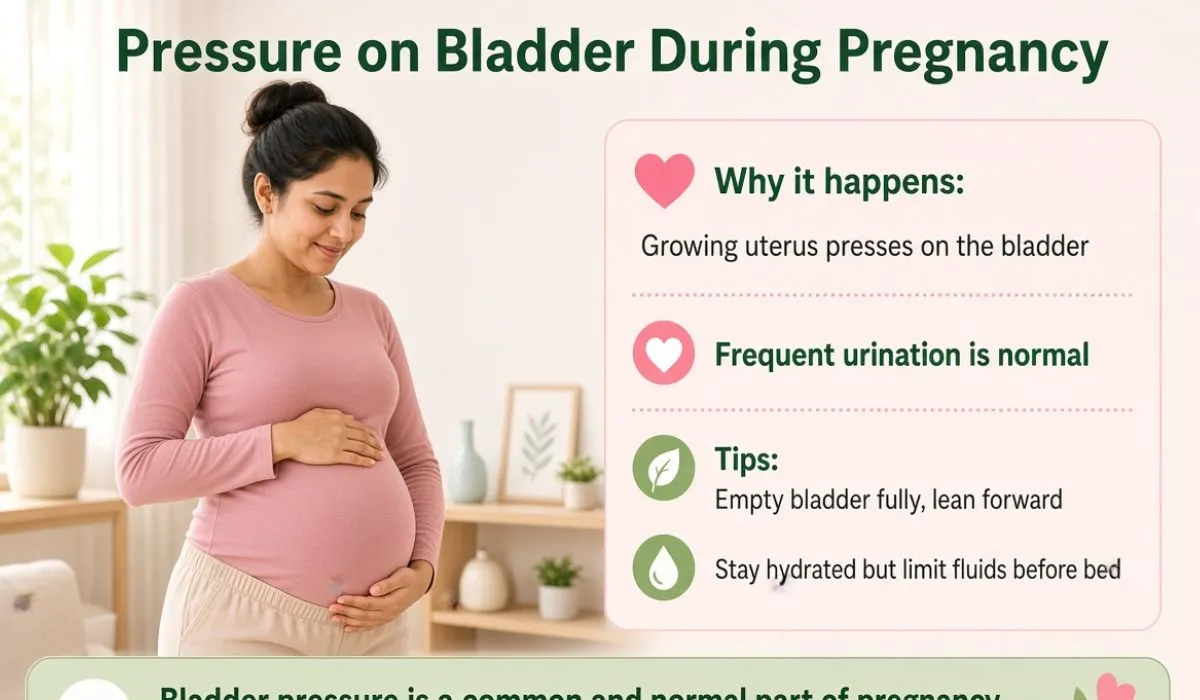
Just went to the bathroom. Ten minutes ago. And yet, here you are again, hovering near the toilet like it owes you money. Sound familiar? That’s bladder pressure, and pregnancy loves to hand it out early. The short version: your uterus is growing, your bladder’s right there next to it, and something’s got to give. It’s annoying. It’s rarely serious. Let’s get into the why and, more importantly, the what-do-I-do-about-it.
Table of Contents
Why Does It Feel Like Someone’s Sitting on Your Bladder?
Picture your bladder and uterus as roommates in a studio apartment. No extra square footage, no compromise. As your baby grows, your bladder simply gets less space to stretch out and fill up.
Here’s the twist most people don’t expect: this pressure shows up twice, and for two totally different reasons.
Early on, when your baby’s barely bigger than a grape, your uterus is already sitting low, right up against your bladder. Add progesterone into the mix, a hormone that relaxes your muscles including the ones around your bladder, and you’re running to the bathroom before you’ve even announced the pregnancy.
Then, somewhere around the second trimester, relief. Your uterus climbs up out of your pelvis and into your belly, and your bladder finally gets a little breathing room. Enjoy it while it lasts.
Because by the third trimester, it’s back. Your baby starts dropping lower into your pelvis, gearing up for birth. Doctors call it “lightening.” Funny name, considering how heavy everything can feel once that little head is resting right on your bladder.
What’s Actually Behind It
It’s never just one thing. Your uterus pressing on your bladder, sure. But also: more blood and fluid moving through your body, meaning your kidneys are producing more urine than usual. Hormones loosening up your pelvic muscles. Your baby shifting position as the weeks go by. Regular pregnancy weight gain, adding its own pressure on top. All of it, happening at once.
Quick note here: not every bit of bladder pressure is “just pregnancy.” Sometimes it’s a UTI wearing a disguise. Burning, pain, fever, cloudy or strong-smelling urine? That’s not a wait-it-out situation. Call your doctor.
What Actually Helps
You won’t make this pressure disappear, it’s part of the deal, but you can make it more manageable.
Lean forward slightly when you sit down to pee. Sounds silly, works surprisingly well. It helps your bladder empty more completely, so you’re not back five minutes later wondering why.
Don’t cut back on water. I know the instinct, fewer sips, fewer bathroom trips. But it backfires, irritating your bladder and raising your UTI risk. Keep drinking normally, just taper off an hour or two before bed.
Add pelvic floor exercises to your routine. Kegels strengthen the muscles holding up your bladder and uterus, and over weeks, that pressure genuinely eases. ACOG considers them safe throughout pregnancy, so there’s no real reason to skip them.
A maternity support belt can help too, redistributing some of your belly’s weight so your pelvis and bladder aren’t carrying it all. And when you feel the urge, don’t rush. Give your bladder a real moment to empty instead of hurrying off.
Even posture plays a role. Slouching pushes your uterus further into your bladder. Sit up, stand tall, give everything inside a little more room.
When to Actually Call Your Doctor
Most of this is just pregnancy being pregnancy. But call your doctor if you notice pain or burning while peeing, blood in your urine, fever or chills, or pressure alongside regular tightening or contractions before 37 weeks. The CDC notes UTIs are common in pregnancy and very treatable when caught early. Ask. It costs nothing.
FAQ: Bladder Pressure in Pregnancy
Is bladder pressure a sign of labor?
It can be. Your baby dropping lower before labor often brings pressure with it. But alone, it’s not a reliable signal.
Why am I feeling this so early?
Your uterus sits low in your pelvis during the first trimester, right against your bladder, and hormones amplify that need-to-go feeling.
Is it normal to feel like I constantly need to pee, even when barely anything comes out?
Very normal. Your bladder just has less room to fill before that urge kicks in. Pain or burning alongside it, though, mention that to your doctor.
Should I drink less water?
No. Stay hydrated. Just shift your timing, less in the evening, normal through the day.
When does this usually calm down?
Often eases in the second trimester, then returns in the third as your baby settles lower.