

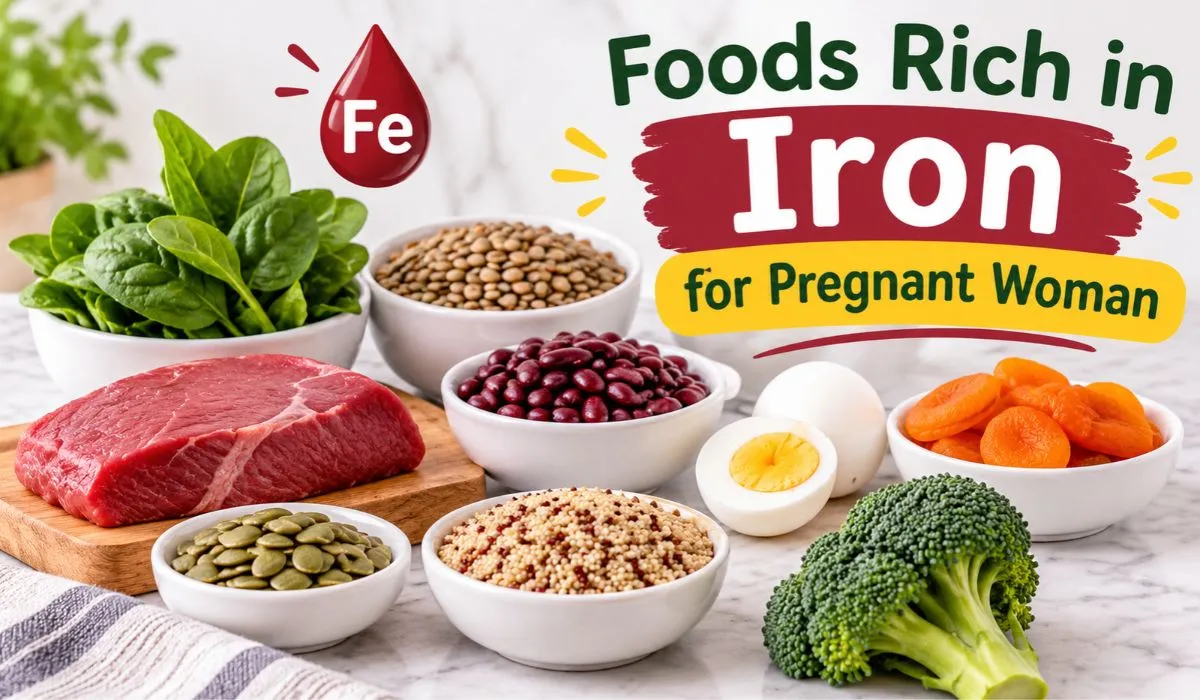
The best foods rich in iron for pregnant woman include lean red meat, chicken, fish, lentils, chickpeas, spinach, eggs, fortified cereals, and dried fruits like apricots. Eat them with something high in vitamin C, such as oranges or tomatoes, and your body absorbs far more of the iron. Pregnant women need about 27 mg of iron a day, according to the CDC and NIH.
Table of Contents
Why Iron Matters So Much Right Now
Your blood volume goes up by almost half during pregnancy. Your body needs iron to make the extra hemoglobin that carries oxygen to you and your baby. If you run low, you may feel dragged down, dizzy, or breathless on the stairs. Low iron can also raise the risk of preterm birth, and ACOG notes that iron-deficiency anemia is common in pregnancy, especially in the second and third trimesters.
The tricky part is that 27 mg is a lot, nearly double what you needed before pregnancy. Prenatal vitamins help, but food does a lot of the heavy lifting.
Animal Foods: The Easiest Iron to Absorb
Meat, poultry, and fish contain heme iron, and your body soaks it up much better than the plant kind. A small serving of beef or lamb a few times a week goes a long way. Chicken thighs, which have more iron than breasts, are a good everyday option. Eggs are cheap and easy, and a boiled egg with toast is a decent breakfast when nothing else sounds good.
Cook all meat, fish, and eggs thoroughly. The CDC advises pregnant women to avoid raw or undercooked animal foods. Liver is rich in iron, but it also carries a lot of vitamin A, so most health experts suggest keeping it occasional or skipping it. Ask your doctor.
Plant Foods That Pull Their Weight
If you’re vegetarian, or meat makes you queasy, you still have good choices. Lentils, chickpeas, kidney beans, and tofu all deliver solid iron. Spinach, pumpkin seeds, quinoa, and fortified breakfast cereals help too. Dates, raisins, and dried apricots make handy snacks you can keep in your bag.
Plant iron (non-heme iron) isn’t absorbed as easily, so it needs a little help. That’s where the next section comes in.
Food Pairings That Boost Absorption
Think of vitamin C as iron’s best friend. A squeeze of lemon on your dal, tomatoes in your lentil soup, or a glass of orange juice with your cereal can noticeably raise how much iron you take in.
On the flip side, tea, coffee, and large amounts of calcium can get in the way. You don’t have to give them up. Just try to have your chai or coffee an hour or two away from your iron-heavy meals.
Easy Iron-Rich Meal Ideas
- Breakfast: Fortified oats with raisins and a sliced orange
- Lunch: Chickpea salad with tomatoes, cucumber, and lemon
- Dinner: Chicken or lentil curry with a side of sautéed spinach
- Snack: A handful of pumpkin seeds and dried apricots
Common Mistakes to Avoid
Many moms rely only on their prenatal vitamins and skip iron-rich meals, which makes it harder to reach 27 mg. Others drink tea right after eating, which blocks absorption. And some start extra iron supplements on their own. Too much iron can cause constipation and, in high doses, real harm. Always check with your doctor before adding a supplement.
FAQs
How much iron do I need during pregnancy?
The CDC and NIH recommend 27 mg per day for pregnant women. The WHO also recommends daily iron supplementation for pregnant women in many settings.
What is the best food for iron during pregnancy?
Lean red meat is one of the best sources. For vegetarians, lentils combined with a vitamin C food work very well.
Can I get enough iron from food alone?
Some women can, but many need a prenatal vitamin or an extra supplement too. A simple blood test will tell you where you stand.
Does iron cause constipation?
It can, especially in supplement form. Water, fiber, and fruit help.