

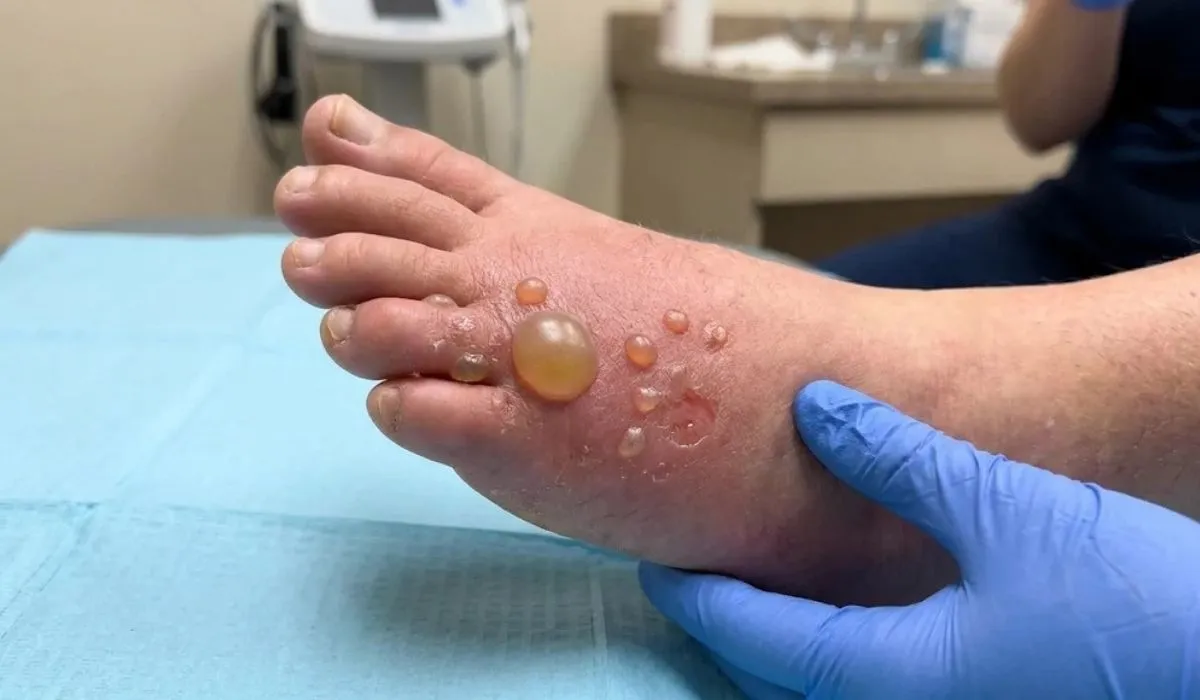
A foot infection with blisters is usually athlete’s foot (a fungus) or a bacterial infection that moved into a blister that popped. Itchy and flaky means fungus. Sore, hot and red means bacteria. Don’t pop anything, keep the foot dry, and get seen quickly if you spot a fever or redness that keeps creeping.
Table of Contents
Picture this. It’s the end of a long, sweaty day, you peel off a sock and the arch of your foot is dotted with tiny blisters. Some are leaking a bit. The whole thing itches like mad. Your first thought is probably “what on earth is that?” and your second is to google it at midnight. Fair enough.
So what’s actually causing it?
Most of the time it’s fungus. The CDC says athlete’s foot comes from fungi that thrive where it’s warm and damp, and a closed shoe is about the best home they could ask for. One version of it shows up as small fluid-filled blisters on the instep or sole, with itching and sometimes a burning feel.
Bacteria are the other big one. A friction blister from new sneakers or a long walk breaks open, germs slip in, and within a day or two the skin is red, puffy and sore to touch. Yellowish fluid is a bad sign. If the red patch keeps growing, that could be cellulitis, which is a deeper skin infection and needs a doctor, not a cream.
And then there’s the sneaky third option. A new pair of socks, a shoe glue or dye, or the type of eczema that likes the soles of the feet can all cause blisters that look exactly like an infection. If antifungal cream does nothing after a couple of weeks, this is probably why.
Telling them apart without a medical degree
Forget how it looks and think about how it feels. Itchy, peeling, worse between the toes? Probably fungus. Throbbing, warm, getting redder each day? Probably bacteria. Showed up the day after you wore something brand new? Maybe just irritation.
What to do at home
If it seems fungal, wash your feet every day with ordinary soap and dry them properly. Between the toes is where people skip. Swap socks daily (twice if your feet sweat), and don’t wear the same shoes two days running, since they need time to dry out. A drugstore antifungal with terbinafine or clotrimazole is the usual start. Keep using it for the full time on the label, often a couple of weeks or more, even when the itch is gone, because stopping early is how it comes back.
An unbroken blister is best left alone. That roof of skin protects what’s underneath. If one has already popped, rinse it with clean water, cover it with a fresh bandage, and change it every day.
Pregnant? Feet swell and sweat more, so fungus gets an easier time. Ask your doctor or pharmacist before using any cream or tablet, because not every one is advised during pregnancy.
When it’s time to stop DIY
Go to a doctor if you see red streaks, fever or chills, pus, a bad smell, or swelling that’s getting worse. Same if there’s no improvement after about two weeks of antifungal treatment. And if you have diabetes or poor circulation, don’t wait at all. The NIH points out that small foot problems can turn serious fast in those cases.
Mistakes I’d steer you away from: popping blisters with a needle, putting steroid cream on a rash you can’t identify, and pulling on damp socks “just this once.”
Quick answers
Can a foot infection with blisters heal by itself?
Mild irritation sometimes does. A real fungal or bacterial infection usually doesn’t.
Should I pop the blisters?
No. It gives bacteria a way in.
Is athlete’s foot contagious?
Yes. Shared towels, gym showers and borrowed shoes all pass it along.
What does a bacterial foot infection look like?
Red, warm, swollen and painful skin, sometimes with pus or red lines.