
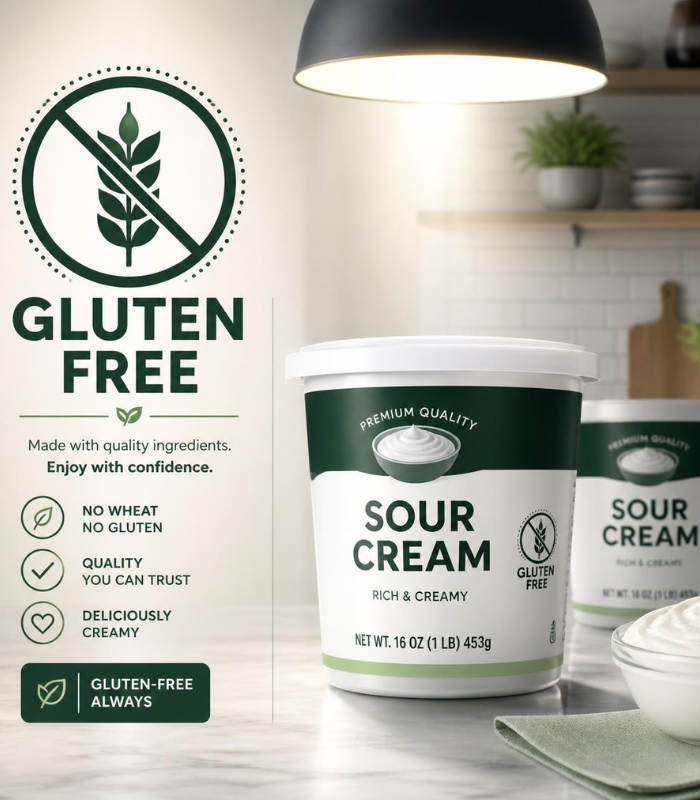
Plain sour cream is gluten-free, full stop — at least in its most basic form, which is really just cream and a live bacterial culture, and neither one has ever had anything to do with gluten. As one registered dietitian who specializes in celiac care puts it, “sour cream almost never trips people up because of the cream itself — it trips them up because of everything that got added to it afterward.” That’s really the whole story in one sentence, so let’s unpack it a bit.
Table of Contents
The Two Ingredients That Started It All
Real sour cream is fermented cream — plain cream that’s been cultured with lactic acid bacteria until it thickens up and develops that familiar tang. That’s the traditional way it’s made, and it’s exactly why sour cream doesn’t technically need a “gluten-free” label slapped on it to actually be gluten-free. None of its core ingredients go anywhere near wheat, barley, or rye.
So Why Does This Question Keep Coming Up?
Honestly, it comes down to two things, and neither one has anything to do with the cream itself.
The first is added thickeners and stabilizers. A lot of commercial brands mix in modified food starch, gums, or vague “natural flavors” to help the texture hold up or extend shelf life. Most of these ingredients are gluten-free too, but every once in a while a starch turns out to be wheat-derived, which is exactly why it’s worth actually reading the ingredient list instead of just trusting the word “sour cream” printed on the front of the tub.
The second is cross-contamination in shared facilities. Some sour cream gets made in plants that also process gluten-containing foods. You won’t see any hint of that on the ingredient list, because it’s not about what’s mixed into the product — it’s about shared equipment or storage that never makes it onto the label at all.
How to Actually Read a Label That Matters
If you have celiac disease or a serious sensitivity, look for certification rather than just guessing. A GFCO-certified product has been tested against a strict threshold, and that’s a genuinely different level of confidence than eyeballing an ingredient list and deciding it “looks fine.” Speaking of which, a short ingredient list is generally a good sign on its own — cream, milk, cultures, maybe a little salt, and that’s about as low-risk as dairy gets. If you spot a “may contain” statement, take it seriously rather than assuming it’s just overly cautious labeling; it’s there specifically to flag shared-facility risk. And if a label just doesn’t say one way or the other, it’s worth calling the manufacturer directly — most food companies will answer this exact question quickly and without much hassle.
Restaurants Play by Different Rules
That dollop landing on your tacos or baked potato carries more risk than the tub sitting in your fridge at home. Restaurant kitchens tend to keep sour cream in shared containers, and the utensils scooping it out often touch bread, tortillas, or breaded items too. If celiac disease is a genuine concern for you, it’s worth asking whether the sour cream is coming from a dedicated container that hasn’t been anywhere near gluten-containing food. And if a server just shrugs and says “should be fine,” take that as a sign to skip it rather than a real reassurance.
The Bottom Line
Reach for the plain tub with the shortest ingredient list you can find, or go straight for a certified gluten-free brand if you’re managing celiac disease. Past that point, it’s really just a matter of reading labels carefully — sour cream itself was never actually the risky part.
 Alona Smith