
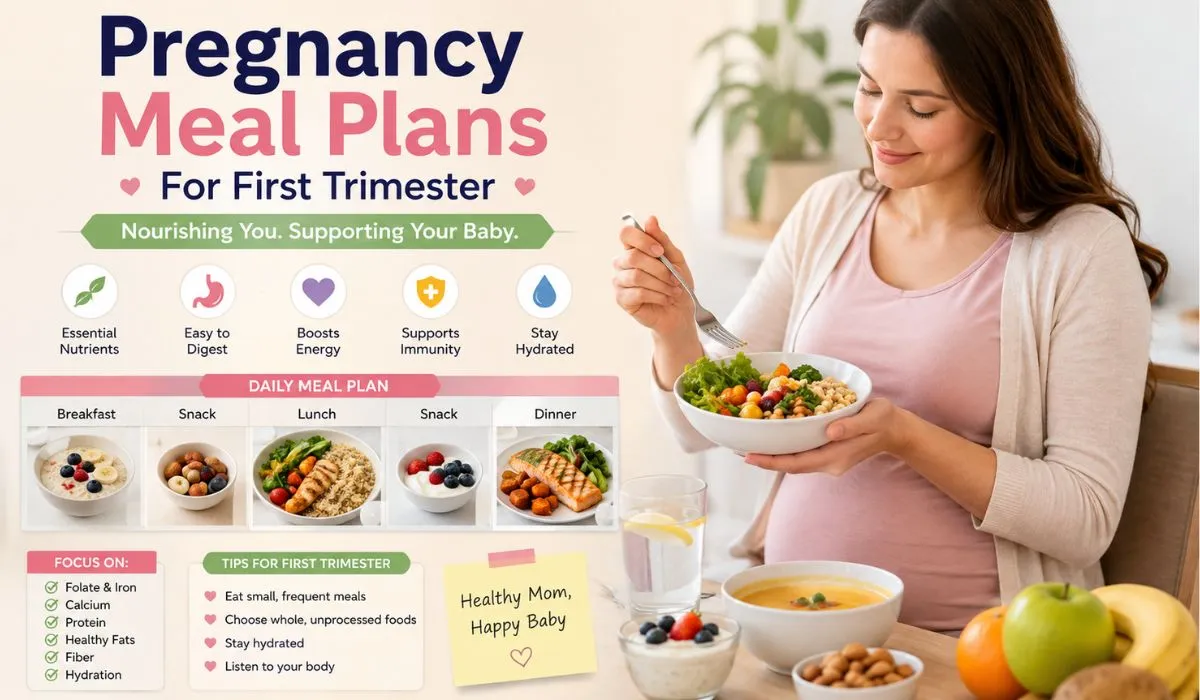
Congratulations — and also, deep breath. If you’re standing in front of your fridge right now with no idea what you’re supposed to eat, you’re in good company. Here’s the short version: small, frequent meals built around folic acid, protein, and iron, with plenty of room for plain, boring food when nausea takes over. That’s really it. You don’t need a meal-prep binder or a strict new diet. You just need a few reliable go-tos that work with your body instead of against it, especially on the days when your body isn’t cooperating at all.
Nobody quite prepares you for how strange the first trimester feels. You’re over the moon one hour and flat on the couch the next, wondering how you’re supposed to nourish a whole new person when crackers are currently your entire personality. Your appetite might vanish. It might completely flip — suddenly you can’t stand the smell of coffee, or chicken tastes like metal. All of that is normal. None of it means you’re failing at this. Let’s talk through what eating actually looks like during these first weeks, one stretch at a time.
Table of Contents
Why the First Trimester Diet Looks Different
Right now, while you might not even be showing yet, your baby’s neural tube, brain, and major organs are already forming. It’s happening quietly, in the background, while you’re just trying to get through your workday. That’s a big reason folic acid matters so much this early — it’s doing important work before you can even feel it. Meanwhile, morning sickness (a name that has always felt like false advertising, since it can hit at 3pm just as easily) makes even simple eating feel complicated.
So set aside the old “eating for two” idea — it was never really true anyway. This trimester isn’t about quantity. It’s about doing your best with whatever your body will tolerate on any given day, and letting that be enough.
Weeks 1–6: Building the Foundation
This is usually when nausea first creeps in, so simplicity is your friend. Instead of three big meals, try eating something small every couple of hours — a few crackers, a spoonful of yogurt, whatever sounds tolerable. Some women swear by eating dry toast before their feet even hit the floor in the morning, before the nausea has a chance to catch up with them. Keep ginger tea or ginger candies within arm’s reach too. It sounds almost too simple to matter, but it helps more people than you’d expect.
When you can stomach it, folic acid-rich foods like leafy greens, lentils, and fortified cereals are worth prioritizing. And sip your water steadily throughout the day rather than gulping down a big glass — that alone can be the difference between a settled stomach and a rough afternoon.
If nothing sounds good right now, try to let yourself off the hook. Your baby is still tiny, and your body knows how to draw on its own reserves for a little while. Right now, the goal is simply to keep something down and to keep taking your prenatal vitamin — ideally alongside food, so it doesn’t sit so heavy.
Weeks 7–9: Managing Nausea While Still Getting Nutrients
For a lot of women, this stretch is the roughest — peak morning sickness, running on fumes, wondering if it will ever let up. Meal planning here isn’t really about “eating well” in the traditional sense. It’s about getting a few nutrients in without setting off another wave of nausea, which honestly counts as a win. Cold or room-temperature foods tend to go down easier than anything hot, mostly because they smell less. A little protein — Greek yogurt, string cheese, a handful of almonds — can steady you when nothing else will. If you can manage iron-rich foods like beans, spinach, or lean meat, pair them with something high in vitamin C, like citrus or bell peppers, since that helps your body actually absorb the iron. And greasy, spicy, or heavily scented meals? Probably best left for later. They tend to be the first thing to turn your stomach.
According to ACOG, mild nausea and food aversions are common in early pregnancy and rarely affect how your baby is growing, as long as you’re managing to keep some fluids down. But if vomiting becomes severe, or you genuinely can’t keep anything down for a full day, please call your provider. That’s not something to just push through alone.
Weeks 10–13: Nausea Starts to Ease
Somewhere around here, a lot of women notice their appetite quietly returning — and after weeks of surviving on crackers, that first real craving can feel like a small miracle. This is a good moment to start widening things out again. Whole grains like oatmeal or quinoa help with steady energy. DHA sources like salmon or walnuts support your baby’s brain development. Calcium-rich foods — milk, yogurt, fortified plant milk — are worth working back into the mix, and as your tolerance improves, let yourself branch back out into more fruits and vegetables too.
Common Mistakes to Avoid
It’s tempting to skip meals entirely on the days when nothing sounds appealing, but even a small snack beats an empty stomach. Try not to force down “healthy” food that makes you gag — if spinach has become your nemesis, find a substitute rather than white-knuckling your way through it. If nausea makes you want to abandon your prenatal vitamin altogether, try switching to a nighttime dose before giving up on it entirely. And keep an eye on how much water you’re actually getting, especially if you’re vomiting often — dehydration sneaks up faster than most people realize.
Quick Tips for an Easier First Trimester
Keep crackers or dry snacks within reach of your bed for the moment you wake up. Eat small amounts, often, rather than committing to three full sit-down meals. Sip water steadily through the day instead of chugging it all at once. And if nausea feels severe, or you’re noticing weight loss, don’t just tough it out — call your doctor and let them help.
FAQs
Do I need to eat more calories in the first trimester?
Not really. Most women don’t need extra calories until the second trimester. Right now it’s more about what you’re eating than how much.
What if I can’t stomach vegetables?
Try smoothies, soups, or well-cooked versions instead. They tend to be much gentler than raw vegetables during early pregnancy.
Is it safe to skip meals if I’m too nauseous to eat?
An occasional small meal is fine, but try not to go too long without eating anything at all — an empty stomach can actually make nausea worse.
Should I still take prenatal vitamins if I’m nauseous?
Yes — try taking them with food, or right before bed. Health experts recommend not stopping your prenatal vitamin without talking to your provider first.
When does first trimester nausea usually improve?
Most women start feeling better around weeks 12–14, though it really does vary. Be patient with yourself — this part doesn’t last forever, even when it feels like it will.