
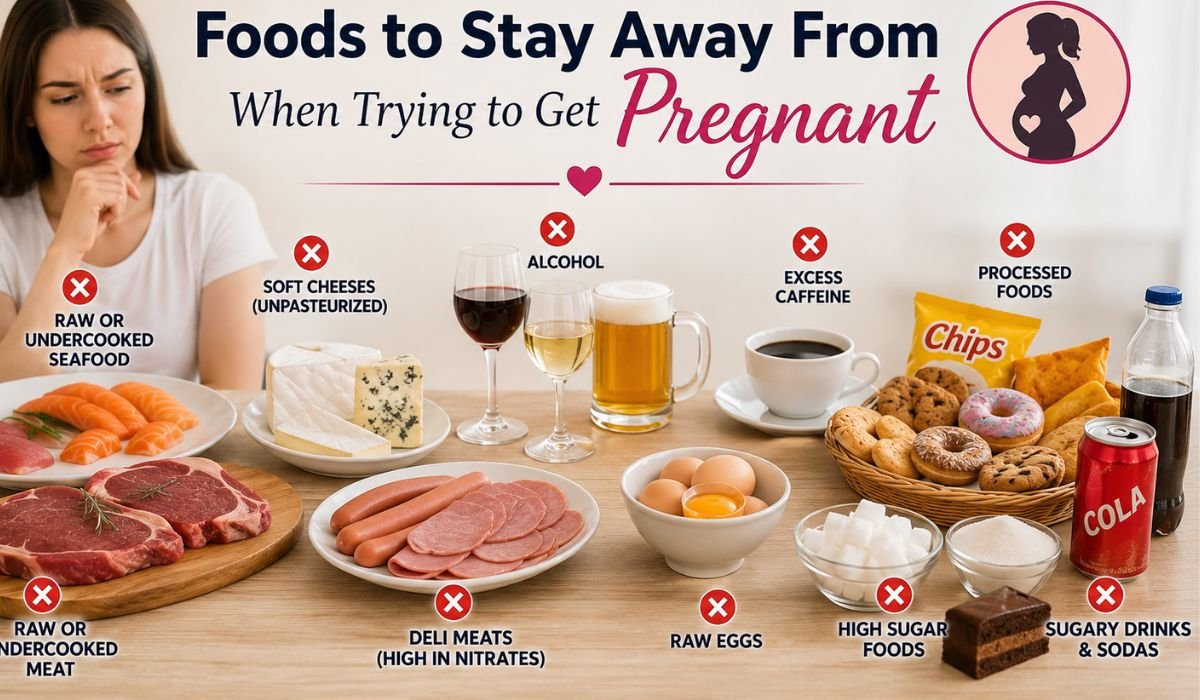
The moment you tell someone you’re trying to conceive, the food advice starts pouring in. Cut this, avoid that, never touch the other thing. It’s a lot, and honestly, most of it gets exaggerated somewhere along the way. The real list is shorter than the internet makes it sound: high-mercury fish, unpasteurized dairy, undercooked meat and eggs, heavy drinking, too much caffeine, and a diet that leans hard on packaged, processed food.
That’s really it. Nothing on this list means you’ve ruined anything if you’ve already had a bite of soft cheese or a second cup of coffee this week. It just means these are the things worth keeping an eye on now, because your body’s quietly getting ready for something big — balancing hormones, prepping eggs, setting the stage. Here’s what’s actually behind each one.
Fish is complicated, but not the enemy
Fish gets a bad reputation it doesn’t fully deserve. In reality, it’s one of the better things you could be eating right now — full of omega-3s that support egg quality and hormone health. The issue isn’t fish in general, it’s a few specific kinds. Swordfish, shark, king mackerel, tilefish — these are the bigger, older fish that have had time to build up mercury, and mercury doesn’t clear out of your system quickly once it’s there. Swap those for salmon, sardines, shrimp, or light canned tuna instead, and you get the benefits without the tradeoff.
About that cheese board
This is the one that gets the most groans. Soft cheeses like brie or camembert are fine — as long as they’re made with pasteurized milk. Same goes for milk and juice: raw and unpasteurized versions can carry listeria, which is a bigger deal right now than it usually would be. It’s an easy check, though. Flip the label over. If it says pasteurized, go ahead.
Hold off on the raw stuff
Sushi, rare steak, runny egg yolks, raw cookie dough, homemade Caesar dressing — anything built around raw or undercooked animal products carries some risk of salmonella, listeria, or toxoplasmosis. It’s not that these foods are dangerous in general, it’s just not the moment to take that particular gamble. Cooked sushi rolls and well-done everything else can hold you over for now.
Alcohol and caffeine, but not treated the same
Alcohol is the one where doctors tend to be more direct: there’s no amount that’s been clearly proven safe during preconception, so most recommend stepping away from it while you’re actively trying. Heavier drinking especially has been linked to irregular cycles, which makes it harder to know when you’re actually ovulating.
Caffeine’s a bit more forgiving. You probably don’t need to quit coffee cold turkey — just watch the total. Somewhere around 200 milligrams a day (about one to two regular cups) is the number most fertility specialists point to. Push past that regularly and some studies suggest it could take a little longer to conceive.
The processed food problem
This one’s less about any single food and more about a general pattern. A diet heavy in fried food, packaged snacks, and sugary drinks tends to bring along trans fats and refined sugar, both of which mess with insulin regulation — and insulin has more say over ovulation than most people realize. Some research has linked diets high in ultra-processed food to a longer time trying to conceive. This doesn’t mean giving up treats forever. It just means most of your plate, most of the time, leaning toward whole foods instead of the drive-through.
Don’t overthink it
One glass of wine, one slip on the cheese label — none of that undoes anything. Fertility nutrition is a slow build, made up of patterns over weeks and months, not any single meal you had on a Tuesday. Small, repeatable swaps are what actually add up: salmon instead of swordfish, pasteurized instead of raw, home-cooked instead of packaged.
Questions people usually ask
Do I have to give up coffee completely?
No. Keeping it around 200 mg a day, roughly one to two cups, is generally considered a reasonable target.
Is all fish risky when trying to get pregnant?
No, just the high-mercury kinds like swordfish, shark, and king mackerel. Lower-mercury fish like salmon are actually worth eating more of.
Can I eat soft cheese while trying to conceive?
Yes, as long as it’s pasteurized. Check the label first.
How early should I start making these changes?
Ideally a few months before you start trying. Egg quality and hormones respond to diet gradually, not overnight.
Does diet actually matter that much for fertility?
It’s one factor among several — age, health conditions, and genetics all play a role too — but nutrition really does affect hormone balance, ovulation, and inflammation, which is why it comes up so often.