
Let’s be honest — pregnancy nutrition advice can feel like a lot. Eat this, avoid that, don’t forget this other thing. So let’s simplify one piece of it: protein. Out of everything on the “eat more of” list, this is one of the ones that genuinely earns its spot. It’s building your baby’s organs and muscles, keeping up with your growing blood supply, and it’s probably part of why you feel a bit steadier on the days you actually eat enough of it.
Most pregnant women need somewhere between 70 and 100 grams a day. That number moves around depending on your trimester and how active you are, but here’s the reassuring part — it’s not as hard to hit as it sounds. A couple of eggs, a cup of yogurt, and a handful of almonds already get you most of the way there before lunch.
Why Your Body Is Suddenly Asking for More of It
Pregnancy is, quite literally, your body building a person from scratch. And it can’t do that on good intentions alone — it needs raw material, and protein is a huge part of that. It shapes your baby’s organs, muscles, and brain. It also keeps up with something most people don’t think about: your blood volume, which climbs by nearly 50% by the third trimester. That’s a lot of new blood to manufacture, and protein is quietly behind a lot of it.
It also helps repair the everyday wear pregnancy puts on your body and supports your baby arriving at a healthy weight. ACOG and other maternal health experts generally point to the second and third trimesters as the stretch where protein needs really pick up, since that’s when your baby’s growth accelerates the most.
The Animal-Based Foods That Make This Easy
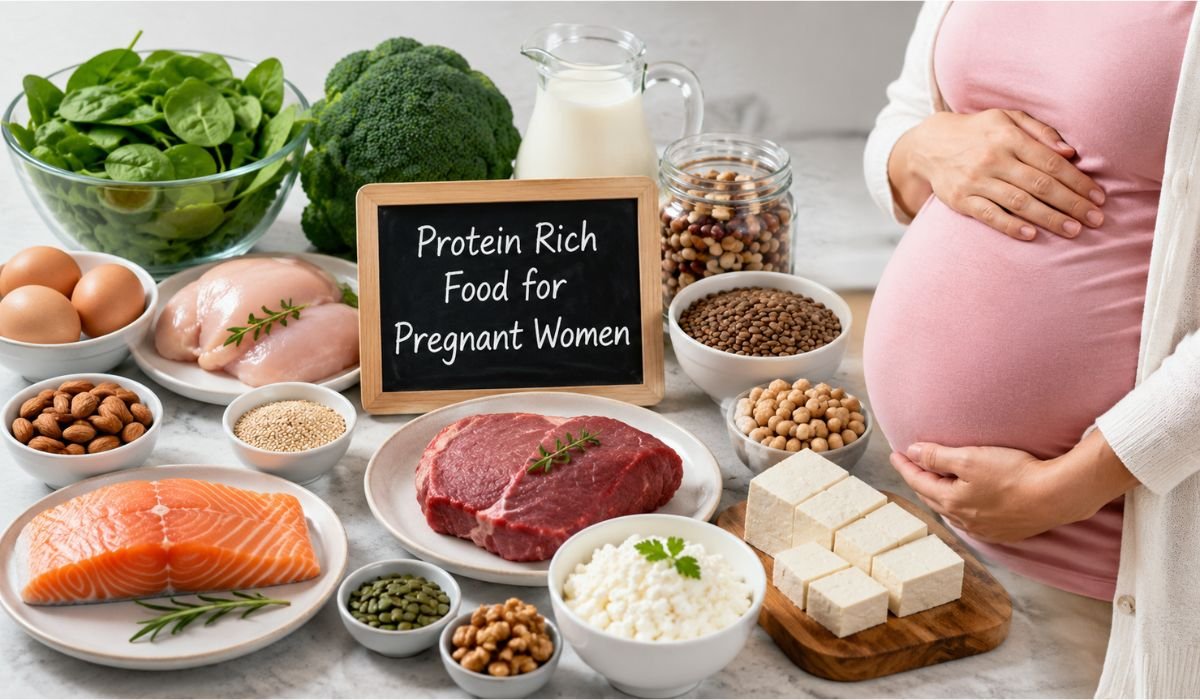
Eggs might be the most underrated food in pregnancy, honestly. One egg gives you about 6 grams of protein, plus choline — a nutrient your baby’s brain needs, and one a lot of prenatal diets fall short on without people realizing it. If eggs are already a habit for you, you’re doing better than you probably think.
Chicken and turkey are the reliable backups. A normal serving gets you around 25 grams of protein without a lot of saturated fat tagging along, which makes them an easy choice on nights when cooking anything more ambitious feels impossible.
Fish is worth working in too, with one small asterisk. Salmon, sardines, and tilapia pair protein with DHA, an omega-3 fat tied to your baby’s brain and eye development. The catch is mercury — the FDA and EPA recommend sticking to lower-mercury options and capping it around two to three servings a week, not more.
And then there’s Greek yogurt, which is almost unfairly good for you right now. Close to 20 grams of protein in a single cup, plus calcium your bones — and your baby’s forming skeleton — are both relying on.
If You’re Eating More Plant-Based, You’ve Still Got Plenty to Work With
You don’t need meat at every meal to hit your protein goals, not even close. Lentils and chickpeas do a lot of quiet heavy lifting — a cup of cooked lentils has about 18 grams of protein, along with fiber and iron, both of which tend to get recommended right alongside protein during pregnancy anyway. Beans work in a similar way and slide easily into soups, rice bowls, or tacos without much effort on your part.
Keep nuts and nut butters somewhere within reach, especially for the days when cooking feels like one task too many. A handful of almonds or a spoonful of peanut butter adds protein and healthy fat that actually keeps you satisfied longer, not just for twenty minutes. Tofu and edamame are two more solid picks if you’re cutting back on meat — a cup of edamame alone gets you around 17 grams.
Quinoa deserves a mention too, mostly because it quietly does something most plant foods can’t: it’s a complete protein on its own, meaning it has all nine essential amino acids your body needs but can’t make by itself.
A Few Things That Actually Help
Spread protein across three meals and a snack or two instead of trying to cram it all into dinner — your body genuinely uses it more efficiently that way. If you’re leaning plant-based, pairing foods like rice with beans, or hummus with whole-grain pita, rounds out the amino acids you’re getting across the day. And if the first trimester has you unable to look at certain foods without needing to lie down, don’t force it. Protein needs are actually at their lowest in those early weeks and climb later, so there’s more room than you’d expect to ease into this.
One more thing worth knowing: protein shakes and bars can help fill gaps on a busy day, but they’re not a full replacement for real food. Whole foods bring fiber, vitamins, and minerals along with the protein, and that combination is genuinely hard to replicate in a scoop of powder.
FAQ
How much protein do I actually need per trimester?
Roughly 70–75 grams in the first trimester, climbing to around 85–100 grams by the third. Your doctor can narrow this down for your specific situation.
Is it safe to eat eggs during pregnancy?
Yes, as long as they’re fully cooked through. Raw or undercooked eggs carry a salmonella risk that’s not worth taking a chance on right now.
Can I get enough protein if I’m vegetarian?
Yes, without much difficulty. Mixing legumes, dairy, tofu, and grains throughout the day generally covers what you need — no meat required.
Can you eat too much protein during pregnancy?
Very high amounts aren’t necessary and don’t add extra benefit, so balance matters more than maximizing intake. If you’re thinking about a protein supplement, it’s worth running it by your provider first.
What’s a good high-protein snack when I’m short on time?
Greek yogurt with a spoonful of nut butter, or a boiled egg with a few almonds — both take under a minute and actually hold you over until your next meal.
 Emma Gill